

You know that moment when a trout rises to inspect your fly, hovers for what feels like an eternity, then slowly sinks back into the depths without so much as a nudge? Selective trout—those wary, educated fish that refuse sloppy presentations—demand specialized gear where presentation finesse outweighs raw power. Recent 2025 testing revealed the Orvis Clearwater outperforming several high-end competitors in blind-casting trials, proving that thoughtful design matters more than price tags when targeting these discriminating fish.
Selective trout fishing gear is not about expensive components or flashy technology. It is specialized equipment designed to create gentle, natural presentations that fool wary, educated fish through refined technique rather than brute force. As fishing pressure increases on accessible waters, trout grow increasingly discriminating, punishing presentation flaws that standard gear overlooks.
Quick Answer: The best selective trout fishing gear prioritizes presentation finesse over power, featuring medium-fast action rods like the St. Croix Technica for soft landings, low-density tippets such as Umpqua Stratos X for natural drift, and specialized fly lines designed for delicate turnover.
Definition: Selective trout fishing gear refers to specialized equipment designed to create gentle, natural presentations that fool wary, educated fish through refined technique rather than brute force.
Key Evidence: According to Field & Stream, over 20 fly rods were evaluated in comprehensive 2025 field testing, with the Orvis Clearwater outperforming several high-end competitors in blind-casting trials despite its accessible price point.
Context: This demonstrates that thoughtful design and presentation capability matter more than expensive components when targeting educated fish.
Maybe you’ve experienced that frustrating afternoon where every rise brings hope, only to watch fish after fish refuse your carefully chosen patterns. Best selective trout fishing gear works because it creates gentle presentations that avoid spooking surface feeders, reduces drag through specialized materials, and maximizes efficiency on the water. When you match rod action to water type and pair low-density tippets with appropriate lines, you shift from random casting to targeted fishing that educated trout can’t ignore.
Key Takeaways
- Medium-fast rod actions create gentler presentations essential for fooling surface feeders during delicate hatches on spring creeks
- Low-density tippet materials like Umpqua Stratos X reduce drag and improve dry fly float by being 10% less dense than standard nylon
- Budget-conscious options can match premium performance—the Orvis Clearwater proved this in blind testing
- Casting efficiency maximizes water time over false casting, with rapid fly changes outperforming stubborn pattern commitment
- System thinking matters more than individual component obsession when presentation demands exceed standard trout fishing
Rod Selection for Finesse Presentations
Notice how selective trout respond differently to various rod actions. The St. Croix Technica’s medium-fast action feels slower specifically for finesse dry fly fishing on selective trout in spring creeks or still waters, prioritizing soft presentation over casting power. This design philosophy acknowledges that educated fish notice the difference between a fly that settles gently onto the surface and one that crashes down like a warning signal.
Research by Field & Stream shows that in blind-casting tests among experienced testers, the Orvis Clearwater outperformed some high-end rods despite its accessible price point. This finding liberates anglers from believing they must spend thousands to fool selective fish. Distance capability enhances coverage without sacrificing presentation quality, with the St. Croix IMX Pro V2 achieving consistent 80-foot casts while maintaining delicate turnover.
One common pattern looks like this: you approach a promising pool with your standard fast-action rod, make what feels like a perfect cast, and watch the fish scatter before your fly even hits the water. The rod’s stiff action transmitted every micro-movement through heavy tippet, creating vibrations that alert cautious fish. Medium-fast actions solve this problem by absorbing these small movements and creating gentler presentations.
Matching Action to Water Type
Different water characteristics demand specific rod capabilities for optimal presentation.
- Spring creeks and still waters: Medium-fast actions like the Technica for ultra-soft landings on glassy surfaces
- Freestone rivers with wind: Fast-action models like the St. Croix Evos handle diverse presentations and power through challenging conditions
- Brushy streams: Shorter rods under 9 feet provide overhead clearance while maintaining line control
Terminal Tackle and Presentation Systems
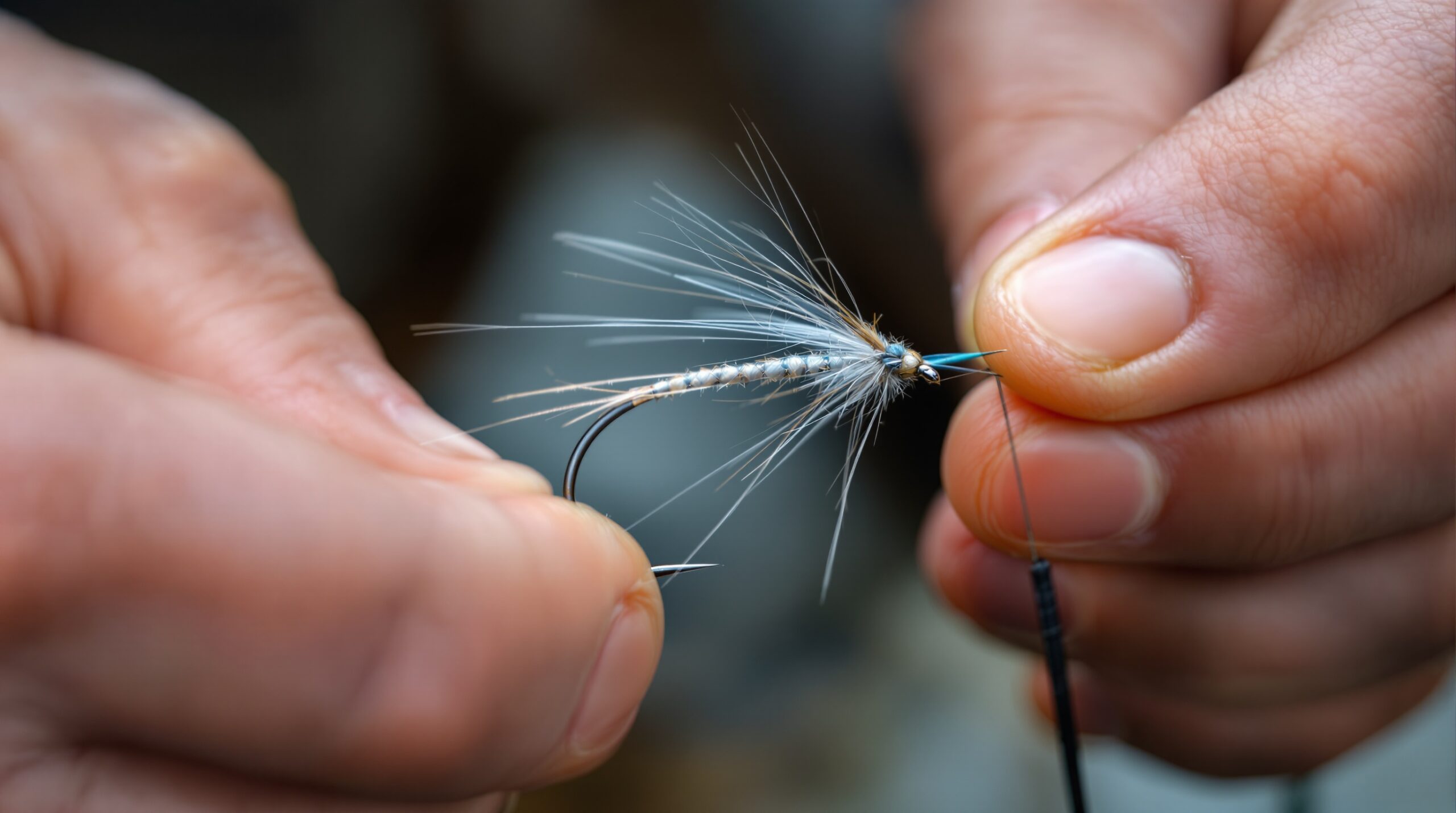
You might not realize how much tippet density affects your success rate. Umpqua Stratos X tippet is 10% less dense than standard nylon, specifically engineered to aid dry fly presentations to surface-feeding trout. This material science breakthrough translates to reduced drag and more natural drift—the difference between a fly that floats naturally with the current and one that creates tiny wake patterns that alert cautious fish.
Doug Swisher advocates rapid fly changes over repeated presentations with the same pattern, recommending darker options like Adams #14-#20 or Blue Wing Olive #18-#22 when initial presentations fail. According to Scientific Anglers, this efficiency factor emphasizes quick knot-tying, rapid fly changes, and minimal false casts to maximize time with the fly actually in the water.
System integration matters more than individual component quality when targeting educated fish. The finest rod paired with heavy tippet and poor casting technique won’t fool selective trout—modest gear with refined presentation skills consistently outperforms expensive setups in inexperienced hands. Understanding tippet characteristics becomes essential when every element of your presentation must work together seamlessly.
Building Your Fly Box
Adaptive pattern selection proves more effective than rigid adherence to classic flies.
- Foundation patterns: Carry Adams in sizes #14-#20 and Blue Wing Olive patterns in #18-#22 as starting points
- Rapid adjustment protocol: Change flies quickly after 3-4 refusals rather than making twenty casts with the wrong pattern
- Match the hatch: Observe what’s drifting in the surface film and adjust to what trout are actually eating
Technique and Efficiency Strategies
Loop control determines precision in ways that separate successful presentations from near misses. Doug Swisher emphasizes that “loop control via rod tip path and wrist movement” determines whether your fly lands naturally or crashes onto the surface like a warning signal. He recommends practice with short yarn rods to visualize casting loops, acknowledging that you can’t fix what you can’t see when it comes to presentation mechanics.
Maybe you’ve noticed how some anglers seem to catch fish while others struggle on the same water. The difference often comes down to line management for drag-free drift. Strip line to add slack when current speeds vary, flip upstream mends to extend natural float, and focus on keeping the fly moving at current speed rather than being dragged by your line. These skills become automatic with practice.
Efficiency maximizes opportunity during narrow feeding windows. Minimize false casting and maximize water time—missing peak activity during elaborate casting displays wastes precious feeding windows when selective trout operate within narrow timeframes. Choosing the right patterns and presenting them efficiently matters more than perfect casting form when fish are actively feeding.
Common mistakes undermine otherwise solid approaches. Over-relying on power rods when finesse situations demand soft presentations telegraphs every micro-movement through stiff blanks and heavy tippet. Excessive false casting keeps your fly out of productive water and often educates nearby fish about your presence. Advanced techniques like sight nymphing require this same attention to presentation detail, whether you’re fishing dry flies or subsurface patterns to educated fish.
Why Best Selective Trout Fishing Gear Matters
Best selective trout fishing gear matters because it represents the evolution from brute-force fishing to refined presentation. As fishing pressure increases and trout grow more educated, the margin for presentation error continues shrinking. Success requires matching complete systems—rod, tippet, line, and technique—to the specific demands of wary fish that punish every flaw in execution. This approach transforms frustrating refusals into consistent hookups on challenging water.
Conclusion
Targeting selective trout demands gear that prioritizes presentation finesse over raw power, with medium-fast action rods, low-density tippets, and specialized lines creating the gentle, natural presentations that fool educated fish. Field testing confirms that thoughtful design matters more than price tags, while expert insights emphasize efficiency and rapid adaptation over stubborn persistence. Build your system around soft landings, drag-free drift, and minimal false casting. Keep your fly in productive water with patterns that match actual feeding behavior rather than assumptions about what should work. When you combine the right gear with refined technique, those wary rises transform from frustrating refusals into satisfying hookups.
Frequently Asked Questions
What is selective trout fishing gear?
Selective trout fishing gear is specialized equipment designed to create gentle, natural presentations that fool wary, educated fish through refined technique rather than brute force or expensive components.
What rod action is best for selective trout?
Medium-fast action rods like the St. Croix Technica are ideal for selective trout, providing soft presentations and gentle landings on glassy surfaces without spooking cautious fish.
Why does tippet density matter for selective trout?
Low-density tippets like Umpqua Stratos X (10% less dense than standard nylon) reduce drag and improve dry fly float, creating more natural drift that doesn’t alert cautious fish.
How often should I change flies when targeting selective trout?
Change flies quickly after 3-4 refusals rather than making twenty casts with the wrong pattern. Rapid fly changes maximize water time during narrow feeding windows.
What fly patterns work best for selective trout?
Carry Adams patterns in sizes #14-#20 and Blue Wing Olive patterns in #18-#22 as foundation flies, but match what’s actually drifting in the surface film rather than assumptions.
Does expensive gear catch more selective trout?
No. Field testing shows the budget-friendly Orvis Clearwater outperformed high-end rods in blind-casting trials, proving thoughtful design matters more than price tags.
Sources
- Field & Stream – Comprehensive 2025 fly rod testing and evaluation for trout fishing applications, including blind-casting trials and performance analysis across multiple rod models and actions
- Umpqua – Product specifications and technical details for Stratos X low-density tippet material engineered for selective trout presentations
- Scientific Anglers – Expert strategies and techniques from Doug Swisher for targeting selective trout, emphasizing casting efficiency, loop control, and adaptive pattern selection