
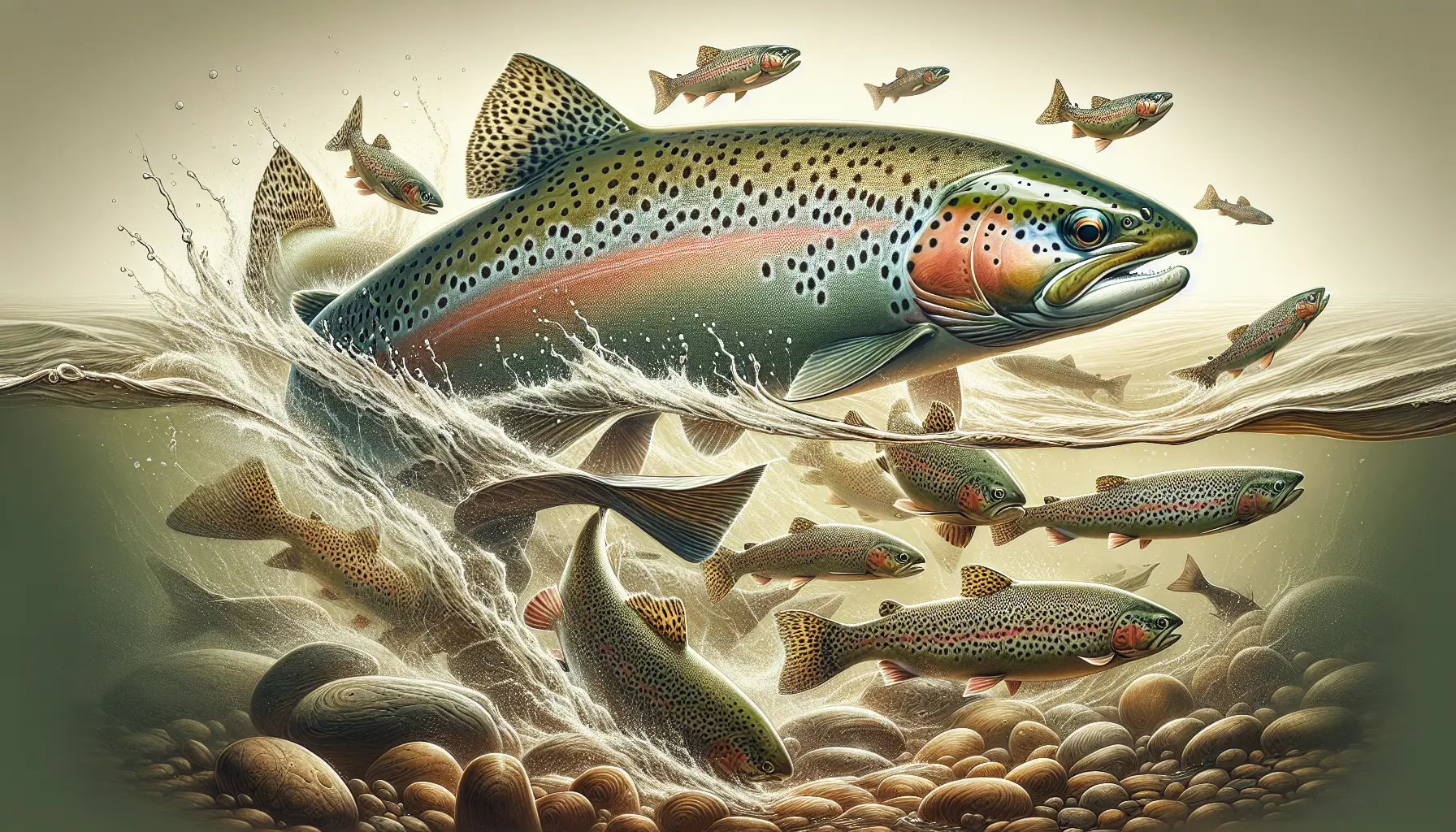
Brown trout move an average of 154 meters upstream during fall spawning runs, with some individuals traveling over 2 kilometers—these aren’t random wanderings but strategic seasonal shifts. Maybe you’ve noticed how certain pools that held fish all summer suddenly go quiet in October, while upstream runs you rarely bothered with start producing consistently. Trout migration patterns are not chaotic movements but temperature-driven rhythms that create predictable concentrations in specific water types throughout the year.
Quick Answer: Trout migration patterns follow distinct seasonal rhythms—brown trout move upstream during fall spawning (averaging 154 meters), shift to deeper pools for winter recovery, while bull trout exhibit peak summer mobility averaging 11.5 kilometers before winter restriction.
Definition: Trout migration patterns are the seasonal movements of fish through watersheds, driven by temperature, spawning needs, and habitat requirements that create predictable concentrations in specific water types.
Key Evidence: According to FACETS Journal, bull trout summer and autumn movements average 11.5 kilometers within season, ranging from 0.3 to 64.9 kilometers, with some tracked groups moving between 11.7 and 115.9 kilometers.
Context: These temperature-driven migrations reveal where trophy fish concentrate during each season, offering a roadmap to anticipation rather than reaction.
Understanding trout migration patterns is not about memorizing fish behavior but recognizing the temperature triggers that drive predictable seasonal concentrations. When water temperatures drop into spawning range, brown trout abandon summer lies and push upstream to gravel runs. After spawning, exhausted fish quickly relocate to thermal refuges where they can recover through winter. The benefit comes from positioning yourself where fish will be rather than where they were. What follows will walk you through exactly how these patterns unfold across seasons, what drives trophy trout to move, and how to read the water for each phase of the migration cycle.
Key Takeaways
- Fall spawning drives upstream movement with 29% of brown trout traveling 300+ meters to spawning gravels
- Habitat shifts follow spawning cycles—trout occupy runs 60% of the time during spawning but shift to pools (46%) for overwintering
- Summer activates bull trout mobility with peak movement probability (0.08-0.15) and extensive watershed-scale travel
- Winter brings movement restriction as trout settle into thermal refuges and remain largely stationary until spring warming
- Regional variation matters—southern systems show elevated winter activity while northern watersheds experience near-complete dormancy
How Trout Migration Patterns Change Through the Seasons
You might notice the first signs of fall migration before the fish actually move. Brown trout begin staging in deeper runs and pools adjacent to spawning tributaries, building energy reserves for the upstream push ahead. Research by Scientific Research Publishing documents that James Pennebaker’s team found brown trout move an average net distance of 154 meters upstream during spawning season, with total movement averaging 625 meters and one individual covering 2,100 meters.
During active spawning, trout occupy runs 60% of the time and riffles 17% of the time, actively seeking gravel substrate and oxygenated flow. This represents a complete behavioral shift from summer patterns when fish prioritize feeding lies and thermal comfort. After spawning completion, brown trout shift dramatically to pools (46% occupancy) for overwintering, with riffle use dropping to minimal levels. This habitat transition happens within days of spawning completion as exhausted fish seek thermal stability.
Bull trout exhibit a different pattern entirely. Peak movement probability occurs mid-summer (0.08-0.15) with movements averaging 11.5 kilometers—challenging assumptions about tight home ranges. According to FACETS Journal, some tracked groups moved between 11.7 and 115.9 kilometers during summer and autumn periods. Winter brings dramatic restriction, with bull trout showing negligible movement and many remaining stationary in stream reaches smaller than 10 kilometers.
One common pattern looks like this: a productive summer pool suddenly goes quiet in early fall as resident fish join the upstream migration. Meanwhile, runs you’ve walked past all season start holding fish as spawners concentrate in suitable habitat. The key is recognizing these shifts before they happen rather than discovering them through trial and error.
Regional Variation in Activity Patterns
Migration timing and intensity vary significantly by latitude and climate, affecting when and where trophy fish appear.

- Southern systems: Chattooga River brown trout demonstrate greatest activity in fall and winter—averaging 29.5 meters per movement in fall and 20.5 meters in winter
- Northern watersheds: More pronounced winter dormancy with ice cover creating extended stationarity periods
- Coastal species: Speckled trout migrate offshore to deeper channels as temperatures drop, seeking thermal stability
What Drives Trophy Trout to Migrate
Water temperature serves as the primary migration trigger because it determines metabolic rates and dictates whether fish move or conserve energy. The reproductive imperative creates the most predictable migration window—fall spawning runs when fish abandon summer lies to reach suitable gravel substrate. This behavior operates on biological necessity that overrides feeding and comfort considerations.
Post-spawn fish face a different imperative: recovery. Exhausted trout relocate to pools offering thermal stability and shelter from current where they can rebuild condition through winter. These thermal refuges concentrate fish but also make them vulnerable—exhausted post-spawn trout face elevated predation from mammals and birds when physiologically compromised.
Summer bull trout movements correlate with prey distribution across watershed scales. Fish temporarily expand home ranges to maximum extents, following food sources scattered throughout the drainage. Recent telemetry reveals remarkable individual variation within single populations—some bull trout remain stationary year-round while others travel dozens of kilometers, suggesting different strategic approaches to survival.
Maybe you’ve wondered why certain pools that held fish consistently all summer suddenly go barren in October. Habitat connectivity determines whether fish can complete seasonal movements. Access to spawning tributaries becomes essential during fall migrations, while barriers that fragment migration routes can trap fish in suboptimal habitat. The difference between a connected watershed and a fragmented one shows up dramatically in fish distribution and seasonal availability to anglers.
Temperature Triggers and Timing
Migration triggers are temperature-driven and therefore vary with latitude, elevation, and local watershed characteristics rather than following a universal calendar.
- Spawning threshold: Brown trout begin upstream movement when water temperatures drop below 50°F consistently
- Metabolic slowdown: Winter dormancy begins when temperatures fall below 40°F for extended periods
- Spring activation: Movement resumes when temperatures rise above 45°F and remain stable
Reading the Water for Seasonal Trout Migration Patterns
Early fall presents staging opportunities as brown trout gather in deeper runs and pools adjacent to spawning tributaries before the upstream push. Look for fish concentrating near tributary mouths and in deeper water immediately downstream from spawning areas. These staging areas offer some of the season’s best fishing as trout build energy reserves before spawning stress.
Active spawning locations require shifting focus to riffles and runs with gravel substrate where spawning fish concentrate. Presentation during this period should account for territorial aggression and feeding instincts disrupted by reproductive behavior. Fish may strike from irritation rather than hunger, making aggressive patterns effective.
Post-spawn winter strategy demands targeting deeper pools with undercut banks, woody debris, or depth transitions that offer thermal stability and shelter from current. These overwinter refuges concentrate recovering fish operating on reduced metabolic budgets. Patient, precise presentation with slower drifts often outperforms aggressive techniques.
Summer bull trout approach requires thinking beyond single pools to entire stream corridors. Mobile fish may be encountered anywhere along movement routes, and areas that hold fish one day may be vacant the next as individuals push upstream or drop back down. This mobility creates opportunities to intercept traveling fish but requires covering water and remaining flexible about location choices.
Temperature monitoring provides valuable intelligence about fish behavior. Carry a stream thermometer to determine whether fish are likely in spawning mode, actively feeding, or conserving energy in refuges. Water temperature tells you more about where fish will be than calendar dates alone.
Practical Timing for Each Season
Precise timing separates consistent success from hit-or-miss encounters with migrating trophy trout.
- Fall (September-November): Peak upstream movement as spawning approaches—focus on tributary mouths and gravel runs
- Winter (December-February): Minimal movement with fish concentrated in thermal refuges—target deep pools with patient, precise presentation
- Summer (June-August): Bull trout peak mobility with watershed-scale movements—cover water and remain flexible about locations
Why Trout Migration Patterns Matter
Understanding seasonal movements transforms random success into predictable encounters with trophy fish. Recent telemetry data provides unprecedented detail about exactly where trout concentrate during each seasonal phase—from fall spawning runs to winter thermal refuges. For anglers willing to read the water through the seasons, these migrations offer a roadmap to anticipation rather than reaction. The difference between knowing migration patterns and fishing blindly shows up in consistent success versus occasional luck.
Conclusion
Trout migration patterns follow temperature-driven seasonal rhythms that create predictable concentrations throughout the year. Brown trout move upstream during fall spawning, averaging 154 meters but sometimes exceeding 2 kilometers, then relocate to deeper pools for winter recovery. Bull trout exhibit dramatic summer mobility averaging 11.5 kilometers before winter restriction. By matching your approach to these seasonal positions—early fall staging areas, active spawning runs, or post-spawn refuges—you transform from reactive to anticipatory, reading the watershed as a seasonal roadmap rather than static water. The next time you’re planning a trip to seasonal fishing destinations or considering remote fishing lodges, remember that understanding trout migration patterns gives you the advantage of knowing where trophy fish will be before you even wet your line.
Frequently Asked Questions
What are trout migration patterns?
Trout migration patterns are seasonal movements of fish through watersheds, driven by temperature, spawning needs, and habitat requirements that create predictable concentrations in specific water types throughout the year.
How far do brown trout migrate during spawning?
Brown trout move an average of 154 meters upstream during fall spawning runs, with some individuals traveling over 2 kilometers to reach suitable gravel substrate for reproduction.
When do trout start their fall migration?
Brown trout begin upstream movement when water temperatures drop below 50°F consistently, typically starting in September and continuing through November depending on regional climate.
Where do trout go after spawning?
After spawning, exhausted trout shift to deeper pools (46% occupancy) for overwintering, seeking thermal refuges with undercut banks, woody debris, or depth transitions for recovery.
How far do bull trout travel during summer?
Bull trout exhibit peak summer mobility averaging 11.5 kilometers, with some tracked groups moving between 11.7 and 115.9 kilometers during summer and autumn periods across entire watersheds.
Do trout move during winter?
Winter brings dramatic movement restriction as trout settle into thermal refuges and remain largely stationary until spring warming, with bull trout showing negligible movement in stream reaches.
Sources
- Scientific Research Publishing – 2024 acoustic telemetry study documenting brown trout seasonal migration distances, habitat shifts, and spawning movement patterns
- FACETS Journal – 2024 research on bull trout seasonal movement peaks, regional stationarity, and individual variation in migration behavior
- Reel Sportswear – Analysis of speckled trout winter offshore migrations and temperature-driven seasonal movements
- USDA Forest Service – Chattooga River brown trout radio telemetry research documenting spawning migrations and seasonal activity patterns
- FLOP Industries – Overview of brown trout seasonal habitat shifts and migration triggers
- Wiley Online Library – 2023 study predicting lake trout vertical migration patterns in response to thermal stratification
- Chris Plaford Outdoor Resources – General framework for understanding seasonal fish migration drivers including temperature, food, and spawning