
Studies show that approximately 40% of new anglers abandon fly fishing for beginners within their first year, not because the sport is impossibly difficult, but because they encounter predictable obstacles without adequate preparation or guidance. Unlike conventional fishing that requires a single casting motion, fly fishing demands mastery of four distinct phases, understanding of aquatic ecosystems, and specialized equipment knowledge—creating a perception of overwhelming complexity. This article identifies the specific barriers that make fly fishing feel harder than it needs to be and provides evidence-based solutions that accelerate the learning curve, helping beginners move past frustration toward consistent success.
Quick Answer: Fly fishing for beginners feels hard because it requires mastering multi-phase casting mechanics, navigating overwhelming equipment choices, and developing water-reading skills simultaneously. These challenges can be overcome through simplified gear selection, focused practice sessions, and realistic distance expectations.
Key Evidence: Fly casting requires coordination of four distinct motion phases compared to the single motion of spin casting, and approximately 80% of line failures result from improperly tied knots rather than technique problems (International Game Fish Association).
Context: These difficulties are surmountable when beginners focus on foundational skills before attempting advanced techniques.
Key Takeaways
- Casting mechanics create the steepest barrier because the four-phase motion contradicts intuitive throwing patterns and requires timing over strength
- Equipment confusion from 15+ rod weight categories and thousands of fly patterns causes decision paralysis. Starting with a 9-foot, 5-weight outfit eliminates 80% of this complexity
- Distance misconceptions undermine confidence when beginners believe they need 60+ foot casts, while effective fly fishing for beginners typically occurs within 20-40 feet (Orvis Guide to Fly Fishing)
- Knot failures account for 80% of lost fish for beginners, making proper knot mastery more important than perfect casting form (International Game Fish Association)
- Seasonal timing dramatically affects success rates, with spring and fall offering 3-4 times more feeding opportunities than summer or winter periods
The Real Reasons Fly Fishing for Beginners Feels Overwhelming
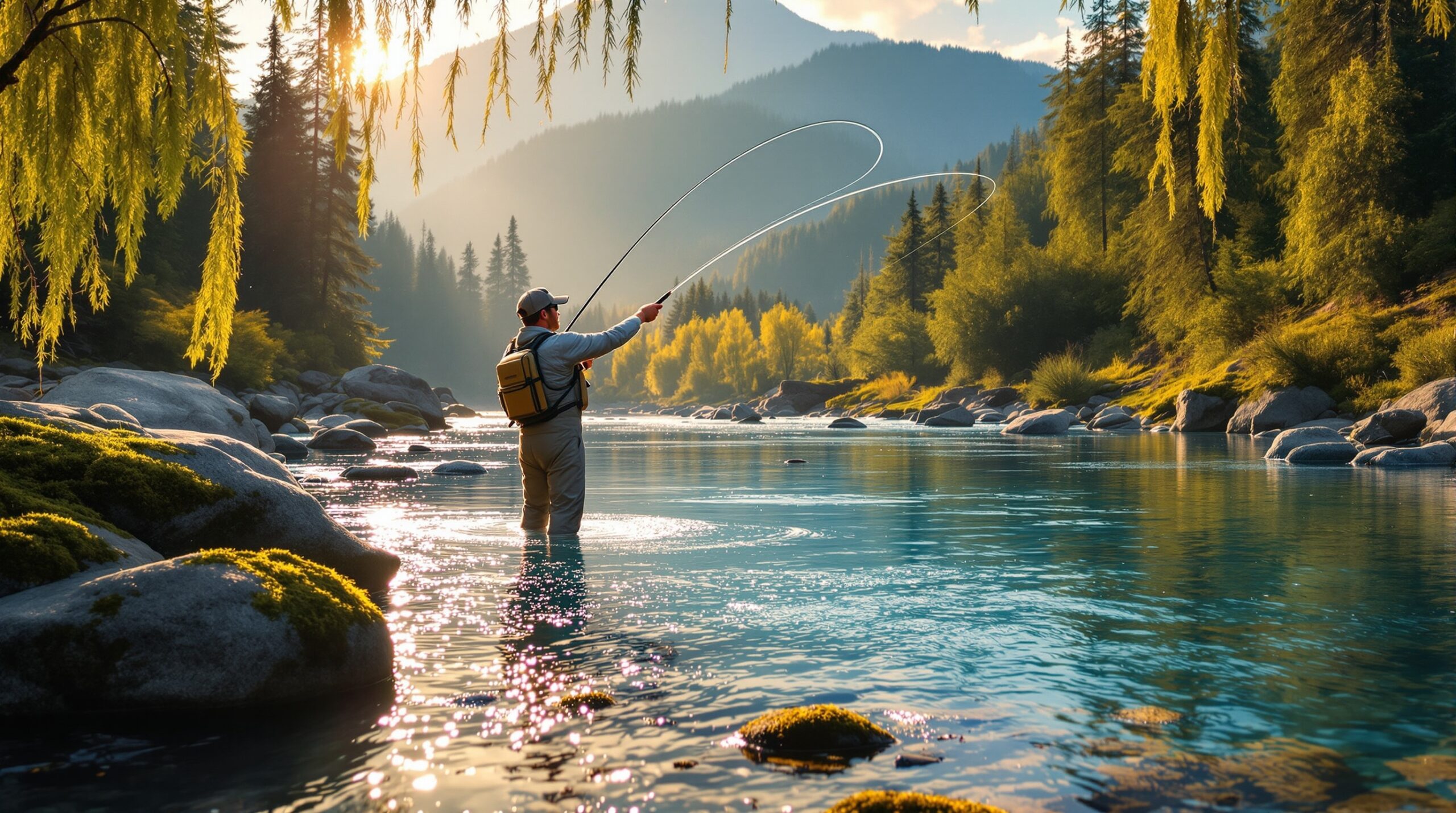
Fly fishing for beginners presents unique complexity because it combines athletic skill, ecological knowledge, and equipment expertise into a single activity. The primary challenge lies in casting mechanics. Where conventional fishing requires one fluid throwing motion, fly casting demands four coordinated phases: pickup, backcast, forward cast, and presentation. This biomechanical complexity contradicts natural throwing instincts, requiring dedicated practice to develop muscle memory.
Casting demands timing and rhythm rather than power. Joan Wulff, fly-casting Hall of Famer, explains that “The biggest mistake beginners make is trying to use force rather than technique. Fly casting is about timing and efficient energy transfer, not muscle. When new anglers understand that the rod does the work if they let it, everything changes” (Joan Wulff Fly Fishing). This counterintuitive approach means beginners must unlearn the instinct to throw harder when casts fall short.
Equipment selection creates immediate paralysis. The industry offers over 15 weight categories of rods, thousands of fly patterns, and specialized lines for different conditions. Beginners must make technical decisions before they understand the relevant variables. Walking into a fly shop without guidance can feel like being asked to choose between medical instruments without knowing which surgery you’re performing.
False expectations about casting distance undermine early confidence. Beginners often believe they need to cast 60+ feet to catch fish, when effective fly fishing for beginners typically occurs within 20-40 feet (Orvis Guide to Fly Fishing). This misconception causes novices to practice advanced techniques before mastering fundamentals, building poor form that becomes harder to correct later.
Water reading requires pattern recognition that develops only through experience. Successful anglers identify feeding lanes, holding water, and productive zones by recognizing subtle current patterns and depth changes. These skills can’t be learned from books alone. You might cast perfectly and present the right fly, but if you’re fishing barren water, you won’t catch anything.
Why Previous Fishing Experience Sometimes Hurts
Professional guide Landon Mayer notes that “People who’ve never fished before sometimes learn faster than experienced spin anglers because they don’t have to unlearn bad habits” (Landon Mayer). Conventional fishing’s power-based casting motion directly contradicts the finesse required for fly casting. Experienced anglers must consciously override ingrained muscle memory while complete beginners can build correct technique from the start. This explains why some newcomers progress faster than seasoned anglers who struggle to break old patterns.
Equipment Mistakes That Make Learning Harder
The wrong gear actively prevents skill development, yet beginners often receive contradictory advice about what constitutes appropriate starter equipment. The marketplace compounds this problem by offering specialized tools that experienced anglers need but novices don’t. Understanding which equipment actually matters during your first season saves both money and frustration.
Start with the “quiver-of-one” approach. A 9-foot, 5-weight rod outfit with weight-forward floating line handles approximately 80% of beginner fishing situations, from small streams to modest rivers and lakes. Specialized equipment becomes relevant only after you’ve identified specific needs through actual fishing experience. This single setup lets you focus on learning techniques rather than managing multiple rod systems.
Knot failure causes more lost fish than any other factor. Improperly tied knots account for approximately 80% of line failures in fly fishing (International Game Fish Association). Beginners should master five essential knots: improved clinch, surgeon’s knot, nail knot, perfection loop, and double surgeon’s loop. Practice each until you can tie it in poor light without reference materials. Those fishless days often result from preventable equipment failures, not poor technique.
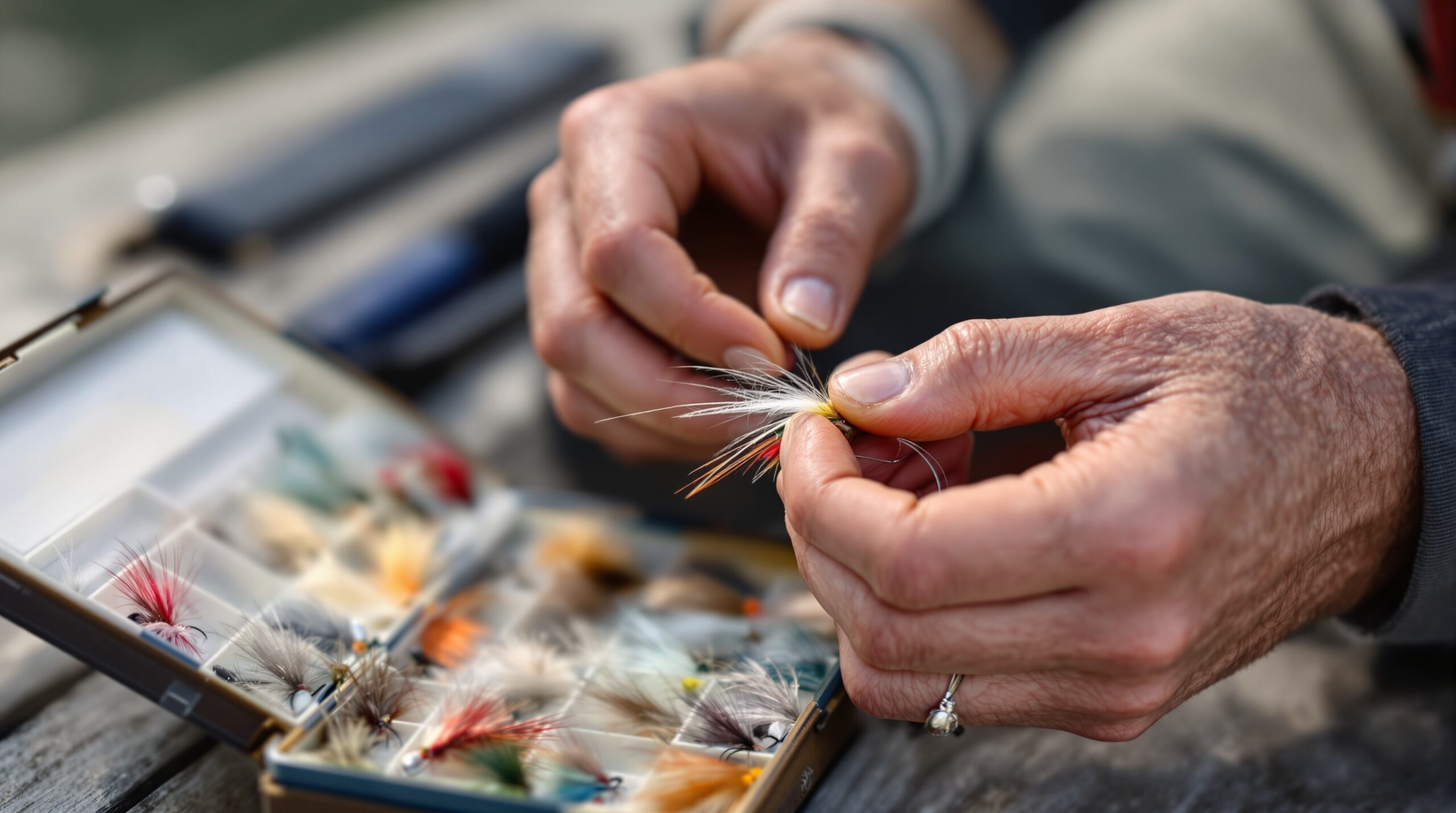
Fly selection overwhelms without local guidance. Rather than building comprehensive collections, beginners should purchase curated starter selections from local fly shops whose staff understand which patterns actually produce fish in regional waters. A dozen proven patterns matched to your home waters outperform a hundred generic flies that may never see feeding fish in your area.
Visible flies accelerate learning. Begin with larger, high-floating dry flies in sizes 12-16 like Elk Hair Caddis, Parachute Adams, and Royal Wulff that remain visible in various light conditions. The visual connection between presentation and fish response creates essential feedback that subsurface nymphs can’t provide during early learning. Watching a trout rise to take your fly teaches more about timing and presentation than a hundred unseen underwater takes. For more guidance on common beginner fly fishing mistakes, consider reviewing fundamental errors before they become habits.
The most productive gear investment for fly fishing for beginners isn’t premium equipment but rather simplified, appropriate starter systems that reduce decision fatigue and allow focus on skill development rather than equipment troubleshooting.
Proven Strategies to Accelerate Your Learning Curve
Strategic practice and realistic expectations dramatically shorten the path from frustration to competence. Research on skill acquisition confirms that structured, progressive learning outperforms unguided trial-and-error approaches. These evidence-based methods help fly fishing for beginners become manageable rather than overwhelming.
Practice casting on grass before fishing. Dedicate 15-20 minute sessions to casting mechanics on open grass using bright-colored yarn instead of flies. This eliminates the distraction of trying to catch fish while making your leader visible and removing hook-related frustrations. Video yourself and compare your motion to instructional content, or practice near a window where you can observe your reflection. Master the basic overhead cast at 20-30 feet before attempting longer distances.
Time your entry strategically. Fish activity levels vary dramatically by season, with spring and fall typically offering 3-4 times more surface feeding opportunities than summer or winter. Beginners who start during peak seasons experience faster success rates and higher retention. If you’re learning in summer, focus your outings on early morning or evening rather than midday when fish are less active.
Hire a guide for your third trip, not your first. Professional instruction provides maximum value after you’ve developed basic casting competency. Use initial outings to practice fundamentals, then invest in guidance when instructors can focus on water reading, fly selection, and presentation refinements rather than correcting basic casting errors. This timing gets you the most value from the guide fee investment.
Fish during peak activity windows. Schedule outings for the first two hours after sunrise or final two hours before sunset when fish feed most actively. Midday summer fishing is possible but significantly more challenging, increasing frustration for anglers still developing core skills. Planning around fish behavior rather than your own convenience dramatically improves your chances of early success.
Join local fly-fishing clubs for mentorship. Community organizations provide group outings to productive waters, casting clinics that supplement individual practice, and social accountability that maintains motivation during skill plateaus (Trout Unlimited). Fishing alongside experienced anglers provides observational learning opportunities that accelerate development more efficiently than solo practice. You’ll pick up techniques and local knowledge that would take years to discover independently. If you’re just starting out, our comprehensive guide on how to fly fish covers the fundamentals in depth.
Common Practice Mistakes to Avoid
Don’t attempt to “power through” casting difficulties. Poor form practiced repeatedly becomes ingrained habit requiring significant effort to correct later. Avoid fishing in crowded areas where performance anxiety increases pressure and reduces learning opportunities. Resist changing fly patterns constantly; confidence in your presentation matters more than perfect fly selection for beginning anglers. Don’t invest in equipment upgrades before understanding what specific performance characteristics you actually need. These mistakes slow progress more than any lack of natural ability. When you encounter unfamiliar terminology, our fly fishing glossary explains essential equipment terms clearly.
Conclusion
Fly fishing for beginners feels difficult because it is difficult, but the challenge comes from tackling too many complex elements at once rather than from insurmountable barriers. The sport becomes manageable when you simplify equipment choices with a 9-foot, 5-weight outfit and local fly selection, focus on foundational casting mechanics through dedicated grass practice, maintain realistic distance expectations of 20-40 feet of effective range, master essential knots before advancing technique, and time your learning during peak fishing seasons. The 40% of beginners who abandon the sport within their first year aren’t less capable. They simply encountered predictable obstacles without the structured approach that transforms frustration into competence. Start with these evidence-based strategies, and you’ll join the anglers who persist past the initial learning curve toward a lifetime pursuit. Consider what aspect of fly fishing interests you most, then direct your early practice toward that specific skill rather than trying to master everything at once.
Frequently Asked Questions
What makes fly fishing for beginners so difficult compared to regular fishing?
Fly fishing requires mastering four distinct casting phases (pickup, backcast, forward cast, presentation) instead of one simple throwing motion. It also demands timing and finesse over power, plus understanding of aquatic ecosystems and specialized equipment.
What equipment do I need to start fly fishing as a beginner?
Start with a 9-foot, 5-weight rod outfit and weight-forward floating line. This setup handles 80% of beginner situations. Add a dozen local fly patterns recommended by your regional fly shop rather than buying large generic collections.
How far do I need to cast when fly fishing?
Effective fly fishing for beginners typically occurs within 20-40 feet, not the 60+ feet many newcomers believe they need. Focus on accuracy and presentation at shorter distances before attempting longer casts.
Why do I keep losing fish when fly fishing?
Approximately 80% of lost fish result from improperly tied knots rather than poor technique. Master five essential knots: improved clinch, surgeon’s knot, nail knot, perfection loop, and double surgeon’s loop before focusing on casting.
When is the best time to start learning fly fishing?
Spring and fall offer 3-4 times more feeding opportunities than summer or winter. Within any season, fish the first two hours after sunrise or final two hours before sunset when fish are most active.
Should I practice fly casting before going fishing?
Yes, practice casting on grass for 15-20 minutes using bright yarn instead of flies. This eliminates fishing distractions and lets you focus on mastering the four-phase casting motion at 20-30 feet before attempting longer distances.
Sources
- Orvis Guide to Fly Fishing – Comprehensive casting instruction, equipment recommendations, distance expectations, and beginner technique guidance
- International Game Fish Association – Research on knot failure rates, line testing standards, and equipment performance data
- Trout Unlimited – Conservation-focused community programs, mentorship initiatives, and beginner-friendly organizational structure
- Joan Wulff Fly Fishing – Expert casting instruction philosophy, biomechanics of fly casting, and technique versus force approaches
- Landon Mayer – Professional guide perspectives on teaching methodologies, skill progression sequencing, and beginner psychology