
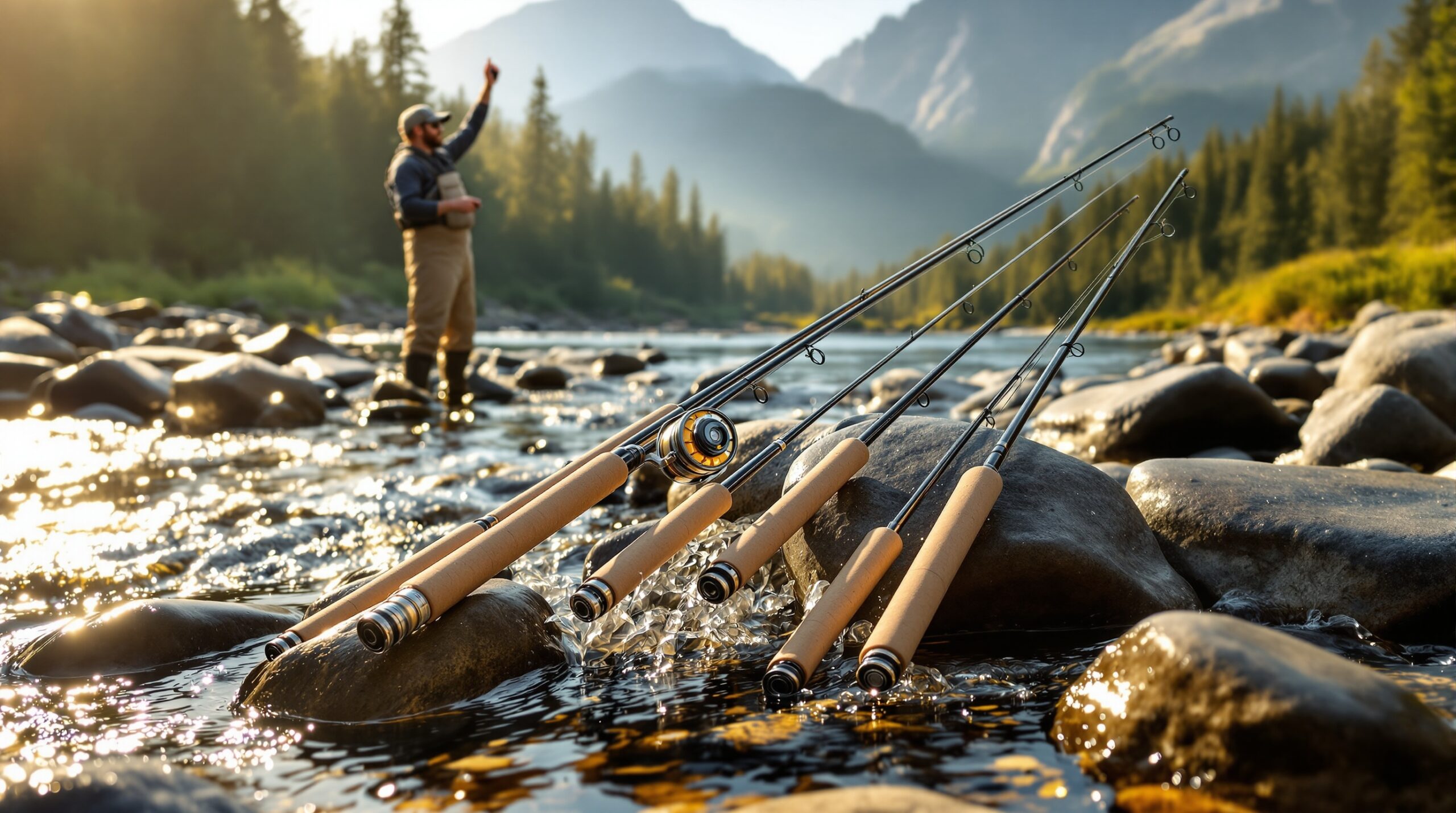
Most fly anglers struggle with rod weight selection, yet this single decision affects casting performance, presentation quality, and fish-fighting success more than any other tackle choice. The right fly rod weights transform difficult casts into effortless presentations and turn hooked fish into landed memories. According to industry data, approximately 70% of freshwater fly anglers use rods in the 4-6 weight range for trout fishing, reflecting the versatility these mid-weights offer for recreational fishing.
The AFTMA weight standard provides a 1-14 scale that creates consistency across manufacturers. Understanding which weight suits your specific fishing situation requires analyzing fly sizes, environmental conditions, and target species. This guide explains the rod weight system, matches weights to fishing scenarios, and provides decision frameworks for building effective tackle systems that perform across diverse angling situations.
Quick Answer: Fly rod weights range from 1-14, with each number corresponding to specific fly sizes and fishing applications. Choose based on the flies you’ll cast most often: 1-3 weights for tiny flies, 4-6 weights for general trout fishing, 7-9 weights for bass and large trout, and 10-14 weights for saltwater species.
Key Evidence: Industry guidelines show that rod weights correlate directly with optimal fly size ranges across all fishing applications.
Context: Matching rod weight to fly size ensures proper line loading and casting performance regardless of target species size.
Key Takeaways
The AFTMA standard created a universal 1-14 weight scale ensuring consistency across manufacturers. Fly size determines rod weight more accurately than target species size. Cast what loads your rod properly. Environmental conditions like wind and stream size often supersede species-based recommendations. Mid-weight versatility makes 5-weight rods the most popular choice for beginning freshwater anglers. Specialized applications require dedicated rod weights rather than compromise-oriented systems.
Understanding the Fly Rod Weight System
The American Fishing Tackle Manufacturers Association established numbered weight ratings from 1-14 that correlate with specific line weights measured in grains for the first 30 feet. This AFTMA standardization creates a universal language for fly tackle. Anglers can match rods, lines, and leaders systematically regardless of equipment brand or manufacturer.
Each weight represents the rod’s power to cast specific line weights and fly sizes, creating balanced tackle systems. A 3-weight rod casts 3-weight line most effectively, while a 9-weight rod requires 9-weight line for optimal performance. Understanding this correlation prevents mismatched tackle systems where rod power cannot load properly with intended fly sizes.
Weight differs from action, an important distinction many anglers overlook. Modern manufacturing allows identical weight ratings in fast, medium-fast, medium, and slow actions. Weight indicates power while action describes bend profile. Two 5-weight rods can perform dramatically differently based on action characteristics affecting casting style and presentation requirements.
According to Tom Rosenbauer, “The most important consideration is matching rod weight to the size flies you’ll cast most often, not necessarily the size fish you hope to catch.” This perspective from the Orvis Fly Fishing Podcast focuses on casting performance as the primary selection criterion. Fish-fighting capability becomes a secondary consideration addressed through proper technique rather than brute force.
The rod weight system provides universal classification. Any properly matched rod, line, and leader combination performs consistently regardless of manufacturer. This standardization allows anglers to purchase tackle with confidence that a 5-weight rod from any reputable manufacturer will cast a 5-weight line effectively.
How Rod Weight Affects Your Casting
Rods must flex properly to store and release energy during the casting stroke. This loading principle forms the foundation of effective fly casting. Undersized rods won’t load with small flies at short distances, while oversized rods won’t load without substantial line extended beyond the rod tip.
Casting efficiency varies dramatically across weight classes. Light rods require delicate timing and smooth acceleration, rewarding technical precision. Heavy rods forgive timing errors but demand more physical effort to generate line speed. Proper weight matching reduces casting fatigue during extended fishing sessions, allowing you to maintain technique and presentation quality throughout the day.
Matching Fly Rod Weights to Fishing Situations
Fly size correlation provides the most reliable selection framework. Rods in the 1-3 weight range handle flies sized #18-24, perfect for midges and small mayflies on technical spring creeks. The 4-6 weight category accommodates flies from #10-18, covering most trout dry flies and nymphs. Weights 7-9 cast flies from #2-10, including large streamers and bass poppers. The 10-14 weight range delivers large streamers and saltwater patterns sized #5/0-2.
For freshwater trout applications, 3-4 weights excel on small streams and technical spring creeks where delicate presentation on fine tippets matters most. The 5-weight rod serves as the versatile all-around choice, handling everything from size 16 caddis to weighted stonefly nymphs. Western rivers with wind and larger fish demand 6-7 weights that maintain control in challenging conditions.
Bass fishing requirements shift based on fly selection and target species. Smallmouth bass with smaller flies work well with 5-7 weights, particularly on streams and rivers. Largemouth bass requiring larger poppers and streamers need 7-9 weights to turn over wind-resistant patterns and control aggressive fish in heavy cover.
Saltwater applications establish higher baselines than freshwater fishing. Saltwater fly-fishing guides consistently recommend 8-weight rods as the minimum for most inshore species, with 10-12 weights standard for larger gamefish like tarpon and permit. Wind-resistant fly requirements and fish-fighting power needs drive these recommendations.
Professional guide Landon Mayer offers practical perspective: “I’d rather fish a 6-weight rod for 14-inch trout in high wind than struggle with a 4-weight in the same conditions. Rod weight should match your casting environment first, then your target species.” This field-oriented approach from Landon Mayer’s Fly Fishing Guide reflects decades of experience where casting effectiveness determines angling success.
Geographic factors significantly impact rod weight effectiveness. Professional guides report that wind conditions, stream size, and vegetation proximity create practical limitations often superseding species-based criteria. A 4-weight rod performs beautifully on sheltered Eastern limestone streams but struggles on exposed Western tailwaters where constant wind demands heavier tackle.
Select rod weight based on flies you’ll cast 80% of the time, not the occasional oversized pattern or dream fish you hope to encounter. This practical approach provides consistent casting performance rather than compromise systems that handle everything poorly.
Species-Specific Weight Guidelines
Trout fishing typically employs 3-6 weights depending on stream size and fish size. Smallmouth bass requires 5-7 weights balancing finesse and power. Largemouth bass demands 7-9 weights for typical fly sizes. Carp fishing uses 6-8 weights providing stealth and power balance. Bonefish needs 7-9 weights, while permit requires 9-10 weights. Tarpon demands 10-12 weights, and offshore species need 12-14 weights.
These serve as baselines requiring adjustment for specific fly selections and conditions. A tarpon angler throwing small flies to juvenile fish might choose an 8-weight, while someone targeting 100-pound fish needs a 12-weight regardless of fly size.
When to Adjust Weight Up or Down
Add one rod weight for consistent wind, heavily weighted nymphing rigs, accuracy requirements in tight quarters, or rapid fish control needs in warm water. Wind creates the single most common reason to increase rod weight, as heavier tackle generates line speed that penetrates breezy conditions.
Reduce one weight for protected spring creeks, clear water with leader-shy fish, or small streams prioritizing delicate presentation over power. Environmental variables create practical limitations requiring flexibility from standard recommendations. A beginner’s first fly rod should account for typical fishing conditions rather than ideal scenarios.
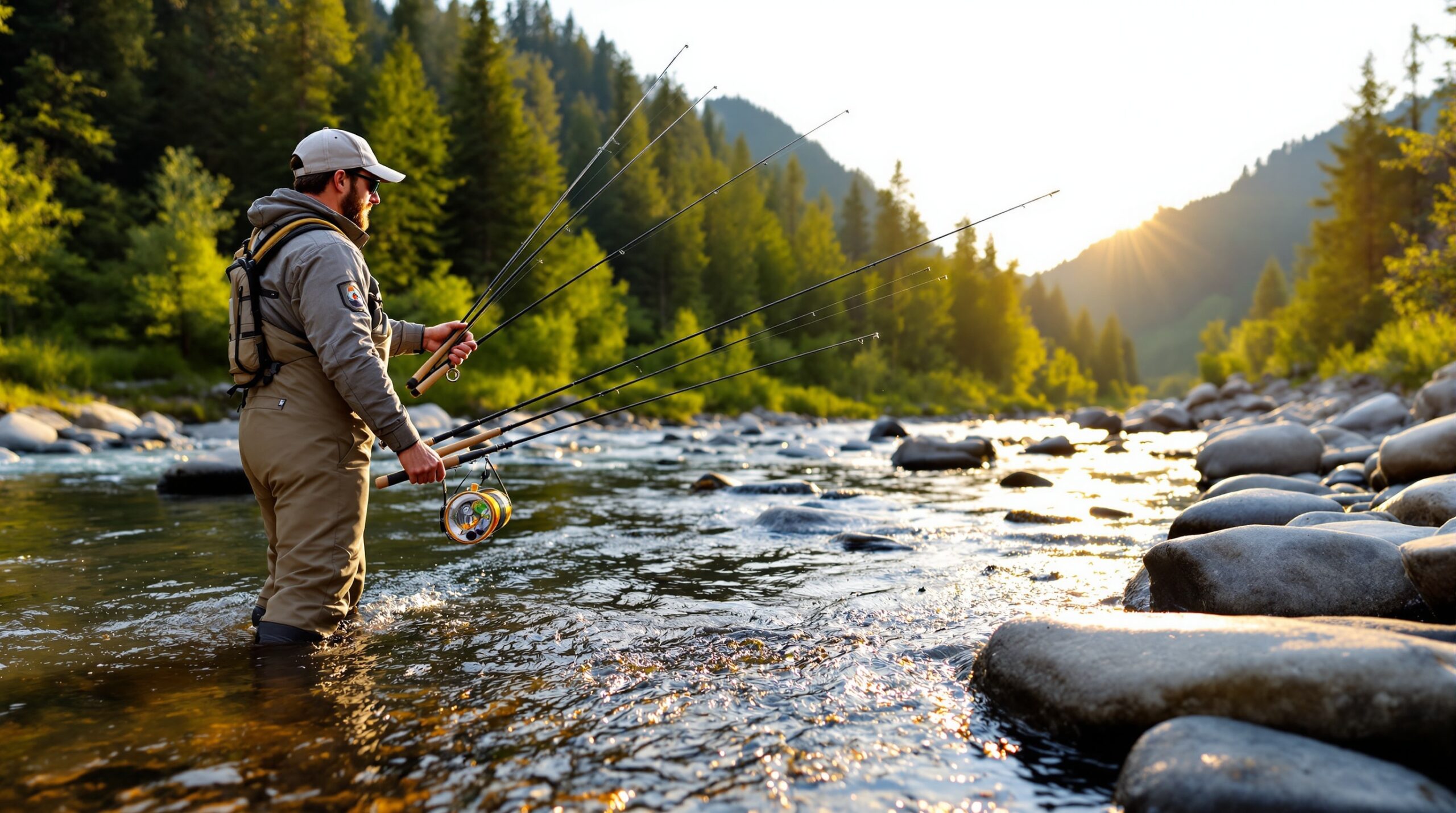
Building Your Fly Rod Weight Collection
Begin with a 5-weight, 9-foot rod for freshwater or an 8-weight, 9-foot rod for saltwater. These mid-range options handle the broadest conditions while supporting skill development. Starting with extreme weights (either ultralight or heavy specialty rods) complicates learning fundamental casting mechanics.
Survey data shows experienced anglers typically own 3-5 rods spanning different weight classes. This multi-rod approach recognizes that diverse fishing situations merit specialized tools. The “one-rod quiver” philosophy continues declining as anglers recognize performance gains from matched tackle, similar to golfers carrying multiple clubs for different shots.
An effective three-rod freshwater system includes a 3-weight for small streams, a 5-weight for general trout fishing, and an 8-weight for bass and pike. Each rod addresses distinct scenarios without overlapping. A three-rod saltwater system might include an 8-weight for inshore species, a 10-weight for tarpon and permit, and a 12-weight for offshore big game.
Kelly Galloup offers perspective on power-oriented fishing: “When you’re throwing large flies to big fish, you need the rod weight to turn over heavy, wind-resistant patterns and control aggressive fish quickly.” This viewpoint from the Slide Inn prioritizes effectiveness with specific techniques over universal versatility.
Manufacturers increasingly produce multiple distinct tapers within single weight ratings, creating “presentation” versus “all-around” versus “power” versions. This specialization allows fine-tuning based on technique preferences without moving to different weight classes. A presentation 5-weight prioritizes delicate delivery, while a power 5-weight approaches 6-weight performance.
Avoid common mistakes when building your collection. Don’t select based solely on the largest hoped-for fish. Proper technique lands large fish on surprisingly light tackle. Don’t purchase ultra-fast heavy actions without advanced casting skills, as these powerful rods magnify timing errors. Don’t buy ultralight rods as primary tools for average conditions, as these specialized rods prove frustrating in typical trout fishing.
Test rods with actual fly sizes and techniques before purchasing. Try wind-casting on breezy days if wind is common in your fishing environments. Verify proper loading at distances you typically fish. Check extended casting comfort, particularly important for heavier saltwater rods that accumulate fatigue over long fishing days.
Conclusion
Choose fly rod weights based primarily on fly sizes you’ll cast most frequently, adjusted for environmental conditions like wind and stream size, with target species as a secondary consideration. Proper rod weight matching provides efficient casting, effective presentation, and ethical fish fighting across all angling scenarios.
The AFTMA standard provides a reliable foundation for building balanced tackle systems regardless of manufacturer. Begin with versatile mid-weight systems (5-weight for freshwater or 8-weight for saltwater), then add specialized weights as you identify specific fishing preferences through experience. Test rods with actual flies and techniques before purchasing, prioritizing casting comfort and loading characteristics over theoretical specifications. The right rod weight transforms challenging casts into confident presentations, connecting you more effectively with the fish and waters you pursue.
Frequently Asked Questions
What are different weight fly rods for?
Different fly rod weights handle specific fly sizes and fishing conditions. Weights 1-3 cast tiny flies for technical streams, 4-6 weights cover general trout fishing, 7-9 weights handle bass and large streamers, while 10-14 weights are designed for saltwater species and offshore fishing.
What weight should my fly rod be?
Choose rod weight based on flies you’ll cast 80% of the time. For freshwater trout, use 3-6 weights; for bass, 7-9 weights; for saltwater inshore, 8-10 weights. Beginners should start with a 5-weight for freshwater or 8-weight for saltwater as versatile options.
What is the 60/20/20 rule in fly fishing?
The 60/20/20 rule suggests spending 60% of your tackle budget on the fly rod, 20% on the reel, and 20% on the line. This prioritizes the rod as the most critical component for casting performance and fish control, with quality line as the second priority.
What does AFTMA standard mean in fly fishing?
The AFTMA standard created a universal 1-14 weight scale for fly rods based on line weight measured in grains for the first 30 feet. This standardization ensures any properly matched rod, line, and leader combination performs consistently across manufacturers.
Is rod weight the same as rod action?
No, rod weight indicates power while action describes bend profile. Weight determines what line size the rod casts effectively, while action affects casting style and presentation. Two rods of identical weight can perform dramatically differently based on their action characteristics.
What is the difference between freshwater and saltwater fly rod weights?
Saltwater fly fishing requires heavier rod weights due to larger flies, wind conditions, and stronger fish. Saltwater guides recommend 8-weight minimum for inshore species, while freshwater trout fishing typically uses 3-6 weights for most applications and conditions.
Sources
- [Orvis](https://www.orvis.com/fly-rod-selection) – Rod weight selection guidelines, fly size correlations, saltwater rod recommendations, and industry statistics on angler preferences
- [Fly Fishers International](https://flyfishersinternational.org/Learn/Education-Resources) – AFTMA standardization information, educational resources on rod weight systems, and angler survey data
- [Trout Unlimited](https://www.tu.org/conservation/) – Environmental factors affecting rod selection and conservation-minded tackle recommendations
- [Sage Fly Fishing](https://www.sageflyfish.com/rod-technology) – Technical information on rod action versus weight and modern manufacturing techniques
- [Orvis Fly Fishing Podcast](https://www.orvis.com/fly-fishing-podcast) – Expert commentary from Tom Rosenbauer on tackle selection philosophy
- [Landon Mayer’s Fly Fishing Guide](https://www.landonmayer.com/) – Professional guide perspectives on environmental factors in rod weight selection
- [Slide Inn](https://www.slideinn.com/) – Kelly Galloup’s expert guidance on predator fishing and streamer techniques with appropriate rod weights