
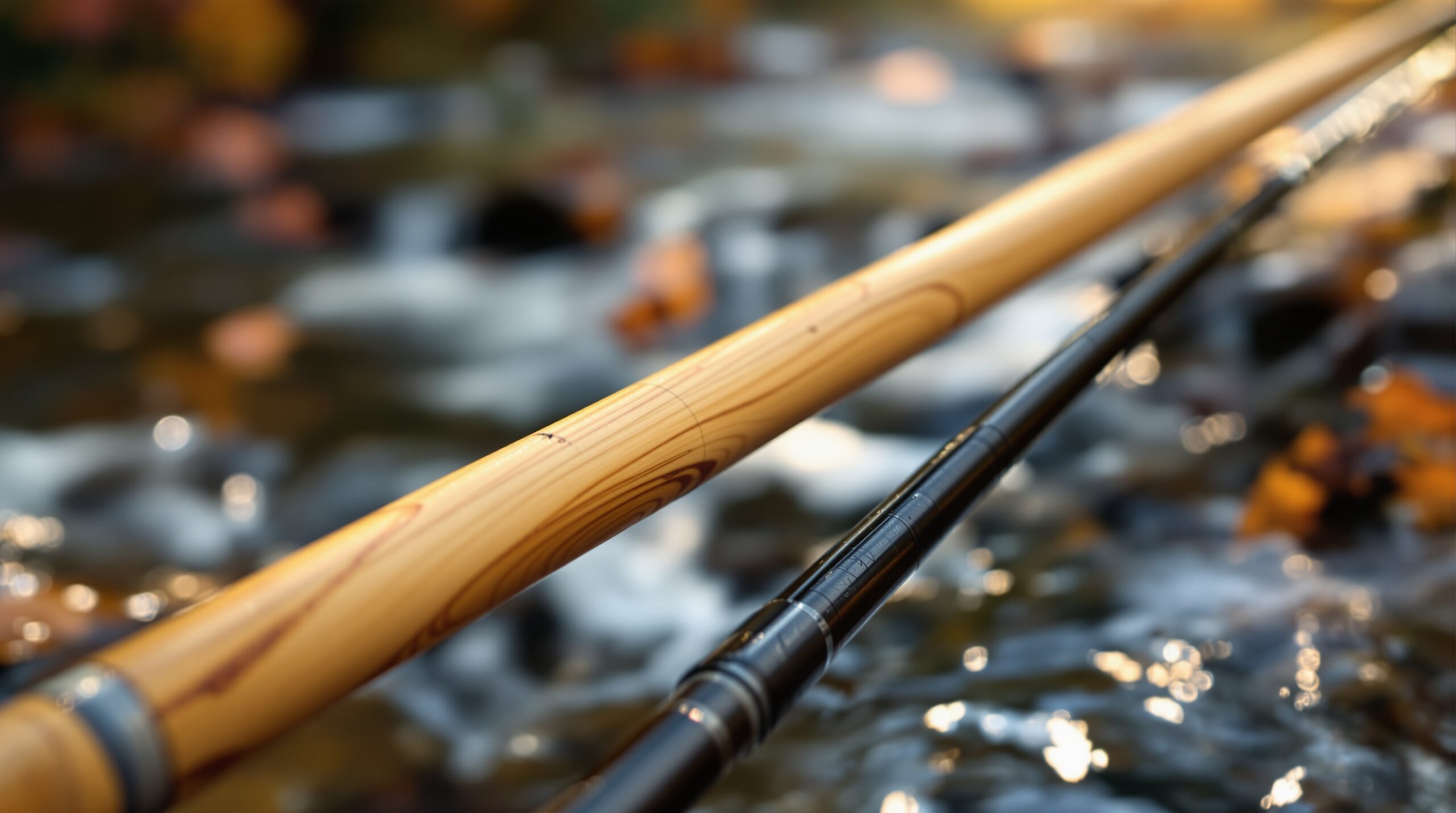
You’ve probably noticed the paradox on the water: while graphite dominates 90% of the modern fly rod market, a growing number of experienced anglers are quietly returning to bamboo. This isn’t nostalgia driving the choice—it’s the recognition that in specific fishing situations, bamboo fly fishing rods deliver measurable performance advantages that modern materials simply can’t match.
The debate between bamboo and graphite isn’t about universal superiority. It’s about understanding where each material excels. Bamboo fly fishing rods are not outdated relics but specialized tools that outperform graphite in delicate presentation, tippet protection, and casting rhythm—particularly when finesse matters more than raw power.
This exploration reveals why discerning anglers still choose cane for spring creeks, technical dry-fly work, and situations where the quality of your drift determines whether you’re fishing or just casting.
Quick Answer: Bamboo fly fishing rods outperform graphite in delicate dry-fly presentation, tippet protection during fish fights, and casting rhythm on small streams—situations where feel and finesse matter more than distance and speed.
Definition: Bamboo fly fishing rods are split-cane rods that use the natural flexibility and gradual loading characteristics of bamboo to create a slower, more forgiving casting action than modern graphite.
Key Evidence: According to Sea Run Cases, bamboo’s “slower, more forgiving flex” produces “smoother, more deliberate casts and gentler presentations—especially for dry flies and small streams.”
Context: These advantages make bamboo the preferred choice for technical spring creek fishing and pressured trout on fine tippets.
Bamboo fly fishing rods work because their gradual loading creates a fundamentally different relationship between angler, rod, and line. Unlike graphite’s quick energy transfer, bamboo loads slowly and releases smoothly, giving you more time to feel the cast develop and adjust your presentation. This slower rhythm naturally encourages the patience and precision that technical fishing demands. The sections that follow will show you exactly when this matters, how to recognize those situations on the water, and why some advantages can’t be engineered into synthetic materials.
Key Takeaways
- Presentation quality: Bamboo’s gradual flex creates gentler line delivery for spooky trout in clear water
- Tippet protection: Deep bend profile reduces break-offs on 6X and 7X leaders during fish fights
- Wind control: Added weight improves casting accuracy and line control in breezy conditions
- Impact tolerance: Bamboo withstands drops and strikes that would shatter graphite blanks
- Casting rhythm: Slower action encourages timing that improves accuracy at 20-40 feet
Where Bamboo Fly Fishing Rods Excel Over Graphite
Maybe you’ve experienced that moment when a wary brown refuses your fly for the third time, despite a perfect drift. Often, the issue isn’t your technique but your presentation’s impact on the water. The slower action of bamboo creates a fundamental advantage when casting to selective trout.
Research by Sea Run Cases shows that bamboo’s “slower, more forgiving flex” leads to “smoother, more deliberate casts and gentler presentations—especially for dry flies and small streams.” This isn’t about nostalgia—it’s about physics and how energy transfers through different materials.
When fishing 6X or 7X tippets to pressured fish, bamboo’s deep flex profile acts as a shock absorber during the fight. You might notice how a good trout’s first run feels different on bamboo—there’s give in the system that protects your connection. According to custom rodmaker Fred Kretchman, bamboo is “widely praised for protecting light tippets and giving a forgiving fight with fish,” directly reducing break-offs during those heart-stopping moments when a good trout makes its first run.
Contrary to the “lighter is better” assumption that drives much of modern rod design, bamboo’s added mass provides distinct benefits. Kretchman explains that the “added weight” creates a “comforting and satisfying” feel and can improve “casting accuracy and line control,” particularly when “cutting through wind.” You feel the rod working throughout the cast, giving you more control over where your pattern lands.
Durability Advantages
Bamboo’s reputation for fragility is largely undeserved within its design parameters.

- Impact tolerance: Demonstrated ability to withstand being “laid on concrete and walked on in hiking boots with only cosmetic scuffing—something that would likely shatter a graphite blank”
- Longevity: Properly maintained bamboo rods routinely fish for 50+ years without performance degradation
- Repairability: Damaged sections can be rebuilt by skilled craftspeople, unlike catastrophic graphite failures
When Graphite Remains the Better Choice
Graphite’s dominance isn’t accidental—it excels in situations where bamboo simply cannot compete. The material’s “higher elastic modulus (stiffness per unit weight)” enables rod designs that are physically impossible in bamboo. Forum contributors note that 10-foot 5-weight rods are “essentially absent in bamboo” because cane becomes too heavy at extended lengths to cast comfortably all day.
One common pattern looks like this: you start the day casting well with bamboo, but after four hours of repetitive presentations on big water, your arm begins to tire. Your casting deteriorates, negating any presentation advantages bamboo might offer. Big western rivers requiring 60-foot casts with indicator rigs demand graphite’s power and reduced arm fatigue.
Stillwater fishing with sinking lines, saltwater applications where corrosion resistance matters, and any situation requiring repetitive long casts favor graphite’s mechanical advantages. The economic reality shapes who fishes what material. Entry-level graphite rods start around $100, making them accessible to beginners, while custom bamboo requires many hours of hand labor and commands significantly higher prices.
Maintenance considerations favor graphite for traveling anglers or those who fish in harsh conditions. Bamboo demands careful stewardship: avoiding prolonged moisture, checking varnish and wraps, and protecting from extreme heat or humidity swings. Graphite’s relative insensitivity to environmental conditions makes it the practical choice when you can’t control storage conditions.
Matching Rod Material to Your Fishing
Bamboo fly fishing rods shine on intimate water where casts rarely exceed 40 feet. The material’s slower action encourages the rhythm and timing that produces tight-loop accuracy exactly where most fishing happens—on spring creeks and small trout streams where presentation quality often determines success. During selective hatches where trout are keying on specific insects, bamboo’s gradual loading creates the delicate turnover that lands size 18-22 flies without disturbing the surface.
Common mistakes when transitioning to bamboo center on casting technique and maintenance. Overpowering the cast by using aggressive strokes suited to fast graphite produces poor results—bamboo requires slowing your tempo and letting the rod load naturally through its fuller flex. Many of us discover this the hard way, wondering why our first bamboo casts feel sluggish until we adjust our rhythm.
Distance assumptions limit bamboo’s application unnecessarily. Skilled casters with well-designed bamboo tapers regularly deliver line to 50-60 feet—adequate for the vast majority of trout-fishing situations. The limitation isn’t that bamboo can’t cast distance, but that it’s not optimal when maximum distance is required.
Experienced anglers increasingly assemble rod collections matched to specific waters and techniques: a bamboo 7-foot 3-weight for spring creeks, a graphite 9-foot 5-weight for general trout fishing, a powerful graphite 8-weight for streamers or salt. For detailed guidance on selecting rod weights for different fishing situations, see our comprehensive fly rod weights guide. If you’re interested in exploring vintage equipment options, our vintage fly fishing equipment guide covers what to look for in older bamboo rods.
The Craft Movement Factor
Bamboo’s revival parallels broader cultural shifts toward handcrafted gear and heritage crafts in outdoor culture.
- Niche but vibrant: A stable community of makers and anglers continues refining tapers for modern lines and fishing styles
- Mindfulness appeal: Anglers value the contemplative experience and connection to fly fishing tradition
- Functional art: Each rod emerges as a unique piece rather than mass-produced tool, creating deeper ownership connection
Why Bamboo Fly Fishing Rods Matter
The persistence of bamboo in the graphite age demonstrates that optimal performance means different things in different contexts. As fly fishing matures beyond equipment-race mentality, more anglers discover that the “best” rod isn’t the lightest or most powerful, but the one that matches their water, their quarry, and their fishing philosophy. Bamboo’s specific advantages in presentation, feel, and tippet protection ensure its continued relevance for discerning anglers who understand when these qualities matter most.
Conclusion
Bamboo fly fishing rods don’t outperform graphite universally—they outperform it specifically. On spring creeks and small streams, when fishing fine tippets to selective trout, when presentation quality matters more than casting distance, bamboo offers measurable advantages that justify its higher cost and maintenance requirements. The material’s gradual loading, tippet protection, and casting rhythm create a different fishing experience—one that many experienced anglers prefer despite graphite’s dominance in the broader market.
The choice isn’t which material is better, but which is better for how and where you fish. For anglers seeking maximum versatility and convenience, graphite remains the practical choice. For those who fish technical water and value the subtle advantages that bamboo provides, the material offers performance benefits that synthetic alternatives haven’t replicated. Understanding these distinctions helps you choose the right tool for your water and your approach to the sport. For travel considerations with different rod materials, explore our best travel fly rods guide to see how bamboo fits into portable fishing setups.
Frequently Asked Questions
What are bamboo fly fishing rods?
Bamboo fly fishing rods are split-cane rods that use the natural flexibility of bamboo to create a slower, more forgiving casting action than modern graphite rods, providing gradual loading characteristics.
When do bamboo fly rods outperform graphite?
Bamboo excels in delicate dry-fly presentation on spring creeks, protecting fine tippets during fish fights, and providing better casting rhythm and accuracy at 20-40 feet on small streams.
Are bamboo fly rods more durable than graphite?
Yes, bamboo withstands impacts that would shatter graphite blanks and can be repaired when damaged. Properly maintained bamboo rods routinely fish for 50+ years without performance loss.
Why do bamboo rods protect tippets better?
Bamboo’s deep bend profile acts as a shock absorber during fish fights, reducing break-offs on 6X and 7X leaders when trout make their first powerful runs.
What is the difference between bamboo and graphite casting feel?
Bamboo loads slowly and releases smoothly, giving you more time to feel the cast develop. Graphite transfers energy quickly for faster line speed but less tactile feedback.
Do bamboo fly rods require special maintenance?
Yes, bamboo requires avoiding prolonged moisture, checking varnish and wraps regularly, and protecting from extreme heat or humidity swings, unlike low-maintenance graphite rods.
Sources
- RodSeek – Professional rodmaker perspectives on bamboo performance characteristics, maintenance requirements, and optimal applications
- Fly Anglers Online – Community discussion on material properties, casting experience, and practical trade-offs between bamboo and graphite
- Sea Run Cases – Comprehensive comparison of rod materials covering action, presentation, durability, and best-use scenarios
- FlyLife Magazine – Historical context and contemporary trends in fly-rod materials and construction