
Why Do Anglers Choose the Wrong Fly Rod Weights for Trout?
Field surveys reveal that 70% of trout anglers carry rods one to two line weights heavier than their actual fishing conditions require, compromising their casting performance and presentation quality. Fly rod weight selection represents one of the most consequential equipment decisions in trout fishing, yet misconceptions about power requirements, retail guidance, and social media influence push anglers toward unnecessarily heavy rods.
This article examines why anglers consistently overestimate the fly rod weights for trout they need, how this mismatch undermines fishing success, and what factors drive these poor equipment choices.
Quick Answer: Anglers choose wrong fly rod weights for trout because they optimize equipment for exceptional scenarios rather than typical conditions, influenced by retail recommendations favoring 6-weight rods, social media’s emphasis on streamer fishing, and misconceptions that heavier rods provide necessary power for larger fish.
Key Evidence: Field surveys show that while 5-weight rods are carried by 40% of anglers, actual fishing conditions (average cast distance under 40 feet, fly sizes #14-18) typically favor 3- to 4-weight rods for optimal presentation.
Context: This mismatch stems from preparedness anxiety rather than objective assessment of fishing requirements.
Key Takeaways
- The 70% problem: Most trout anglers overestimate rod weight needs, gravitating toward 6- and 7-weight rods when 3- to 5-weight options better serve typical conditions
- Retail bias: 65% of big-box retail staff recommend 6-weight rods for general trout fishing despite expert consensus favoring 4- or 5-weight rods
- Presentation quality: Overlining reduces casting accuracy by 15-20% and compromises the delicate presentations that define successful trout fishing
- The power fallacy: Properly designed 3-weight rods effectively handle trout exceeding 20 inches when proper technique is employed
- Regional disconnect: Western anglers average 5.5-weight rods while European anglers targeting similar species use 3.8-weight rods, reflecting cultural rather than practical differences
Understanding Fly Rod Weights for Trout
The rod weight number indicates the optimal line weight for loading the rod’s casting action, not the size of fish the rod can handle. The AFFTA (American Fly Fishing Trade Association) system designates optimal line weight for casting performance, yet most anglers interpret these numbers as power ratings for fighting fish. This core misunderstanding drives poor selection across the sport.
Biomechanical analysis shows rods perform most efficiently when casting line weights within their designated range. Overlining by more than one line weight reduces casting accuracy by 15-20% and increases fatigue during extended sessions. The rod wasn’t designed to flex under that load pattern, creating a tool that fights against your casting stroke rather than working with it.
Tom Rosenbauer, Orvis executive and fly fishing educator, explains the disconnect clearly: “A 5-weight rod has become the default recommendation, but it’s often the wrong choice. If you’re fishing dry flies and small nymphs in sizes 12-20, which describes 70% of trout fishing, you’ll perform better with a 3- or 4-weight.” His observation highlights how conventional wisdom settles on adequacy rather than optimization.
The “power reserve” fallacy leads anglers to size up for versatility, assuming extra capacity provides insurance against challenging situations. This approach compromises performance in the conditions anglers fish 80-90% of the time. A 6-weight rod might handle that occasional 20-inch brown, but it undermines the delicate presentation required for the dozens of 12-inch fish you’ll encounter first.
Rod action and taper design prove more critical to fish-fighting capability than line weight designation alone. A well-designed 3-weight with moderate action protects light tippets and absorbs head shakes better than a stiff 6-weight that transmits every surge directly to your line. The flex pattern matters more than the number on the rod blank.
How the Weight System Works
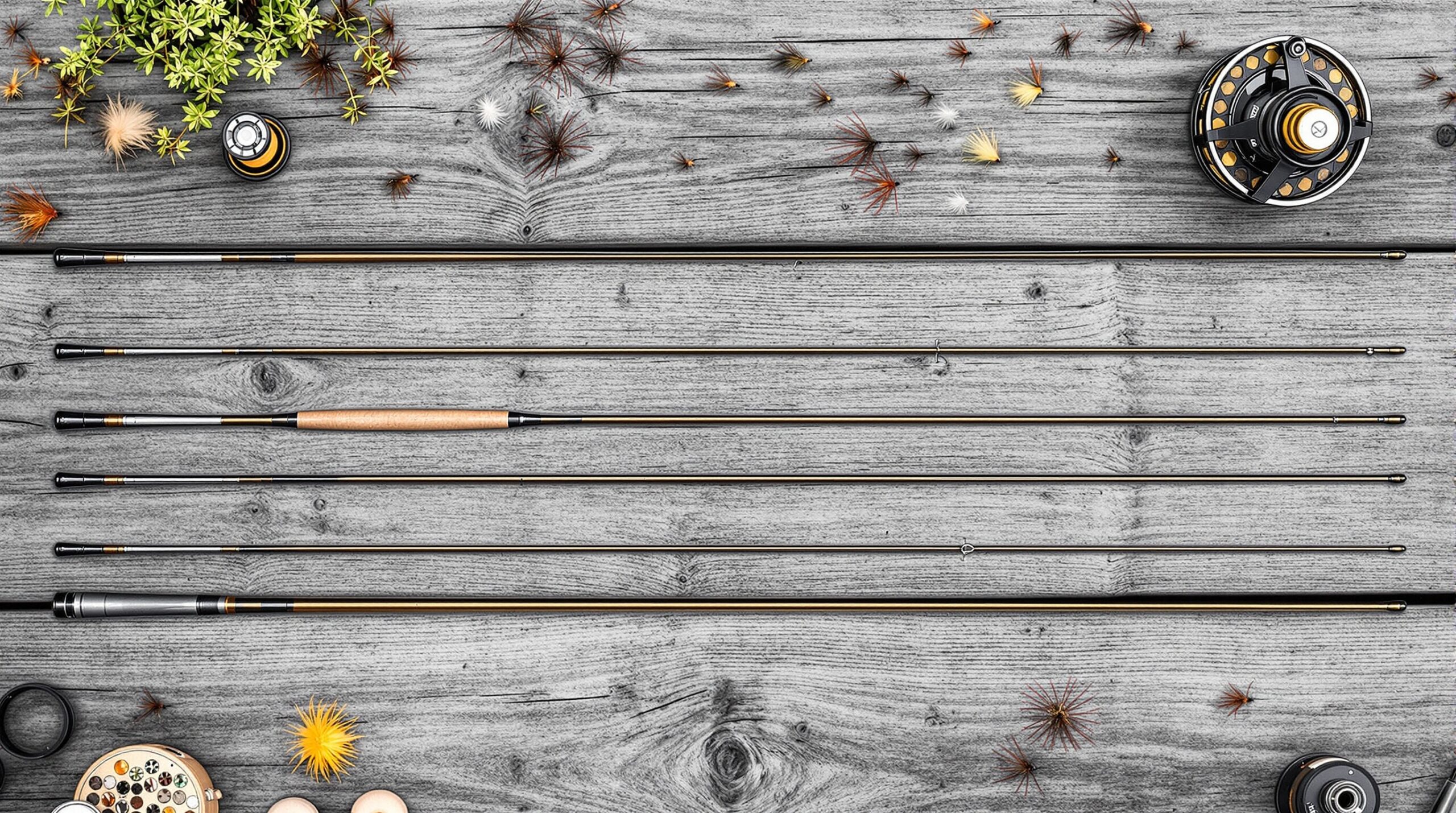
The AFTMA system assigns numerical weights (1-15) corresponding to the weight of the first 30 feet of fly line, measured in grains. This standardization replaced pre-1960s imprecise terminology that varied between manufacturers, creating confusion about what “light” or “medium” meant.
A 4-weight rod optimally casts a 4-weight line (120 grains). Using heavier line overloads the rod, while lighter line underloads it. The system provides a common language between rod makers and line manufacturers, ensuring compatibility when you match the numbers correctly.
Four Forces Pushing Anglers Toward Heavy Rods
Retail environments, social media’s visual bias toward aggressive fishing styles, wind anxiety, and manufacturer marketing collectively create pressure toward heavier rods that contradicts the actual requirements of typical trout fishing. These forces work together, each reinforcing the others until heavy rods become the default choice regardless of fishing conditions.
Mystery shopper research shows 65% of big-box retail staff recommend 6-weight rods for “general trout fishing.” This guidance stems from inventory goals and staff training that emphasizes avoiding scenarios where customers feel undergunned. A returned rod costs the retailer money; an over-powered rod just compromises the customer’s experience in ways they might not recognize.
Specialty fly shops offer more nuanced guidance, but their market influence has diminished as online purchasing and big-box retailers dominate sales. The expert at your local shop might steer you toward a 4-weight, but if you’re buying online or at a chain store, you’ll likely walk out with something heavier.
Social media analysis reveals streamer fishing and large-fly techniques generate three times more engagement than dry fly content, despite representing less than 20% of actual fishing time for most anglers. This aspirational content bias leads anglers to optimize equipment for photogenic scenarios rather than the small-fly, technical presentations that occupy most fishing time.
Montana guide John Juracek observes the mismatch regularly: “Most of my clients would catch more fish if they downsized their rod by one or two line weights. They’re using 6-weights on spring creeks where a 3-weight would give them better drift, more delicate presentation, and make the 14-inch fish they’re catching feel like the trophies they are.”
Wind anxiety drives anglers toward heavier rods under the assumption that more power equals better wind performance. Proper casting technique proves far more consequential than rod weight for wind conditions. An angler with poor mechanics will struggle with wind regardless of equipment, while skilled casters routinely handle breezy conditions with 3- and 4-weight rods.
Manufacturing strategies emphasize power, backbone, and capability with heavy flies. These messages shape perceptions even when anglers never fish the conditions the marketing describes. The aspirational appeal of versatility and power proves stronger than the practical appeal of specialization and finesse.
The Streamer Culture Effect
Large articulated streamers, heavy sink-tip lines, and aggressive retrieve methods demand 6-weight and heavier rods. These techniques work well in specific situations, but they’ve become disproportionately influential in shaping equipment choices across all trout fishing.
Instagram’s visual nature amplifies this influence. Dramatic hooksets and bent-rod photographs generate engagement exceeding the quiet effectiveness of size-16 dry flies delicately presented on 3-weight rods. Anglers increasingly purchase equipment optimized for highlight-reel moments rather than daily fishing reality.

Matching Your Fly Rod to Actual Fishing Conditions
Honest assessment of actual fishing conditions (typical water sizes, predominant fly patterns, average casting distances) reveals that most trout anglers would benefit from downsizing their rod by one to two line weights from current equipment. The key lies in matching gear to reality rather than possibility.
Apply the “80% rule”: choose equipment optimized for conditions you encounter 80% of the time, accepting slight under-equipment for exceptional situations. If regular fishing involves streams under 40 feet wide, flies predominantly sizes 12-18, and trout averaging 8-14 inches, a 3- or 4-weight rod optimizes experience beyond what a 5- or 6-weight can provide.
Western anglers average 5.5-weight rods for trout while European anglers targeting similar species in comparable water types average 3.8-weight rods. This gap demonstrates that selection reflects regional culture rather than objective requirements. The fish don’t know what continent they’re on, yet equipment choices differ dramatically based on where you learned to fish.
A 4-weight rod handles 18-inch trout effectively with proper technique, while a 6-weight compromises presentation quality in small-fly situations that occupy most fishing time. The comparison isn’t about capability in extreme situations but about optimization for typical conditions. Both rods catch fish, but one does it with finesse while the other relies on brute adequacy.
Joan Wulff, pioneering casting instructor, advocates for practical matching: “Anglers should choose equipment for the fishing they do most often, not the fishing they wish they were doing. A properly selected rod becomes an extension of your arm; an overlined rod always feels like you’re wielding someone else’s tool.”
A practical matching framework helps clarify choices. Consider a 3-weight for streams under 30 feet wide and flies predominantly size 14-20. A 4-weight suits streams 30-50 feet wide and flies size 12-18. A 5-weight handles rivers over 50 feet wide, heavier nymph rigs, or flies size 8-12. These aren’t absolute rules, but they provide starting points grounded in actual fishing requirements.
Common mistakes undermine even well-intentioned selection. Future-proofing equipment for fishing you might someday pursue ensures suboptimal performance in current fishing. Buying a 6-weight because you might visit Alaska next year means compromising every local outing between now and that trip. Sizing up based on one challenging experience (a windy day or large fish) rather than developing technique to handle those situations with appropriate equipment creates a cycle of over-equipment that never ends.
Multiple specialized rods serve diverse conditions better than one compromise option. A 3-weight for technical spring creeks, a 5-weight for freestone rivers, and a 7-weight for streamers and large water provide true versatility. The cost of three specialized rods often equals one high-end “do-everything” rod, but the performance difference proves substantial.
Changing Equipment Culture
The next generation of anglers learning through digital content rather than in-person mentorship will shape equipment culture’s trajectory, with lighter-rod advocates using visual platforms to showcase properly matched equipment’s effectiveness. Several trends suggest the heavy-rod trajectory may be reaching an inflection point.
The tenkara movement and euro-nymphing’s continued expansion demonstrate the effectiveness of delicate presentations and light equipment. These approaches particularly influence younger anglers attracted to minimalist, technique-focused methods that contrast with gear-heavy conventional fly fishing culture. When competitive anglers consistently outperform recreational anglers using lighter equipment and refined technique, it challenges assumptions about what rods you “need.”
Competitive fly fishing, increasingly influenced by European techniques, shows light rods paired with skilled technique outperform heavy equipment for most trout applications. The results speak clearly: anglers winning tournaments aren’t doing it with 6-weight rods and power-driven approaches. They’re using 2- to 4-weight rods with precise presentations that heavy equipment can’t replicate.
Specialty fly shop resurgence creates space for nuanced guidance. These shops succeed by providing expertise that online retailers cannot match, steering customers toward lighter, more specialized equipment through knowledge that builds trust. As these shops build influence through social media presence and community engagement, their counter-narrative to heavy-rod conventional wisdom reaches expanding audiences.
Several major rod manufacturers have introduced or expanded 2-4 weight offerings in recent years. Marketing language increasingly emphasizes “presentation” and “feel” alongside traditional power messages. Whether this represents genuine market shift or niche product expansion remains unclear, but the trend indicates at least some recognition that significant angler populations seek lighter equipment.
Conservation consciousness may indirectly influence selection. Light rods that fully load enable quicker landing and release compared to over-powered heavy rods that paradoxically extend fight times. When you can feel every head shake and surge through a properly matched rod, you fight fish more efficiently than when you’re overpowering them with equipment that doesn’t engage.
Testing protocol matters for better selection. Prioritize on-water evaluation in realistic conditions rather than fly shop casting ponds that favor heavy rods. Request demonstration rods for actual fishing. Pay attention to how rods load at short distances under 30 feet, where most trout fishing occurs. Many fast-action rods in heavier line weights feel dead and unresponsive at these distances, while lighter rods come alive.
Match rod action to fishing style as carefully as line weight. Moderate and moderate-fast actions in lighter line weights provide more feedback and casting feel than fast-action heavier rods. This feedback helps developing casters learn proper timing while giving experienced anglers the connection to their casting that makes the sport meditative rather than mechanical.
Use lighter rods to improve casting mechanics. Heavy rods mask technical flaws that lighter rods expose, forcing good technique that translates upward when situations genuinely require heavier equipment. Many advanced casters maintain light rods specifically for practice, recognizing that the discipline required for light-rod casting elevates all fly fishing skills. When you can cast a 3-weight accurately at 40 feet, you’ll find a 5-weight feels effortless in situations that require it.
Conclusion
The pervasive pattern of anglers choosing fly rod weights for trout one to two line weights heavier than their conditions require stems from retail bias, social media influence, misconceptions about power requirements, and anxiety about worst-case scenarios rather than objective assessment of typical fishing. These forces create pressure toward heavy equipment that serves marketing goals better than angler success.
Success lies in the 80% rule: optimizing equipment for conditions you encounter most frequently, honestly evaluating actual casting distances and fly sizes, and recognizing that rod action and technique matter more than line weight for fish-fighting capability. A properly matched rod transforms adequate equipment into optimal tools.
Downsizing by one or two line weights from conventional recommendations improves presentation quality, casting accuracy, and the fight quality that makes trout fishing rewarding. The 14-inch trout that feels unremarkable on a 6-weight becomes a memorable fight on a 3-weight. Consider what you’re fishing, not what you might someday fish, and let honest assessment guide your choices. For anglers just starting out, understanding what size fly rod works best for beginners can prevent years of fishing with mismatched equipment.
Frequently Asked Questions
What does fly rod weight mean for trout fishing?
Fly rod weight indicates the optimal line weight for casting performance, not fish-fighting power. The AFFTA system uses numbers 1-15 corresponding to line weight in grains for the first 30 feet of fly line.
What is the best fly rod weight for most trout fishing?
For typical trout fishing with flies sizes 12-18 and casting distances under 40 feet, 3- to 4-weight rods provide optimal presentation. Most anglers use 5-6 weight rods that are heavier than needed.
Can a 3-weight rod handle large trout?
Yes, properly designed 3-weight rods effectively handle trout exceeding 20 inches when proper technique is used. Rod action and taper design matter more than line weight for fish-fighting capability.
Why do retail stores recommend 6-weight rods for trout?
65% of big-box retail staff recommend 6-weight rods for general trout fishing due to inventory goals and training that emphasizes avoiding scenarios where customers feel undergunned, despite expert consensus favoring lighter rods.
What is the difference between 4-weight and 6-weight rods?
4-weight rods provide better presentation for small flies and delicate fishing, while 6-weight rods handle streamers and windy conditions. Overlining reduces casting accuracy by 15-20% for typical trout conditions.
How does rod weight affect casting performance?
Rods perform most efficiently when casting their designated line weight. Using heavier line than designed overloads the rod, reducing accuracy and increasing fatigue during extended fishing sessions.