
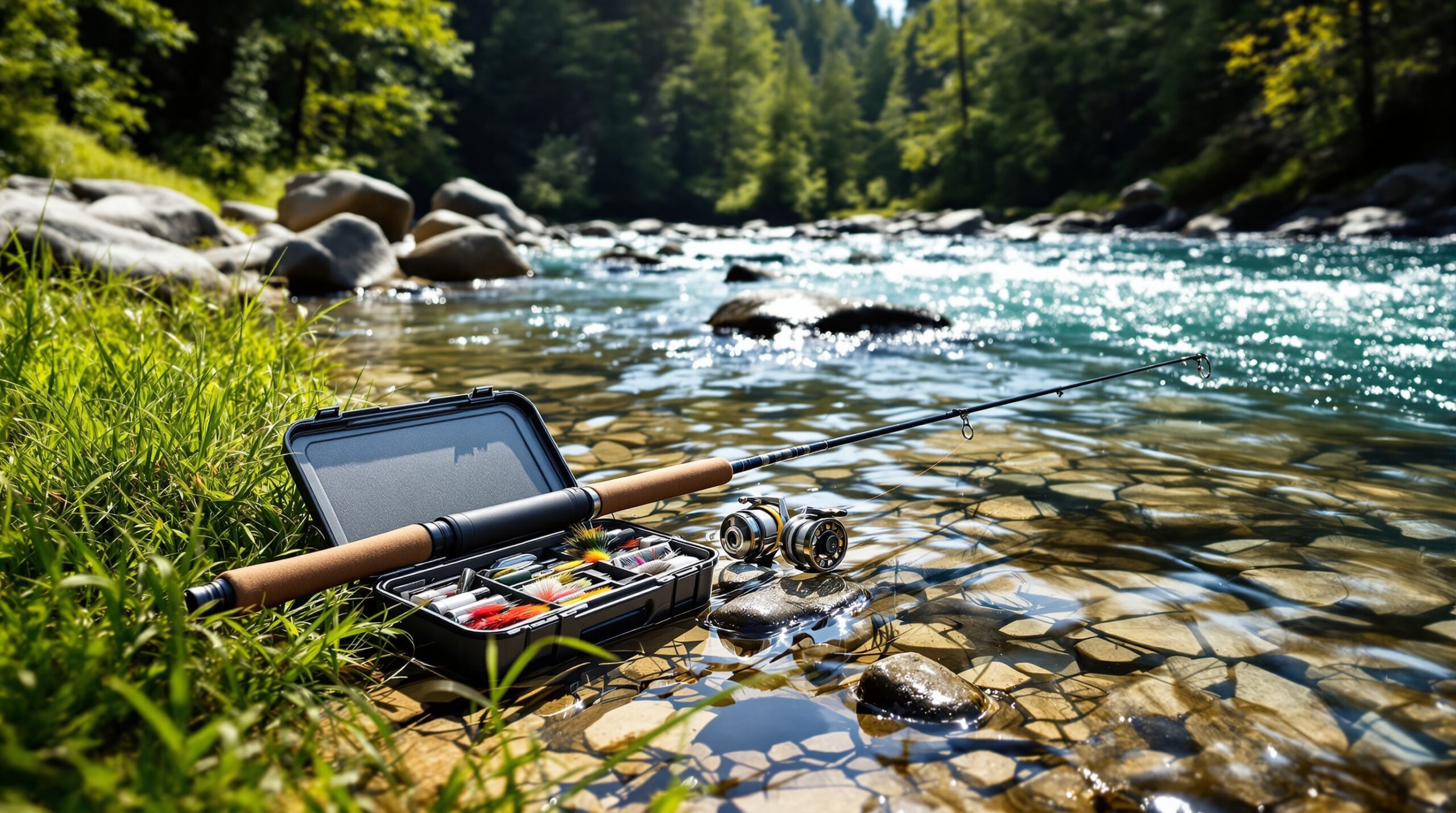
Premium trout fly fishing equipment creates a paradox—the more you spend, the harder learning becomes, with $900 rods amplifying every beginner mistake just as clearly as they reward expert precision. While the industry has standardized around 9-foot, 5-weight combos as the entry point, beginners still face a mismatch between gear capabilities and skill levels that undermines development on the water.
Expensive gear is not about helping you learn—it’s about precision performance for those who already know what they’re doing. Rather than supporting development, premium trout fly fishing equipment demands technique and control that novices lack, creating frustration where affordable, forgiving gear would build confidence.
Quick Answer: Expensive trout fly fishing equipment fails beginners because it demands precise technique and control that novices haven’t developed, amplifying every casting error and presentation mistake. Affordable, forgiving gear—particularly 9-foot, 5-weight combos under $400—allows newcomers to focus on fundamentals rather than fighting finicky equipment designed for expert hands.
Definition: Trout fly fishing equipment is the specialized gear used to present artificial flies to trout, including rods, reels, lines, and accessories designed for accuracy and delicate presentation.
Key Evidence: According to Georgia Wild Trout, expert anglers argue “the fly line can be more important” than rod expense for novices, as poor line quality hampers learning regardless of rod cost.
Context: This challenges conventional wisdom about where beginners should invest their budget, shifting focus from rod prestige to functional components.
This article reveals why affordable, forgiving trout fly fishing equipment accelerates learning better than expensive gear, where to actually invest your budget, and how to avoid the common traps that frustrate newcomers seeking that perfect drift and natural presentation.
Key Takeaways
- Sensitivity amplifies mistakes: Premium rods designed for subtle adjustments become liabilities when handed to anglers still developing muscle memory
- Standard setup works best: The 9-foot, 5-weight configuration represents industry-wide consensus for versatile, manageable learning equipment
- Line quality outweighs rod cost: A $30 line upgrade on a $300 combo delivers more practical benefit than a $600 rod paired with economy line
- Minimalism reduces barriers: Essential equipment includes rod, reel, line, leaders, tippet, and small fly selection—avoiding “nice-to-haves” that create distraction
- Premature specialization undermines progress: Purchasing stream-specific rods and elaborate accessories before mastering fundamentals consistently frustrates development
Why Premium Trout Fly Fishing Equipment Backfires for Newcomers
Maybe you’ve stood in a fly shop surrounded by gleaming $800 rods, wondering if that extra sensitivity will help you finally achieve the natural drift you’ve been chasing. The truth is more complex than the marketing suggests.
James Prosek, author and fly fishing expert, notes that ultra-sensitive graphite construction and advanced drag systems perform brilliantly in experienced hands but offer no forgiveness for timing errors and presentation mistakes that characterize early learning. A $900 rod amplifies poor technique just as clearly as it rewards precision, creating frustration rather than the serenity newcomers seek on the water.
According to Middle River Outfitters, “a combo, a rod, reel, and line is a great place to start. It comes all set up, and you’re ready to fish”—a philosophy that prioritizes time practicing over gear complexity. When you’re fighting finicky equipment, you can’t focus on watching how current moves your fly or recognizing when trout rise to feeding positions.
Even expensive combo packages can fail beginners through inferior line components. Experts “strongly recommend stripping the existing line from the combo’s reel and having the shop replace it with a better line,” noting that “this simple change will make a world of difference,” according to Wired2Fish. This reveals how premium combos often prioritize rod quality while cutting costs on the component that most directly affects your cast.
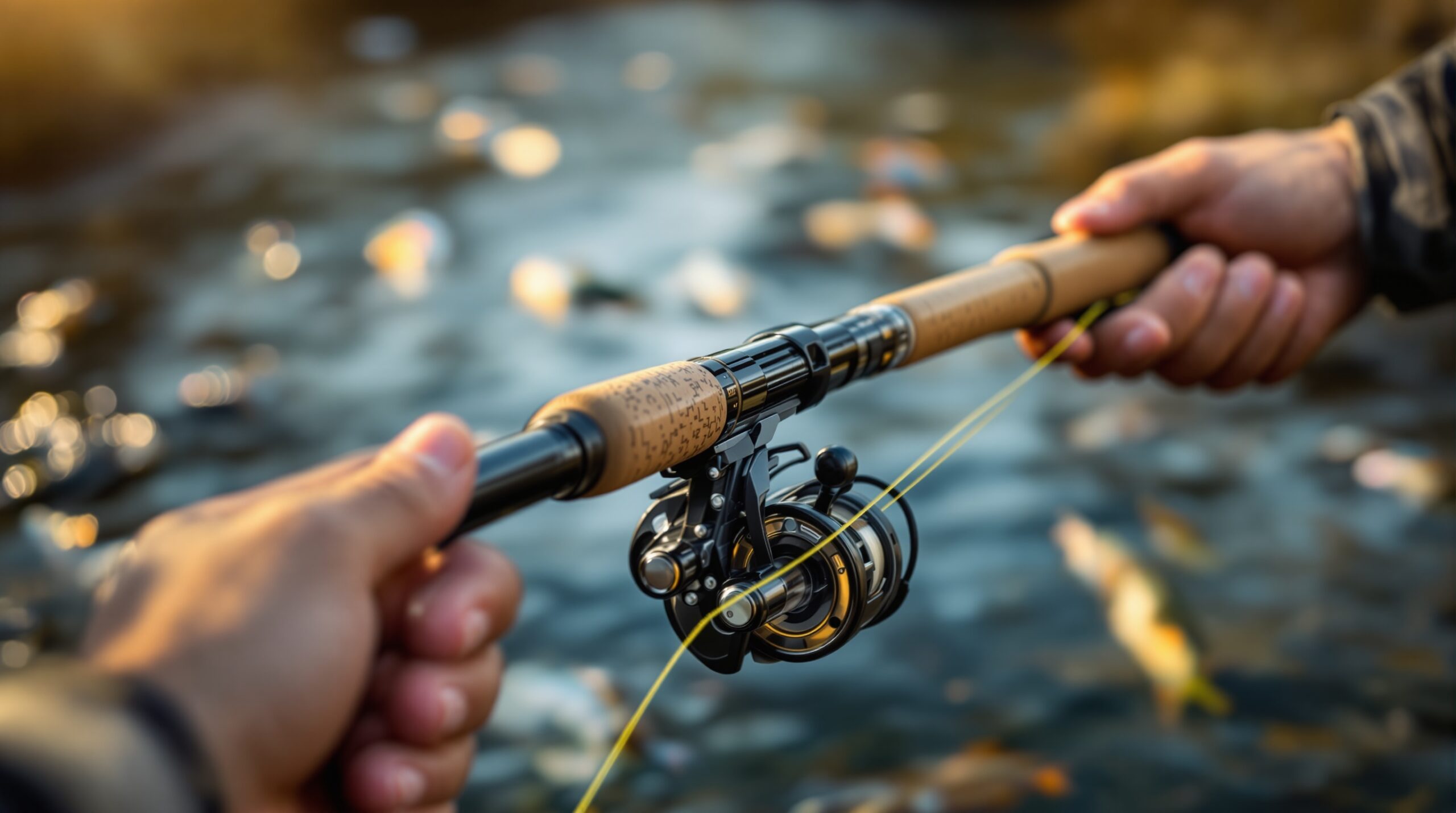
The Standard Beginner Setup That Actually Works
Industry consensus has crystallized around specific equipment that balances learning accessibility with practical trout fishing applications.
- The 5-weight, 9-foot standard: “We recommend a 5-weight, 9-foot fly rod for beginners. It’s versatile, manageable” according to Orvis
- Price range: $300-400 complete combos from Redington, Orvis, or similar manufacturers
- Ready to fish: Complete combos eliminate guesswork about component matching while ensuring functional compatibility
Where Beginners Should Actually Invest Their Budget
You might notice that most fly fishing guides argue the rod is where to splurge, but according to Georgia Wild Trout, “I believe that the fly line can be more important” for novices. This expert challenges conventional hierarchy, arguing that line quality directly impacts every cast, while rod quality only matters once technique develops sufficiently.
The line forms the direct connection between angler and fly—affecting presentation, feel, and control more than any other component. When you’re learning to achieve natural drift during a hatch or working to match the pattern trout are feeding on, line quality determines whether your fly behaves naturally or drags unnaturally through the water.
Here’s how the investment hierarchy works in practice: line quality affects every cast you make, reel quality matters primarily for drag when targeting larger fish, and rod quality only becomes apparent once your technique can appreciate the differences. A $100 rod with $60 line outperforms a $500 rod with $20 line for learning and practical fishing success.
Upon purchasing any combo, visit a fly shop and request line replacement with quality weight-forward floating line. This single $30-50 investment transforms the learning experience by ensuring clean casts, better drift control, and reduced frustration from memory coils and poor turnover.
Essential equipment includes rod, reel, weight-forward floating line, 9-foot tapered leaders, 4x-5x tippet, small fly selection, forceps, nippers, and floatant, according to Middle River Outfitters. Beginners frequently purchase elaborate vests, multiple net options, extensive fly boxes, and specialized tools before mastering basic knots or achieving clean drift—creating both financial burden and cognitive overload.
Practical Steps for Starting Right with Trout Fly Fishing Equipment
One common pattern looks like this: you walk into a fly shop with a $500 budget, get overwhelmed by options, and leave with a cart full of gear you won’t understand for months. Instead, begin with a $300-400 combo from established manufacturers like Redington, Orvis, or similar brands.
According to L.L.Bean Outdoors, beginners should “start with a versatile setup, such as a 9-foot, 5-weight fly rod paired with a matching reel,” noting that newcomers don’t need everything at once. The Redington Field Kit exemplifies this approach—a complete, matched system that requires only adding appropriate flies and practicing.
Build your initial fly selection around 12-15 patterns that match local waters rather than purchasing overwhelming variety packs. Consult fly shops or online regional guides to identify which nymphs, dry flies, and streamers actually produce in your target streams. Classic starting patterns like Pheasant Tail Nymphs, Elk Hair Caddis, and Woolly Buggers provide reliable starting points across diverse trout waters.
For technique prioritization, streamer fishing with simple retrieves allows you to practice casting and feel takes without the delicate presentation demands of dry flies. Nymph fishing with indicators teaches you to read the water and identify productive lies while providing visual feedback. Save technical dry fly fishing for after you’ve developed basic cast control.
Hip packs and lightweight chest packs are replacing bulky vests, acknowledging that mobility and focus matter more than carrying capacity. This shift aligns with the craft focus that attracts many practitioners—emphasizing connection to surroundings over equipment accumulation.
When to Actually Upgrade Your Gear
Knowing when equipment upgrades genuinely enhance performance versus when they reflect marketing-driven desire prevents premature purchases.
- First-year focus: Prioritize time on water, guided instruction, and skill development over equipment upgrades during your initial season
- Upgrade signals: Consider better equipment only after mastering basic casting, reading water confidently, and achieving consistent natural presentation
- Progressive investment: Follow the line-first, reel-second, rod-last hierarchy when you do upgrade
Why Trout Fly Fishing Equipment Choices Matter
The equipment decisions beginners make in their first months determine whether they develop genuine skills or become frustrated and quit—with expensive gear often accelerating the latter outcome. Understanding where to invest limited budgets and how to avoid common traps allows newcomers to focus on the fundamentals that actually create successful anglers. Starting right with forgiving, appropriate equipment builds the judgment necessary to eventually select advanced equipment purposefully. That foundation becomes the difference between anglers who stick with the sport and those who abandon it after a frustrating season.
Conclusion
Expensive trout fly fishing equipment fails beginners because it amplifies every mistake while offering no forgiveness for the technique development that takes time. The path forward is counterintuitive but clear: invest in adequate combos under $400, immediately upgrade to quality line, keep your kit minimal, and spend money on instruction rather than premium gear.
This approach prioritizes time practicing drift and presentation on the water over fighting finicky equipment designed for expert hands. Understanding why fly fishing feels difficult initially and choosing appropriate rod weights supports this foundation. The irony remains that spending less initially accelerates learning—and eventually creates the skills that can genuinely benefit from advanced equipment when the time comes to upgrade.
Frequently Asked Questions
What is trout fly fishing equipment?
Trout fly fishing equipment is the specialized gear used to present artificial flies to trout, including rods, reels, lines, and accessories designed for accuracy and delicate presentation on streams and rivers.
What fly rod setup is best for beginners?
A 9-foot, 5-weight fly rod combo is the industry standard for beginners. It’s versatile, manageable, and works well across diverse trout waters while being forgiving enough for learning proper technique.
Why does expensive fly fishing gear make learning harder?
Expensive gear amplifies every beginner mistake just as clearly as it rewards expert precision. Premium rods demand technique and control that novices lack, creating frustration instead of the forgiveness needed for skill development.
Should I upgrade the fly line on a beginner combo?
Yes, replacing combo line with quality weight-forward floating line is the best $30-50 investment you can make. Line quality affects every cast and presentation more than rod quality for beginners.
How much should beginners spend on fly fishing equipment?
Complete beginner combos from established manufacturers like Redington or Orvis cost $300-400 and provide everything needed to start. This budget allows focus on learning rather than gear complexity.
What essential gear do fly fishing beginners actually need?
Essential equipment includes rod, reel, weight-forward floating line, 9-foot tapered leaders, 4x-5x tippet, small fly selection, forceps, nippers, and floatant. Avoid elaborate accessories until mastering basics.
Sources
- Middle River Outfitters – Comprehensive equipment guidance for beginners emphasizing simplicity and essential gear selection
- L.L.Bean Outdoors – Beginner’s guide covering setup versatility and avoiding equipment overload
- Georgia Wild Trout – Equipment guide challenging conventional wisdom on budget allocation between rods and lines
- Wired2Fish – Introduction to fly fishing gear basics including line upgrade recommendations
- Orvis – Manufacturer guidance on beginner fly fishing gear featuring industry-standard recommendations
- YouTube – Middle River Outfitters Video Guide – Video instruction on beginner equipment focusing on combo packages