

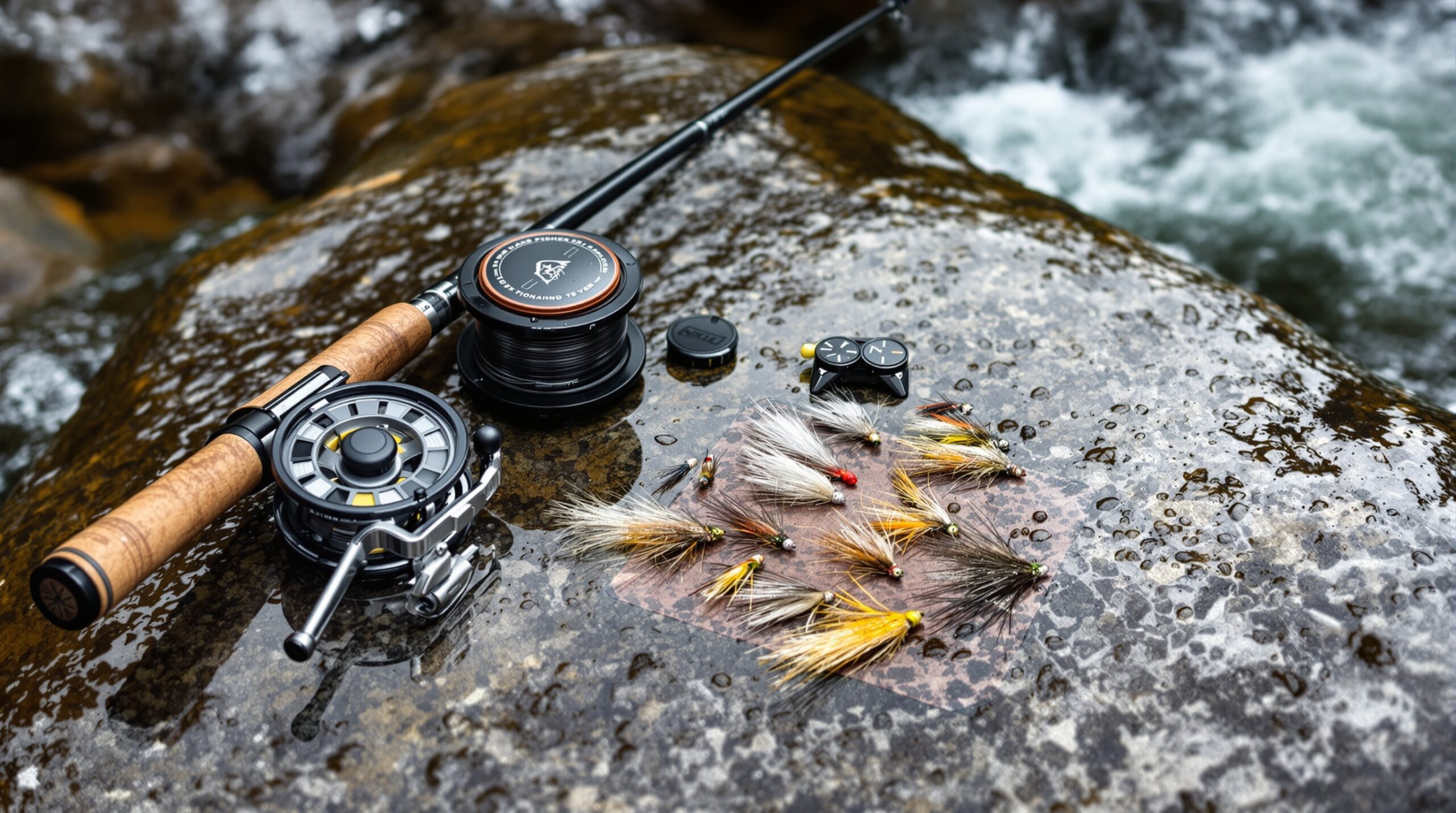
Mountain streams demand precision over power—where a single drag-free drift through pocket water determines whether wild trout rise or flee, and where brushy banks and conflicting currents punish poor gear choices with missed fish and tangled leaders. A fly fishing combo is a complete outfit pairing rod, reel, line, and backing designed to work together for specific fishing conditions and target species. The right fly fishing combo balances reach with maneuverability in tight, technical environments. Expert testing consistently identifies 8 to 8.5-foot rods in 4-weight as the versatile foundation for mountain water, countering traditional assumptions that small streams always require ultra-short rods. Mountain stream fishing is not about covering maximum water quickly. It is structured observation that reveals feeding patterns invisible when you rush.
Quick Answer: The best fly fishing combo for mountain streams is an 8 to 8.5-foot rod in 4-weight with medium-fast action, providing adequate reach for high-sticking techniques while remaining maneuverable in brushy conditions—versatile enough to handle pocket water, runs, and delicate presentations without requiring rod changes.
Definition: A fly fishing combo is a complete outfit pairing rod, reel, line, and backing designed to work together for specific fishing conditions and target species.
Key Evidence: According to Fight Master Fly Fishing, “the perfect fly rod for fishing someplace like the Smoky Mountains is a 4-weight in a length between 8′ – 8½'” because it balances reach with maneuverability.
Context: This specification emerged from thousands of hours of field experience recognizing that mountain fishing involves short casts where line control matters more than compact casting tools.
Mountain stream fishing works because it forces you to read water at an intimate scale, where every boulder creates feeding lanes and every overhanging branch shapes your presentation. Maybe you’ve stood at the edge of pocket water, watching rises but struggling to get a clean drift past conflicting currents—that’s where proper gear makes the difference. When you match your gear to this technical environment, you shift from fighting the water to working with it.
Key Takeaways
- 8 to 8.5-foot 4-weight rods provide the versatile foundation for most mountain stream conditions, prioritizing reach over compactness
- Medium-fast actions handle dry flies, nymphs, and pocket water scenarios within a single outing without requiring technique compromise
- Budget options from $100 to $429 allow matching investment to commitment level while accessing appropriately balanced gear
- Specialty rods under 8 feet serve ultra-tight headwater creeks where leader-only presentations and bow-and-arrow casts dominate
- High-sticking techniques require adequate rod length to control line over conflicting currents—the defining challenge of pocket water
The 4-Weight Sweet Spot for Mountain Stream Versatility
You might notice that experienced guides consistently recommend 4-weight rods between 8 and 8.5 feet as optimal fly fishing combo specifications for mountain streams. Research by Fight Master Fly Fishing shows this length provides “adequate reach when using high-sticking techniques in open water” while remaining “short enough to be able to maneuver in all but the tightest of streams.” This standard emerged from recognizing that pocket water requires reach to control line over conflicting currents while high-sticking nymphs through seams and riffles.
The 4-weight sensitivity detects subtle takes from wild trout while maintaining backbone for occasional larger fish. Medium-fast actions balance dry fly delicacy with nymph control through technical currents. That combination reduces guesswork and increases your ability to respond when fish show interest in your offering.
A common misconception drives traditional advice toward 6 to 7-foot rods for mountain streams, assuming tight quarters required maximum compactness. Field experience reveals most casts cover under 20 feet where reach matters more than compact maneuverability. You need to hold line off water while drifting flies naturally through strike zones. Small stream rods are defined as “8 feet long and under and 5 weight and under,” establishing practical baselines for matching gear to water type.
One pattern that shows up often looks like this: anglers buy ultra-short rods for imagined tight conditions, then find themselves handicapped on 80% of the water they actually fish. The 8 to 8.5-foot standard has remained consistent for over 20 years among experienced mountain stream anglers, reflecting understanding of how water, technique, and gear interact in real fishing situations.
When Specialty Short Rods Matter
True headwater creeks—tiny flows where brush defines every cast—justify specialty rods under 8 feet for technical presentations.
- Leader-only casting: At “ultra-close distances of, say, 12 feet or less” where anglers “accurately cast just the leader and fly (with no fly line out of the tip)”
- Bow-and-arrow casts: In brushy canopy where conventional approaches fail completely
- 7’9″ designs: Like the Orvis Superfine enabling “tight casts up to 60ft and drag-free drifts” in confined spaces
Fly Fishing Combo Options Across Price Ranges
The market offers compelling mountain stream combos from $100 entry-level packages to $429 premium outfits, each balancing performance with investment appropriate to angler commitment levels. This range allows you to match your gear to your dedication without compromising the core specifications that make mountain stream fishing successful.
At the budget tier, the Cabela’s White River Fly Shop Bighorn ($100) provides basic functionality for budget-conscious access to mountain water. The Redington Crosswater ($190) delivers versatile fast-medium action with protective case, balancing affordability with durability for developing skills. These options get you on the water with appropriate specifications without requiring significant financial commitment.
Premium combos like the Orvis Clearwater ($429) combine balanced performance with a 25-year warranty and smooth line handling that improves presentation quality. According to Fly Lords Magazine, the Douglas LRS stands out as a top beginner recommendation for overall versatility across water types. These investments make sense when you’re planning decades on the water and want gear that grows with your skills.
Component quality differences separate adequate from exceptional performance. Entry combos sometimes ship with less smooth lines that compromise presentation, while premium packages integrate engineered components that work together rather than simply bundled in the same tube. Protective cases now accompany most combos, acknowledging that mountain stream anglers hike to remote water requiring gear that travels safely.
What Separates Good from Great Combos
Component integration determines whether combos enhance or handicap mountain stream success.
- Line quality: Smooth casting and turnover directly affect presentation and drift quality in technical currents
- Reel functionality: Smooth drag and reliable retrieve matter when managing line through pocket water
- Action consistency: Medium-fast tapers that load properly on short casts where mountain fishing happens
Practical Techniques for Mountain Stream Success
Selecting appropriate gear means little without understanding how to fish mountain water effectively. The 8 to 8.5-foot 4-weight excels through techniques that leverage reach and control over conflicting currents. Your success depends more on reading the structure and positioning precisely than on covering maximum water quickly.
High-sticking fundamentals begin with positioning yourself to make short, controlled casts—under 20 feet—to specific lies like seams behind boulders, cushions above submerged logs, or tail-outs where pocket water transitions. Hold line off water while drifting flies naturally through strike zones, a technique impossible with rods too short to provide reach. Weight nymphs like Pheasant Tails appropriately for current speed and depth, adjusting based on what the water tells you.
Versatility within single outings showcases why the 4-weight standard works so well. Morning hatches call for delicate dry fly presentation to sipping fish, midday requires weighted nymphs through pocket water’s technical currents, and evening brings dry-dropper rigs in transitional runs as rises begin. Your medium-fast action handles all these presentations with minor adjustments to casting stroke and line management.
Common mistakes include assuming the shortest rod always performs best, overlooking that reach matters more than compactness for 80% of water encountered. Many anglers undervalue line quality in beginner combos, accepting rough casts when upgrading line would dramatically improve drift. Focus on achieving drag-free drift rather than covering water quickly, recognizing that patience and presentation connect you to mountain trout more reliably than aggressive prospecting.
Practice loading your rod on short casts, developing feel for how little line you need outside the tip to generate tight loops that slip under overhanging branches. This skill transforms technical challenges into opportunities for precise presentation. Consider checking out our complete guide to fly rod weights for deeper understanding of how weight affects casting and presentation. When planning your mountain stream adventures, proper wading gear becomes essential for accessing remote pocket water safely.
Why Fly Fishing Combos Matter for Mountain Streams
Balanced gear transforms mountain stream fishing from frustrating to fulfilling. The right fly fishing combo provides technical capability for reading water and achieving presentations that connect anglers to wild trout in intimate environments. As fly fishing popularity grows exponentially, investing in versatile foundation gear that handles pocket water, runs, and delicate situations without requiring rod changes sets anglers up for decades of mountain stream success. That foundation is where lasting connections with wild places begin.
Conclusion
The best fly fishing combo for mountain streams prioritizes versatility over specialization through 8 to 8.5-foot 4-weight rods with medium-fast actions. This specification, validated by decades of guide experience and recent field testing, balances reach for high-sticking techniques with maneuverability in brushy conditions. Options spanning $100 to $429 allow matching investment to commitment level while accessing appropriately balanced gear. Success on mountain water comes from understanding that most fishing involves short casts where line control and drag-free drift matter more than distance or compactness—principles that transform technical challenges into connections with wild trout and centuries of tradition. For anglers ready to explore legendary waters, our Montana fly fishing guide offers insights into some of the finest mountain stream fishing in North America.
Frequently Asked Questions
What is a fly fishing combo?
A fly fishing combo is a complete outfit pairing rod, reel, line, and backing designed to work together for specific fishing conditions and target species. These pre-matched components ensure balanced performance for mountain streams.
What rod length works best for mountain streams?
An 8 to 8.5-foot rod provides optimal reach for high-sticking techniques while remaining maneuverable in brushy conditions. This length balances line control over conflicting currents with casting ability in tight spaces.
What weight fly rod is best for mountain stream fishing?
A 4-weight rod offers the ideal balance of sensitivity for detecting subtle takes from wild trout while maintaining backbone for larger fish. It handles both delicate dry flies and weighted nymphs effectively.
What action should I choose for mountain stream rods?
Medium-fast action provides versatility for dry flies, nymphs, and pocket water scenarios within a single outing. This taper loads properly on short casts and delivers precise presentations without technique compromise.
How much should I spend on a mountain stream combo?
Quality mountain stream combos range from $100 entry-level packages to $429 premium outfits. Budget options like Redington Crosswater ($190) provide excellent value while premium combos offer enhanced durability and performance.
When do I need a rod shorter than 8 feet?
True headwater creeks with dense brush justify specialty rods under 8 feet for leader-only casting and bow-and-arrow techniques. These ultra-tight conditions represent less than 20% of typical mountain stream fishing.
Sources
- Treeline Review – Comprehensive testing and comparison of beginner fly fishing combos across price ranges, warranties, and performance characteristics
- Fight Master Fly Fishing – Expert guide perspective on optimal rod length and weight for mountain stream versatility, emphasizing reach and maneuverability balance
- Field & Stream – Field testing of specialty small stream rods including the Orvis Superfine, focusing on tight casting and drag-free drift capability
- Outdoor Life – Technical analysis of trout rods including ultra-close casting performance and leader-only presentation capability for narrow streams
- Casting Across – Definition and classification parameters for small stream rod specifications by length and weight
- Fly Lords Magazine – Overview of top beginner rod recommendations for 2025 including the Douglas LRS