

Your reel seizes mid-fight with a trophy tarpon, or worse—the backing knot fails when you’re 200 yards into a bonefish run. These disasters rarely stem from manufacturing defects. Saltwater fly fishing reels face brutal conditions—salt corrosion, UV exposure, and extreme drag pressure—but most failures trace to five preventable maintenance oversights that compound silently over seasons.
Saltwater fly fishing reels are not fragile equipment that breaks randomly. Rather than design flaws, most breakage patterns originate from user technique and maintenance errors that accumulate invisibly between fishing sessions.
Quick Answer: Saltwater fly fishing reels break primarily from five maintenance errors: reeling line completely in (causing internal tangles), improper retrieval technique (introducing line twist), high-pressure cleaning (forcing debris into sealed mechanisms), storing in enclosed cases (trapping corrosive moisture), and neglecting annual backing inspections that catch UV degradation before catastrophic failure.
Definition: Saltwater fly fishing reels are specialized drag systems designed to withstand marine corrosion and extreme pressure from powerful fish that can strip hundreds of yards of backing in seconds.
Key Evidence: According to Orvis fly fishing expert Evan Jones, leaving tippet outside the reel prevents fly line from “working into knots inside the reel”—a failure mode that manifests during critical fish fights.
Context: These seemingly minor oversights create cascading problems that appear as equipment failures but originate entirely from user technique rather than reel design flaws.
Maybe you’ve experienced that sinking feeling when your drag suddenly locks up during a fish fight, or when backing snaps at the connection point just as a permit makes its second run. These moments feel like equipment failure, but they usually trace to how we handle our reels between fishing sessions. When you reel line completely in, leader ends create half-hitch knots around fly line during storage. These internal tangles bind and snap tippet during your next presentation on the water.
Key Takeaways
- Line management prevents internal tangles: Stop reeling with one foot of tippet extending beyond the reel to avoid leader-created half-hitches around fly line during storage
- Gentle cleaning protects sealed systems: Warm water rinses without high-pressure methods prevent forcing saltwater and debris past drag seals designed only for splash exposure
- Proper retrieval eliminates twist: Cast line fully out under tension before reeling to allow accumulated twists to unwind naturally rather than compounding in storage
- Open storage beats cases: Saltwater fly fishing reels need air circulation to dry completely; enclosed cases trap moisture and salt against surfaces, accelerating corrosion
- Annual backing checks prevent failures: UV exposure and age degrade backing invisibly beneath outer line layers, with deteriorated knots failing catastrophically when tested by large fish
The Five Critical Failures That Break Saltwater Fly Fishing Reels
You might notice patterns in how reel disasters unfold—they rarely happen during easy fish or calm conditions. Most failures trace to predictable maintenance errors that anglers unknowingly repeat after each day on the water. According to Orvis contributor Evan Jones, “Leave some tippet outside the reel at the end of the day” to prevent fly line from working into knots inside the reel—a practice that eliminates tangles manifesting during your next presentation.
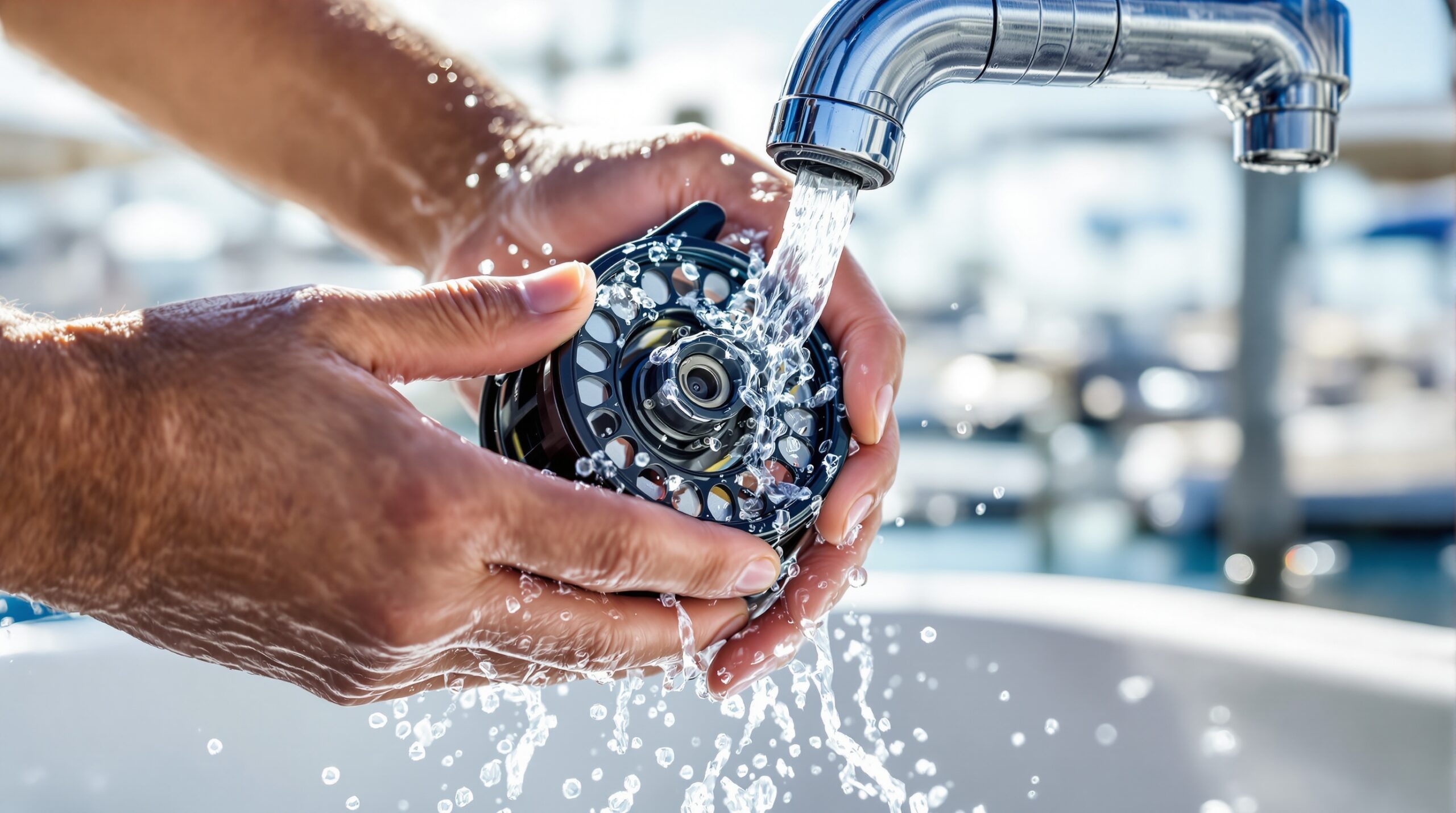
Aggressive cleaning creates the second major failure pattern. Jones emphasizes that “A gentle rinse with warm water is all any reel should need,” with explicit warnings against high-pressure washing that forces debris into the spool or prolonged soaking that risks water intrusion into sealed drag components. These sealed systems are designed to exclude normal spray and splash, not withstand direct pressure washing that compromises their protective architecture.
Improper retrieval technique introduces line twist that accumulates with each fishing session. When you reel line without first casting it out under tension, twists lock into the reel where they compound until they tangle catastrophically in rod guides during critical fish fights. This failure mode appears random but results from consistent technique errors over multiple outings.
Storage mistakes accelerate corrosion in ways that contradict conventional equipment care wisdom. Saltwater fly fishing reels are designed to endure sun, salt, and scratches without protective cases. Using cases on boats or kayaks traps moisture and salt against reel surfaces rather than protecting them, creating corrosive microenvironments that accelerate deterioration.
Backing degradation operates invisibly beneath outer line layers until tested by a significant fish that reaches full reel capacity. UV exposure and aging compromise backing over years, with degraded knots failing catastrophically when you need them most—failures that annual inspection could prevent.
Real-World Connection Failures
Connection points between backing, fly line, and leader create vulnerability under saltwater stress and abrasion from structure.
- Braided loop compression: One angler bonefishing in the Florida Keys reported that after coral abrasion, “The braided loop went into compression, and no longer was able to hold the fly line,” resulting in fly line and fish loss during the fight
- Abrasion vulnerability: Convenient braided connections fail precisely when connection strength matters most—during fights with powerful fish around structure
How Saltwater Environments Amplify Maintenance Mistakes
Salt acts as a persistent corrosive agent that draws moisture from air and maintains contact with reel surfaces long after fishing days end. This creates ongoing corrosion rather than one-time exposure, with salt crystals continuing to attract moisture from humid air even when reels appear dry. The marine environment transforms minor maintenance oversights into major equipment failures through this continuous corrosive process.
Even sealed drag systems face limitations when saltwater enters through improper cleaning or prolonged submersion during wading. These seals are designed to exclude spray and splash, not withstand high-pressure rinses that force water past barriers meant only for normal fishing exposure. Research by Thomas & Thomas shows that saltwater fly fishing reels generally prove more durable than rods in marine applications, with rods facing higher breakage rates from handling errors, yet this durability differential creates false confidence that reels require less attention.
UV degradation operates invisibly on backing materials over multiple seasons, with deterioration occurring beneath outer line layers until tested by a fish that strips line to full reel capacity. This invisible degradation means that backing failure appears sudden but results from accumulated damage over months or years of sun exposure during fishing and storage.
Current reel engineering features corrosion-resistant materials and robust construction designed for saltwater applications, yet these advances cannot overcome improper user care. Even premium reels require consistent maintenance protocols that acknowledge how salt water creates unique challenges absent in freshwater fishing.
The Case Storage Paradox
Conventional wisdom about protecting equipment fails in saltwater contexts where enclosed storage creates problems rather than preventing them.
- Freshwater assumptions fail: Cases that protect gear in freshwater environments create corrosive microenvironments in salt water
- Air circulation necessity: Reels designed for marine exposure fare better when allowed to air dry completely between fishing days
- Enclosed spaces concentrate salt: Moisture and salt trapped in cases maintain constant contact with metal surfaces rather than evaporating naturally
Practical Protocols That Prevent Reel Breakage
Stop reeling with approximately one foot of tippet extending beyond the reel at session’s end. This simple behavioral adjustment prevents the leader from creating internal half-hitch knots around fly line during storage—the primary cause of tangles that appear during your next day on the water. The practice requires no additional equipment or time, just awareness of where you stop the retrieve.
Before reeling line after each fishing session, cast the full line out while maintaining hand tension through retrieval. This allows accumulated twists to unwind naturally rather than being locked into the reel where they compound with each session. The key involves maintaining consistent tension—simply pulling line off the reel without casting does not remove twist, as the line must rotate freely in air to release accumulated torque.
Clean reels with gentle warm water rinses rather than high-pressure methods, loosening the drag before rinsing to allow water to flow through rather than being forced past seals. Air dry reels completely by suspending or positioning them to maximize airflow before storage, ensuring no moisture remains trapped in crevices where it maintains salt contact with metal surfaces. Skip the protective case in saltwater environments—reels need air circulation to dry completely.
Inspect backing annually by removing all line, checking for discoloration or texture changes indicating deterioration, and verifying knot security under hand tension before rewinding. This brief annual practice prevents backing failures that occur when a significant fish tests the full capacity of your reel. Check connection points by feel and visual inspection after any session where line contacted abrasive surfaces like coral or rocks.
For connection durability around structure, favor well-tied knots over convenient braided loops that fail under compression after abrasion. The Florida Keys example demonstrates how these convenient connections create vulnerability precisely when connection strength matters most. These behavioral adjustments integrate seamlessly into fishing routines rather than requiring elaborate maintenance rituals—the key to sustainable reel care that you will follow consistently.
Why Saltwater Fly Fishing Reels Matter
Your reel represents the mechanical link between you and powerful saltwater species that can run 200+ yards in seconds. Unlike freshwater applications where reels serve primarily as line storage, saltwater fly fishing demands drag systems and construction that withstand extreme pressure. Proper maintenance makes the difference between landing trophy fish and watching backing knots fail at the worst possible moment. When your equipment functions flawlessly, you can focus entirely on reading the water and perfecting your presentation.
Conclusion
Saltwater fly fishing reel failures stem overwhelmingly from five preventable maintenance oversights rather than equipment defects: reeling completely in, improper retrieval technique, aggressive cleaning, enclosed storage, and neglected backing inspection. Each error compounds silently over seasons until manifesting during fish fights. The solution requires behavioral adjustments integrated into fishing routines—leaving tippet extended, casting before reeling, gentle rinsing, open-air drying, and annual backing checks. These practices transform reel care from occasional maintenance into intentional technique, extending equipment life and preserving the serenity of days spent pursuing saltwater species on the fly. When your tippet holds and your reel performs flawlessly, you can focus entirely on what draws us to this craft—the quiet moments between casts when everything feels possible.
Frequently Asked Questions
What causes saltwater fly fishing reels to break most often?
Five maintenance errors cause most failures: reeling line completely in (creating internal tangles), improper retrieval technique (introducing line twist), high-pressure cleaning (forcing debris into seals), storing in cases (trapping moisture), and neglecting annual backing inspections.
How should I clean my saltwater fly fishing reel properly?
Use gentle warm water rinses only—never high-pressure washing. Loosen the drag before rinsing to allow water flow through rather than forcing it past seals. Air dry completely with maximum airflow before storage, skipping protective cases that trap moisture.
Why does my fly line tangle inside the reel during fish fights?
Reeling line completely in allows the leader to create half-hitch knots around fly line during storage. Stop reeling with one foot of tippet extending beyond the reel to prevent these internal tangles that manifest during your next presentation.
Should I store my saltwater reel in a protective case?
No—cases trap moisture and salt against reel surfaces, creating corrosive microenvironments. Saltwater reels are designed to endure sun and salt exposure and need air circulation to dry completely between fishing sessions.
How do I prevent line twist from building up in my reel?
Before reeling line after each session, cast the full line out while maintaining hand tension during retrieval. This allows accumulated twists to unwind naturally in air rather than being locked into the reel where they compound.
When should I inspect my backing for potential failure?
Check backing annually by removing all line and inspecting for discoloration or texture changes. UV exposure degrades backing invisibly beneath outer layers, with deteriorated knots failing catastrophically when tested by large fish stripping line to full capacity.
Sources
- Orvis News – Comprehensive guidance on preventing common fly reel failures through proper maintenance, cleaning, and line management techniques specific to saltwater environments
- Thomas & Thomas – Comparative context on fly fishing equipment durability and care across different gear types in various fishing environments