
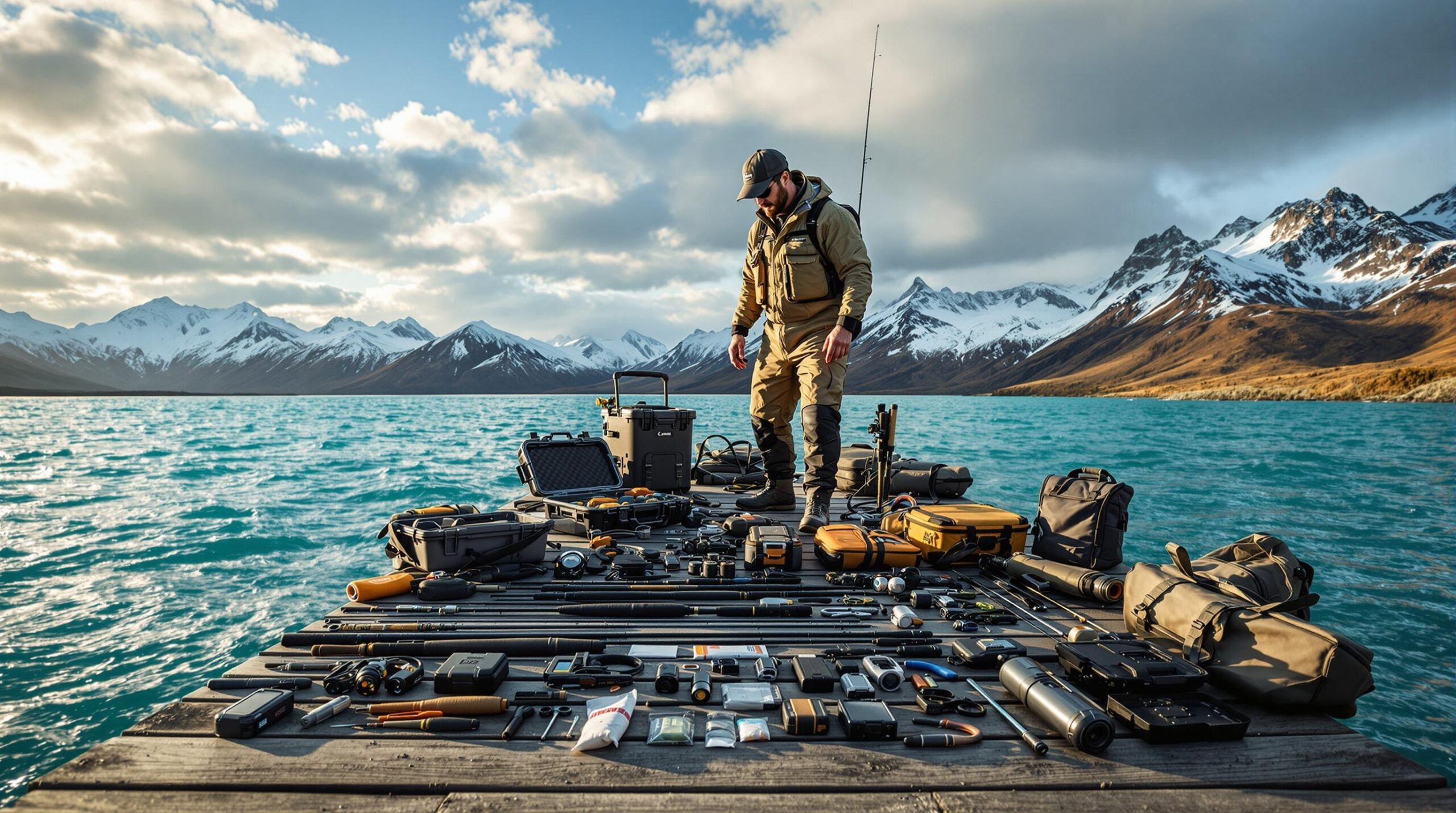
Remote Patagonia trout expeditions demand gear that performs across windswept lakes, brushy spring creeks, and big rivers—often in a single day—with no resupply options for hundreds of miles. Fly fishing gear for travel to Patagonia is not lightweight tackle designed for gentle conditions; it is robust, versatile equipment built to handle notorious winds, variable water types, and aggressive trophy trout. This guide covers essential equipment selection, from rod weights and line systems to fly patterns and packing strategies that ensure you’re ready for any condition the region presents.
Quick Answer: Essential fly fishing gear for travel to remote Patagonia includes two 4-piece rods (5-6 weight for dry flies, 6-7 weight for streamers), floating and sink-tip lines, 9-foot leaders in 3X-4X, and simple visible fly patterns like hoppers and streamers rather than technical imitations.
Definition: Fly fishing gear for travel is portable, versatile tackle systems designed to handle diverse conditions while fitting airline luggage constraints and remote expedition demands.
Key Evidence: According to Yellow Dog Flyfishing, anglers should bring “at least two rods” as lighter 4-weight rods “may struggle against Patagonia’s notorious winds.”
Context: Wind and remoteness make versatility and redundancy essential for Patagonia expeditions.
You might notice that fly fishing gear for travel to Patagonia feels different from what works on your home waters. The region demands equipment that balances portability with performance, creating tackle systems that adapt to wind, variable water types, and distance from resupply. When you pack versatile mid-weight rods with multiple line options, you shift from hoping conditions match your gear to confidently reading the water and adjusting your presentation. The sections that follow will walk you through exactly which rods handle Patagonia’s wind, how to organize flies for quick tactical shifts, and proven packing strategies that ensure your gear performs when trophy trout rise within casting range.
Key Takeaways
- Dual-rod strategy: Pack both a 5-6 weight for dry flies and a 6-7 weight for streamers to handle wind and diverse fishing modes
- Sink-tip versatility: Carry 150-250 grain sink-tip or intermediate lines on spare spools for deep water presentations
- Simple fly patterns: Hoppers, classic dries, and streamers outperform technical imitations in Patagonia’s waters
- Backing capacity: Spool 100-175 yards of 20-pound backing for rare but possible trophy runs
- Travel-friendly construction: Four-piece 9-foot rods fit standard luggage and protect investment pieces from airline damage
Essential Rod and Reel Setups for Patagonia Conditions
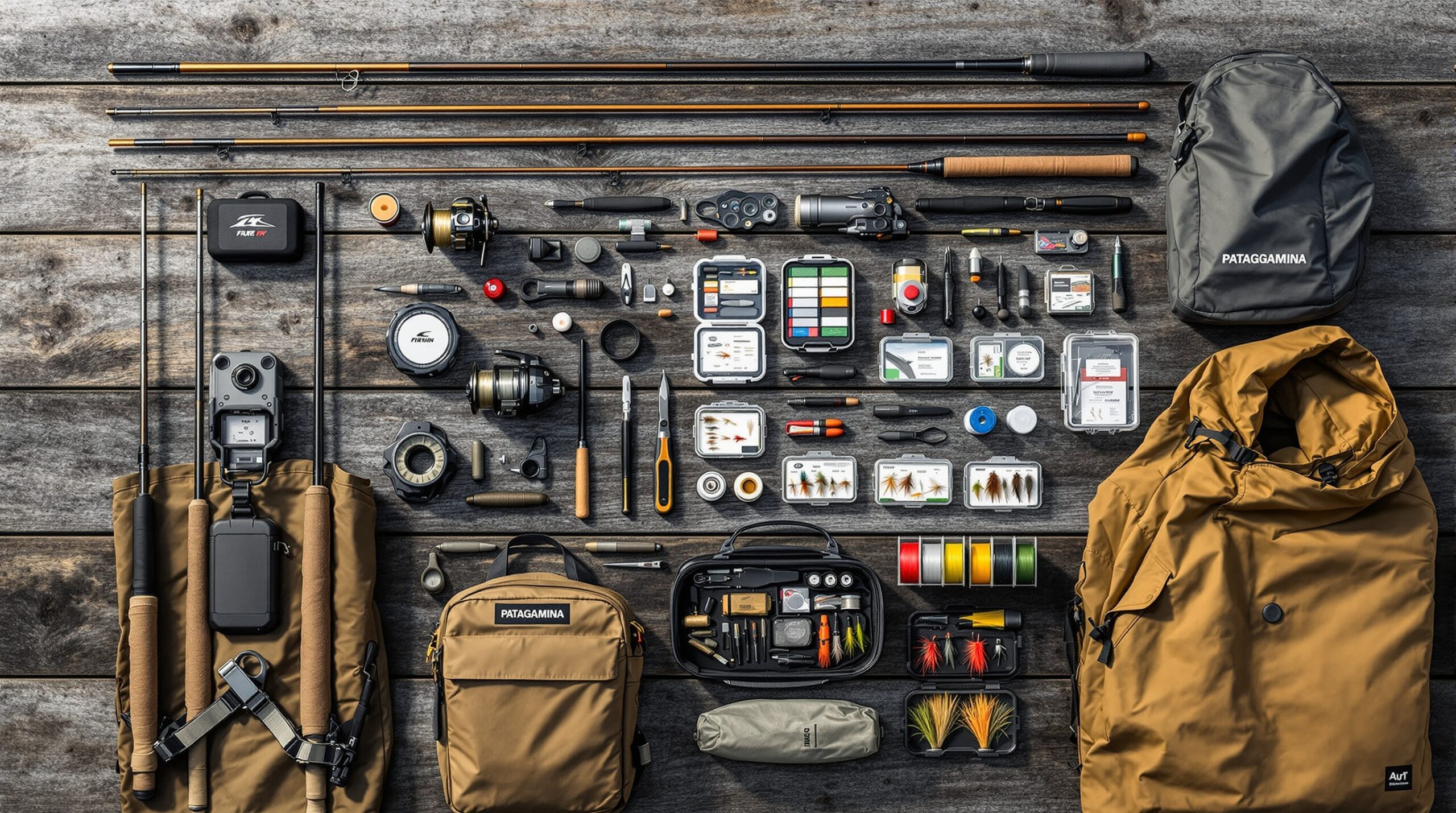
Maybe you’ve stood on a riverbank watching perfect risers while your 4-weight folded against a 25-mph crosswind—that’s exactly why Patagonia demands different thinking about rod selection. Pack two travel-friendly 4-piece rods to cover the region’s dual fishing modes: a 5- or 6-weight for dry flies, dry-dropper rigs, and nymphing, paired with a 6- or 7-weight dedicated to streamer work with sink-tip line.
Wind performance drives rod weight selection in Patagonia more than fish size or water type. Research by Yellow Dog Flyfishing shows that “a 4-weight may struggle in wind,” making mid-weight rods (5-7 weight) the baseline for the region’s legendary gusts that can exceed 20 mph without warning. The heavier rod weights provide the backbone needed to punch through wind and turn over larger flies, while still maintaining the sensitivity required for delicate presentations on calm water.
Match each rod to a large-arbor reel spooled with weight-forward floating line and 100-175 yards of 20-pound backing. According to El Encuentro Flyfishing, “big fish runs are rare but possible” on trophy waters, and insufficient backing capacity risks break-offs on the fish of a lifetime. Large arbor design reduces line memory and provides faster retrieve rates when fish charge toward you.
Floating lines serve as your primary workhorse across rivers and spring creeks, but spare spools rigged with 150-250 grain sink-tip or intermediate lines prove essential when trout hold deep on lakes and large pools. This dual-line system creates quick tactical shifts without re-rigging, keeping you fishing rather than fumbling with tackle changes as conditions evolve throughout the day.
Common Rod Selection Mistakes
Anglers frequently underestimate Patagonia’s demands when selecting fly fishing gear for travel.
- Too-light rod weights: Bringing only 4-weight rods that can’t handle 20+ mph winds
- Single-rod gamble: Packing one rod with no backup in remote areas hundreds of miles from shops
- Inadequate line options: Carrying only floating lines when deep-water presentations require sink-tips
Leaders, Tippet, and Fly Pattern Strategy
One pattern that shows up often involves anglers packing dozens of complex fly patterns while neglecting leader and tippet systems that actually connect flies to fish. Research by Chile Patagonia recommends “six tapered 9-foot leaders in 3X or 4X” for a week-long trip, supplemented by tippet spools ranging from 2X for streamers to 5X for spring creek finesse.
Fluorocarbon leaders and tippet have become baseline standard for abrasion resistance on rock-studded rivers and low visibility on clear spring creeks with spooky trout. The material’s refractive index closely matches water, making it nearly invisible to fish, while its density helps nymphs sink faster and resist wind drift better than traditional nylon.
Patagonia’s trout reward simple, visible attractors over technical imitations. Pack 10-20 each of hopper patterns (Chubby Chernobyl, Thunder Thigh), classic dries (Elk Hair Caddis, Parachute Adams), standard nymphs (Prince, Pheasant Tail), and streamers (Woolly Bugger, rubberlegs). Studies by Montana Angler confirm these proven patterns consistently outperform intricate imitations in Patagonia’s opportunistic trout waters.
Focus on flies that cast well in wind, remain visible during drift, and survive multiple fish and rocky strikes. Foam terrestrials compress for better wind penetration, bead-head nymphs sink quickly in current, and synthetic streamer materials shed water to reduce false-cast fatigue. The philosophy is durability and visibility over matching-the-hatch precision, as Patagonia’s trout are less selective than heavily pressured spring creeks elsewhere.
Optimal Fly Box Organization
Efficient fly organization saves time and prevents loss in variable conditions.
- Waterproof boxes: Protect flies from sudden downpours and river spray
- Type-based sorting: Separate boxes for dries, nymphs, and streamers enable quick tactical shifts
- High-visibility patterns: Pack tan, olive, and pink hopper colors to match different light conditions
Packing Strategy and Field-Tested Best Practices
You might find yourself switching between walk-and-wade sessions on intimate spring creeks and full-day drift boat trips on big rivers—that’s exactly why pack selection matters as much as rod choice. Sling or hip packs suit walk-and-wade sessions on smaller rivers, keeping hands free for casting and net work, while larger waterproof backpacks accommodate drift-boat days with layering systems, rain gear, and spare reels.
Pre-trip preparation prevents field failures and saves precious fishing time. Organize flies by type in waterproof boxes, pre-rig leaders at camp to avoid fumbling with knots in wind, and test all connections before the first cast. A quality rain jacket—lightweight, breathable, packable—proves non-negotiable as Patagonia weather shifts without warning, and fingerless gloves maintain dexterity for fly changes in cold conditions.
Switch to your streamer rod and sink-tip at the first sign fish are holding deep rather than persisting with floating lines that can’t reach them. Guides consistently report that anglers who make mid-session line changes outfish those committed to single presentations, as Patagonia’s trout move vertically throughout the day based on light, temperature, and feeding patterns.
Research by experienced Patagonia guides shows that a 6-weight handles “most situations” across Chilean rivers from hoppers on the Simpson to nymphs on the Paloma, while a 7-weight streamer rod unlocks trophy fish on windswept lakes like Tromen. Consider how your waders will perform across different terrain, and remember that the best gear is what you can use confidently when conditions change mid-drift.
Why Patagonia Gear Selection Matters
Remote Patagonia expeditions operate hundreds of miles from tackle shops, making thoughtful gear selection the difference between capitalizing on trophy trout opportunities and watching fish from shore with inadequate equipment. Wind, variable water types, and aggressive fish demand tackle that performs across conditions without compromise. Proper fly fishing gear for travel creates presentation confidence and fishing success regardless of weather shifts or tactical demands. The distance between you and the nearest fly shop transforms gear preparation from convenience to necessity.
Conclusion
Remote Patagonia trout expeditions reward anglers who pack versatile, wind-capable fly fishing gear for travel—two mid-weight rods, floating and sink-tip lines, fluorocarbon leaders, and simple proven fly patterns that adapt to rivers, spring creeks, and lakes within a single day. The dual-rod strategy addresses both delicate dry-fly presentation and aggressive streamer fishing, while adequate backing, spare leaders, and waterproof organization provide insurance against tackle failures miles from resupply. Prioritize adaptability and redundancy over specialization, test all systems before departure, and remain ready to shift tactics as Patagonia’s legendary conditions demand. Whether you’re planning your first expedition to Argentina’s Patagonia lodges or returning for another season on the water, thoughtful gear selection transforms challenging conditions into opportunities for the fishing of a lifetime.
Frequently Asked Questions
What fly fishing gear do you need for travel to Patagonia?
Essential gear includes two 4-piece rods (5-6 weight for dry flies, 6-7 weight for streamers), floating and sink-tip lines, 9-foot fluorocarbon leaders in 3X-4X, and simple visible fly patterns like hoppers and streamers rather than technical imitations.
What rod weight is best for Patagonia fly fishing?
Pack 5-7 weight rods for Patagonia’s notorious winds that exceed 20 mph. A 4-weight rod will struggle against the wind, while mid-weight rods provide the backbone needed to punch through gusts and turn over larger flies effectively.
What flies work best in Patagonia?
Simple, visible attractors outperform technical imitations. Pack 10-20 each of hopper patterns (Chubby Chernobyl), classic dries (Elk Hair Caddis), standard nymphs (Prince, Pheasant Tail), and streamers (Woolly Bugger) in durable materials.
How much backing do you need for Patagonia trout?
Spool 100-175 yards of 20-pound backing on large-arbor reels. Big fish runs are rare but possible on trophy waters, and insufficient backing capacity risks break-offs on the fish of a lifetime in remote locations.
What is the difference between floating and sink-tip lines for Patagonia?
Floating lines serve as your primary workhorse for rivers and spring creeks, while 150-250 grain sink-tip or intermediate lines on spare spools prove essential when trout hold deep on lakes and large pools throughout the day.
Why pack two rods for Patagonia fly fishing?
Remote locations are hundreds of miles from tackle shops, making rod backup essential. The dual-rod strategy also covers different fishing modes: lighter rods for dry flies and heavier rods for streamers with sink-tip lines.
Sources
- Yellow Dog Flyfishing – Comprehensive rod, reel, and line recommendations for Patagonia expeditions, emphasizing wind performance and dual-rod strategies
- El Encuentro Flyfishing – Detailed packing guidance covering rod weights, backing capacity, and gear versatility for remote destinations
- Chile Patagonia – Minimalist packing list emphasizing single-rod setups, leader and tippet quantities, and travel-friendly gear selections
- Montana Angler – Rod weight and leader recommendations for specific Patagonia waters, with fly pattern guidance
- Sierra Brava – Equipment checklist featuring simple, proven fly patterns and essential accessories for walk-and-wade and drift-boat fishing