

Vintage fly fishing equipment has seen a 35-40% increase in collector interest over the past decade, according to the American Museum of Fly Fishing. Yet not all vintage gear delivers the performance anglers need on the water. Unlike modern equipment with warranties and standardized testing, vintage purchases require hands-on inspection skills and historical knowledge to avoid costly mistakes. This guide explains how to identify functional vintage fly fishing equipment, evaluate condition, avoid common pitfalls, and match classic gear to your fishing style.
Quick Answer: To buy vintage fly fishing equipment that performs, focus on models from 1950-1980 when craftsmanship and material science intersected optimally, prioritize condition over age, and inspect ferrule fit, structural integrity, and parts availability before purchasing. Fiberglass rods from the 1960s-1970s offer the best durability-to-price ratio for active anglers.
Key Evidence: “Equipment manufactured between 1950-1980 represents the sweet spot for combining traditional craftsmanship with modern materials, with manufacturers like Hardy, Orvis, and Fenwick producing particularly durable models” (Fly Fisherman Magazine, 2023).
Context: This golden age produced equipment that remains highly fishable today while maintaining authentic vintage character.
Key Takeaways:
- Condition trumps age — A 1960s rod in excellent shape outperforms a rare 1920s rod with multiple repairs (Fly Fisherman Magazine, 2023)
- Target the golden age — Equipment from 1950-1980 balances durability with vintage appeal
- Choose fiberglass for durability — Vintage fiberglass requires less maintenance than bamboo while offering comparable performance
- Inspect failure points — Check drag systems, ferrule fit, and parts availability before buying
- Expect $300-800 for premium performance — Mid-tier vintage brands offer the best performance-to-price ratio (Vintage Fly Tackle Marketplace, 2023)
Why Condition Matters More Than Age
Professional rod restorer Tom Smithwick offers a principle that should guide every vintage purchase: “A 1965 Fenwick in excellent condition will outfish and outlast a 1935 bamboo rod with repairs every single time,” he notes in Fly Fisherman Magazine. This finding shifts purchase criteria from pure collectibility to usability, helping buyers focus on what matters for fishing rather than display.
Structural integrity directly impacts casting performance in ways that age alone cannot predict. Cracks, delamination, and compression fractures create dead spots that ruin action, turning what might appear to be a bargain into an expensive disappointment. A rod with compromised structure will feel lifeless in your hand, failing to load properly during the cast.
For performance-focused buyers, a well-maintained vintage rod from the 1950s-1980s delivers surprisingly competitive performance against contemporary mid-range equipment, particularly for small stream fishing and delicate presentations. The key lies in finding examples where original owners cared for their gear properly, storing rods in tubes, avoiding impacts, and maintaining finish integrity.
Critical Inspection Points for Rods
Start your inspection by testing ferrule fit. Assemble and disassemble rod sections multiple times. They should fit snugly without binding or looseness. A ferrule that wobbles indicates wear that will worsen with use, while one that requires excessive force to seat may have been bent or damaged.
For fiberglass models, inspect the entire rod length in bright light, looking for cloudy areas or separation lines that indicate delamination. This condition appears as a milky haze between layers and signals that the resin bonding has failed. Once started, delamination typically spreads, making affected rods poor investments.
Bamboo requires checking for compression fractures, straightness issues, and varnish integrity. Flex the rod gently to feel for dead spots or unusual resistance indicating internal damage. A bamboo rod should bend in a smooth arc without flat spots or sudden changes in flexibility.
Vintage Reel Inspection Checklist
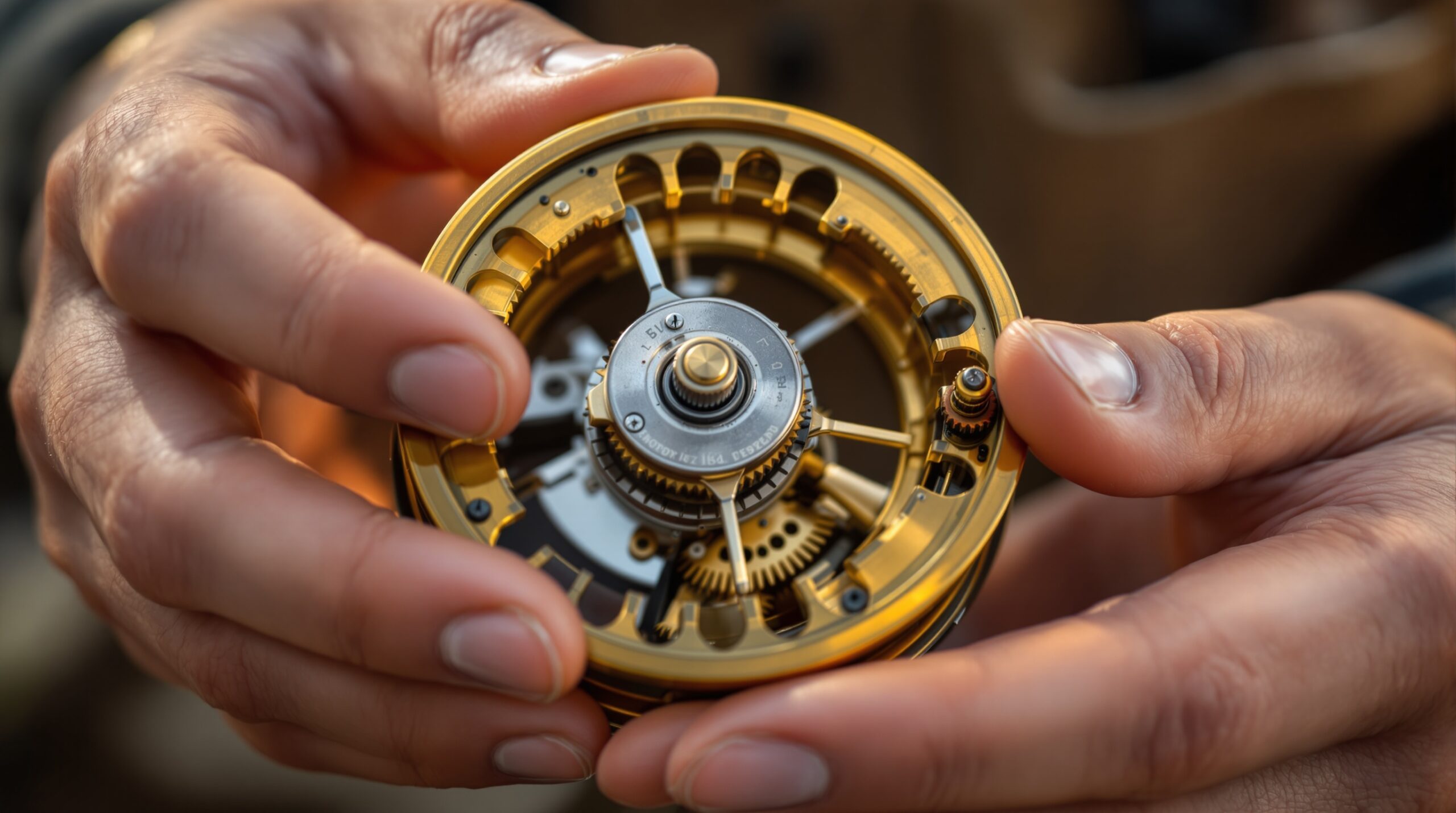
Three points determine whether a vintage reel will function reliably: drag systems, bail mechanisms for spinning reels, and pawl-and-spring assemblies for click-and-pawl fly reels, according to Classic Fly Rod Forum. These components handle the stress of fighting fish and fail predictably when worn or corroded.
Parts availability varies dramatically by manufacturer. Hardy, Orvis, and Scientific Anglers maintain better replacement part access than smaller makers, making their reels safer purchases if repairs become necessary. Before buying a reel from an obscure manufacturer, research whether replacement pawls, springs, or drag washers remain available.
Click-and-pawl mechanisms offer superior simplicity and reliability for basic fly fishing applications. These straightforward designs use fewer parts than modern disc drags, reducing potential failure points and simplifying maintenance. For trout fishing and other applications where sophisticated drag control proves unnecessary, vintage click-and-pawl reels often outperform their complexity-to-function ratio compared to modern alternatives.
The Golden Age: Identifying the Best Performance Eras
The 1950s and 1960s introduced fiberglass construction, democratizing fly fishing through more affordable and durable equipment that remains highly fishable today. Companies like Fenwick pioneered designs that combined accessibility with performance, creating rods that working anglers could afford and use hard without constant worry about damage.
Fiberglass technology from the 1960s-1970s requires significantly less maintenance than bamboo counterparts while offering comparable casting performance, notes the American Museum of Fly Fishing. This durability advantage makes fiberglass the ideal entry point for anglers new to vintage fly fishing equipment, eliminating the humidity control, regular refinishing, and careful storage that bamboo demands.
Late-1970s early graphite models offer performance closely approaching modern standards while maintaining vintage character. These rods bridge eras, old enough to possess the slower, more forgiving actions that define vintage casting, yet modern enough to handle contemporary fishing techniques and line weights without compromise.
Vintage fiberglass rods excel for small stream fishing where slow actions help protect light tippets and forgiving flex prevents break-offs, making them ideal teaching tools beyond their nostalgic appeal. The progressive flex patterns help anglers develop proper timing and rhythm, teaching fundamentals that fast-action modern rods often mask through their stiffness.
Material Comparison for Performance Buyers
Bamboo rods from before 1950 require extensive care and expertise, making them better suited for collectors than fishing-focused buyers. These early examples demand regular maintenance, controlled storage conditions, and gentle handling that conflicts with the realities of active fishing.
Fiberglass from the 1950s-1970s offers the best entry point for anglers new to vintage fly fishing equipment. These rods combine durability, affordability, and forgiving casting characteristics without the maintenance demands that bamboo imposes. A quality fiberglass rod can be fished hard, stored casually, and passed down through generations with minimal intervention.
Early graphite from the late 1970s-1980s competes directly with contemporary gear while offering distinctive character. Look for models from this era when shopping for fly fishing rod weights that match your target species. These rods handle modern fishing techniques effectively while maintaining the aesthetic and feel that define vintage equipment.
Avoid rods with unknown or unspecified actions where weight or specifications remain unclear. These prove difficult to line correctly and often fish poorly, creating frustration rather than the enjoyable experience vintage equipment should provide.
Understanding Pricing and Value in Vintage Fly Fishing Equipment
The vintage market follows a three-tier structure that helps buyers target appropriate price ranges. Working-condition common brands sell for $50-200, premium vintage brands in good condition command $300-800, and rare or mint-condition collectibles exceed $1,000, according to Vintage Fly Tackle Marketplace. Understanding where equipment falls within this structure prevents both overpaying for common pieces and undervaluing rare finds.
Mid-tier equipment offers the best performance-to-price ratio for active anglers who prioritize fishing over collecting. This range includes well-maintained rods from respected manufacturers like Fenwick, Shakespeare, and early Orvis models. These rods deliver authentic vintage casting characteristics without the premiums attached to rare maker’s marks.
Restoration economics create an important threshold for buyers considering damaged equipment. Repairs costing more than 60-70% of a rod’s restored value rarely make financial sense for performance buyers, though collectors may accept different calculations. Before purchasing equipment needing work, obtain restoration estimates from qualified rod builders to understand true total investment.
The vintage fly fishing market allows educated buyers to find excellent fishing equipment at reasonable prices while collector premiums inflate elsewhere, creating opportunities for those willing to overlook rare maker’s marks. This bifurcation benefits anglers focused on function, as common but well-made rods from the golden age remain affordable despite rising interest in vintage fly fishing equipment generally.
Strategic Buying Locations and Timing
Estate sales and local classifieds often yield better values than specialized vintage marketplaces where sellers understand current pricing. These sources require stronger authentication skills since sellers typically know less about what they offer, but the potential savings justify developing expertise. Watch for estate sales in areas with established fly fishing communities, where quality equipment appears more frequently.
Online forums dedicated to vintage fly fishing provide both purchasing opportunities and expert guidance, creating safer buying environments for less experienced purchasers. Community members often vet equipment before sales, identifying issues that photographs might hide and sharing knowledge about fair pricing for specific models.
Regional fly fishing clubs sometimes maintain equipment swap programs offering opportunities to inspect before purchasing. These face-to-face transactions eliminate shipping risks while allowing thorough examination that online purchases cannot provide. Club members also tend to care for their equipment well, increasing the likelihood of finding properly maintained vintage gear.
Avoid purchasing based solely on photographs for higher-value pieces. Shipping damage to vintage rods remains common and often proves irreparable, particularly for bamboo and early fiberglass models. The cost of traveling to inspect equipment personally or arranging local pickup typically proves worthwhile compared to receiving damaged goods.
Matching Vintage Equipment to Modern Fishing Applications
Jerry Siem, former curator at the American Museum of Fly Fishing, offers important perspective on the collectibility versus functionality divide: “Museum-quality vintage equipment and fishing-quality vintage equipment are entirely different categories. Anglers should focus on structural integrity, action characteristics, and parts availability.” This distinction helps buyers avoid the collector’s trap of prioritizing originality over fishing performance.
Application-specific recommendations guide smart purchases. Vintage fiberglass excels for small streams where brush contact and bank-side obstacles threaten equipment. Bamboo shines for delicate dry fly presentations where the slow, progressive loading helps achieve soft landings. Early graphite handles nymphing and streamers effectively, offering the backbone needed for turning over weighted flies while maintaining vintage character.
Test casting before purchase whenever possible. Bring a reel and line matched to the rod’s specifications, and test on water rather than just lawn casting. Water loading reveals action characteristics that lawn casting cannot, showing how the rod handles actual fishing situations. Check for consistent flex throughout the rod’s length, absence of vibration after the cast stops, and comfortable grip ergonomics during extended casting.
Slower actions and forgiving nature of vintage fiberglass and bamboo help anglers develop proper timing and rhythm, making these rods valuable teaching tools that modern fast-action rods cannot replicate. Contemporary rods often compensate for timing errors through their stiffness, allowing poor technique to produce acceptable results. Vintage fly fishing equipment demands better fundamentals, making it ideal for anglers seeking to improve their casting or teach newcomers proper form. Consider exploring fly rod weights to understand how vintage specifications compare to modern standards.
Common Mistakes to Avoid
Never prioritize age over condition when buying vintage fly fishing equipment intended for fishing rather than display. Rarity guarantees nothing about performance, and a common rod in excellent condition will outfish a rare rod with structural compromises every time. Focus your attention on the physical state of equipment rather than its historical significance.
Avoid “Frankenstein rods” assembled from multiple damaged rods. These may fish acceptably while being misrepresented as original, creating authentication issues and uncertain value. Look for consistency in wraps, finish, and hardware that indicates original construction rather than cobbled-together sections.
Skip equipment requiring extensive restoration unless you commit to that process and understand costs involved. Restoration often exceeds initial purchase price, and the economics rarely favor buyers seeking fishing equipment rather than collectibles. Be realistic about your willingness to invest time and money in bringing damaged equipment back to fishing condition.
Never assume rare means better performing. Many obscure makers produced inferior equipment that remains obscure for good reason. Focus on manufacturers with established reputations for quality construction rather than chasing unusual maker’s marks that may be historical curiosities rather than fishing tools.
Beware of counterfeiting and misrepresentation issues, particularly for high-value brands like Payne, Leonard, and Garrison, warns Fly Fisherman Magazine. Common problems include re-marked rods, replacement sections mixing different manufacturers, and fake maker’s marks. Develop authentication skills or consult experts before making significant purchases, as visual inspection alone proves insufficient for valuable pieces. For more guidance on selecting quality equipment, review our advanced fly fishing gear reviews.
Conclusion
Buying vintage fly fishing equipment that performs requires focusing on the 1950-1980 golden age, prioritizing condition over age, and understanding the inspection points that separate functional gear from expensive mistakes. The market offers genuine opportunities for anglers willing to develop expertise, with well-maintained fiberglass and early graphite rods delivering authentic vintage casting characteristics at reasonable prices.
Fiberglass rods from the 1960s-1970s offer the ideal entry point into vintage fly fishing equipment, combining durability, affordability, and authentic vintage casting characteristics without the maintenance demands of bamboo. These rods teach proper casting fundamentals while handling the realities of active fishing, making them practical choices rather than purely nostalgic ones.
Start by handling multiple rods at fly shops or club gatherings to develop tactile familiarity with quality construction. Build relationships with reputable rod builders for authentication help, and focus your budget on the $300-800 mid-tier market where performance meets value.
Frequently Asked Questions
What is vintage fly fishing equipment?
Vintage fly fishing equipment refers to rods, reels, and accessories manufactured primarily between 1950-1980, when traditional craftsmanship intersected with modern materials to create durable, fishable gear that maintains authentic vintage character.
What is the best era for vintage fly fishing equipment?
The 1950-1980 period represents the golden age, when manufacturers like Hardy, Orvis, and Fenwick produced equipment combining traditional craftsmanship with modern materials, offering optimal durability and performance for today’s anglers.
Is vintage fiberglass better than bamboo for fishing?
Vintage fiberglass from the 1960s-1970s requires significantly less maintenance than bamboo while offering comparable casting performance, making it ideal for active fishing without the humidity control and regular refinishing bamboo demands.
How much should I pay for vintage fly fishing equipment?
Working-condition common brands sell for $50-200, premium vintage brands in good condition command $300-800, and rare collectibles exceed $1,000. Mid-tier equipment offers the best performance-to-price ratio for active anglers.
What should I inspect when buying vintage fly rods?
Test ferrule fit for snugness without binding, inspect fiberglass for cloudy delamination areas, check bamboo for compression fractures, and flex the rod to feel for dead spots or unusual resistance indicating internal damage.
How do I know if vintage fly fishing equipment will perform well?
Focus on structural integrity over age – a 1965 Fenwick in excellent condition will outfish a 1935 bamboo rod with repairs. Check for consistent flex, absence of vibration, and comfortable ergonomics during test casting.
Sources
- American Museum of Fly Fishing – Statistics on vintage equipment collector interest growth, guidance on material durability comparisons between bamboo and fiberglass, and expert perspectives on collectibility versus functionality from museum curators
- Fly Fisherman Magazine – Comprehensive vintage equipment buying guide including golden age equipment dating (1950-1980), expert quotes from professional rod restorer Tom Smithwick on condition versus age priorities, and authentication guidance for high-value brands
- Clark’s Classic Fly Rods – Technical information on vintage reel inspection points, common failure mechanisms, and parts availability considerations
- Vintage Fly Rods For Sale – Market pricing structure analysis across three equipment tiers and performance-to-price ratio recommendations for active anglers