

Standing waist-deep in a Montana spring creek at dawn, you notice how quality fly fishing waders disappear from awareness—no cold seepage, no internal condensation, just the meditative focus on a rising trout’s feeding rhythm. This seamless integration between angler and environment represents what separates exceptional waders from gear that constantly reminds you of its presence through discomfort or distraction.
Fly fishing waders are not simply waterproof barriers but technical garments that balance protection with mobility through multi-layer fabric systems. Rather than enduring cold and dampness, modern breathable designs allow you to maintain casting precision and reading water effectively across seasons and conditions.
This guide examines how fabric technology, fit considerations, and essential features determine which fly fishing waders deliver reliable dryness and comfort. We’ll explore options from budget-conscious models under $200 to premium designs exceeding $800, helping you match your investment to your time pursuing fish.
Quick Answer: Choose fly fishing waders with 3-5 layer breathable shells (GORE-TEX or equivalent), proper fit allowing full casting mobility, reinforced high-wear zones, and quality gravel guards. Match your budget to fishing frequency: under $200 for occasional use, $300-500 for regular weekends, or $800+ for intensive conditions.
Definition: Fly fishing waders are waterproof chest-high garments that allow anglers to wade into streams and rivers while maintaining dryness and casting mobility.
Key Evidence: According to Into Fly Fishing, premium models like the Simms G4 utilize 5-layer Cordura reinforcement in high-wear areas, delivering zero leaks over entire guide seasons in demanding conditions from New Zealand rivers to Alaskan streams.
Context: Modern waders balance waterproof protection with breathability through multi-layer fabric technologies that prevent both external water infiltration and internal moisture buildup during active fishing.
Fly fishing waders work through breathable membrane technology that blocks water infiltration while allowing body moisture to escape. This prevents the condensation buildup that plagued earlier rubber designs, letting you focus on presentation rather than monitoring dampness. Multi-layer construction treats waders as technical garments engineered for active use rather than simple rain protection.
Key Takeaways
- Multi-layer breathable construction is essential—3-5 layers with GORE-TEX or equivalent membranes prevent leaks while allowing body moisture to escape
- Proper fit matters more than features—undersizing restricts casting mobility while excess fabric bunches uncomfortably
- Budget tiers align with use frequency—$200 for occasional fishing, $300-500 for regular weekends, $800+ for intensive conditions
- Reinforced high-wear zones (knees, shins, seat) determine durability over multiple seasons of stream crossings
- Essential components include adjustable suspenders, quality gravel guards, and adequate pocket placement for flies and tippet
Understanding Waterproof-Breathable Technology in Fly Fishing Waders
Modern fly fishing waders utilize 3-5 layer breathable shells incorporating GORE-TEX Pro or equivalent membranes, creating barriers against water infiltration while allowing body moisture to escape. This multi-layer approach prevents the internal condensation that forced earlier anglers to choose between staying dry and staying comfortable during extended sessions on the water.
Research by Into Fly Fishing shows premium models like the Simms G4 and G3 demonstrate this construction through GORE-TEX Pro technology combined with 5-layer Cordura reinforcement in the lower legs. This targeted layering approach protects high-wear areas without adding unnecessary weight to zones requiring flexibility for casting and movement.
Breathability equals waterproofing in importance because wading generates significant body heat. Without adequate moisture transfer, condensation accumulates inside waders, creating the dampness their waterproof design should prevent. This becomes acute during moderate temperatures where external cold doesn’t provide cooling but exertion still generates perspiration.
Maybe you’ve experienced that clammy feeling inside budget waders after a few hours of active fishing—that’s the result of poor breathability design. Quality construction prevents this through engineered moisture transfer that keeps your base layers dry regardless of activity level.
Taped seams prevent water infiltration at stitching points, representing construction detail that separates quality options from budget alternatives. Every needle hole creates a potential leak path that requires sealing through heat-applied tape or liquid sealants. PFAS-free alternatives like those in Patagonia’s Swiftcurrent demonstrate that eco-conscious materials can maintain waterproof performance while eliminating persistent chemicals.
Targeted Reinforcement Zones
Strategic layering addresses durability where abrasion concentrates during stream crossings and bank navigation.
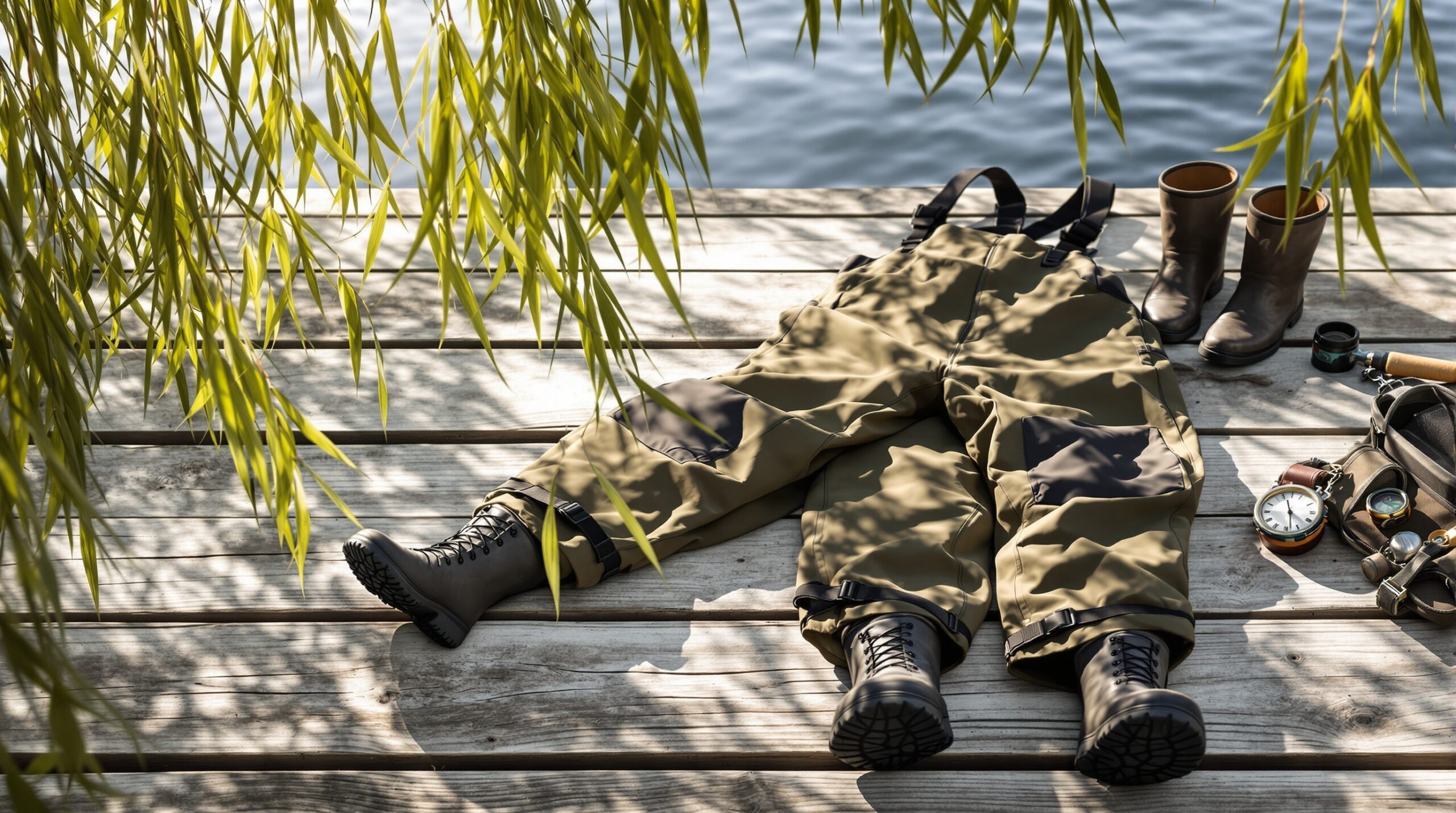
- Knees and shins: 4-5 layers withstand repeated rock contact during crossings
- Seat area: Reinforcement prevents wear from sitting on stream banks and boat seats
- Lower legs: 5-layer Cordura in premium models handles brush and sharp edges that tear lighter fabrics
Fit Considerations and Essential Design Features
Field evaluations by The Wading List identify the Simms G3 suspender system and gravel guards as “the best in the market”—components beyond shell fabric that determine whether waders enhance or hinder casting flow. These details create the difference between waders that feel integrated with your body and those that create constant distraction.
Fit takes priority over features when comparing models because improper sizing undermines even premium construction. Try waders with the actual fishing layers and boots you’ll wear, moving through casting motions and deep squats that simulate getting in and out of boats or crossing uneven streambeds. You might notice that waders feeling fine in the store become restrictive when layered with fleece and rain jackets during actual fishing conditions.
Inseam length presents persistent challenges across manufacturers. Research shows the Orvis Pro specifically presents fit issues for anglers with longer legs, highlighting how even premium models may not accommodate all body proportions. This limitation affects comfort and durability as improper length creates stress points that accelerate wear.
One common pattern involves anglers purchasing waders online based on chest size alone, then discovering the inseam doesn’t match their proportions. That mismatch creates bunching at the crotch or excessive length that pools around boots, both compromising mobility and creating wear points.
Adjustable suspenders distribute weight and maintain positioning throughout active fishing without the sagging that disrupts casting rhythm. Quality systems allow fine-tuning as layers change with weather conditions and provide backup security if one attachment point fails. Poor suspender design creates pressure points that become painful during extended sessions.
Essential Components Beyond Shell Fabric
These features determine daily usability and long-term satisfaction with your wader choice.
- Quality gravel guards: Create effective seals with neoprene boots, preventing debris infiltration
- Strategic pocket placement: Allows carrying fly boxes and tippet without disrupting movement
- Women’s-specific designs: Most manufacturers offer scaled-down men’s patterns rather than engineering for different body proportions
Matching Budget to Fishing Frequency and Conditions
Entry-level models like Frogg Toggs Canyon II and Redington Crosswater perform reliably under $200, while mid-range options range from $300-500, compared to premium models at $800+. This tiered approach lets you match financial commitment to actual time on water rather than aspirational fishing plans that may not materialize.
Budget allocation should align with use patterns and conditions rather than following gear enthusiasm. Anglers fishing occasionally or in moderate conditions find excellent value in options under $200 like the Frogg Toggs Canyon II or Redington Crosswater. These models provide adequate waterproofing and basic breathability for weekend trips without premium investment.
Expert consensus from Outdoor Life identifies the Simms G3 Guide as the best overall choice for breathability and durability based on field testing and guide interviews. Mid-range models from $300-500, including the Simms Freestone and Redington Sonic, suit regular weekend fishing with occasional extended trips.
Reserve premium investments above $800 for intensive use patterns—multiple days weekly, extreme environments like Alaska’s rivers, or professional guiding where failure means lost income. Professional guides report going entire seasons without leaks using premium models, validating that higher pricing can deliver proportional performance under demanding conditions.
Warranty standards provide insight into manufacturer confidence. Companies like Simms offer one-year leak protection, signaling construction quality while providing recourse for manufacturing defects. These guarantees acknowledge that even well-made waders face harsh realities during seasons of demanding use.
Emerging Innovations Worth Considering
Recent developments refine versatility and user experience beyond basic waterproof-breathable performance.
- Waterproof zippers: (Simms Freestone Z, Orvis PRO Zipper) eliminate awkward donning process
- Packable designs: (Patagonia Swiftcurrent) appeal to anglers hiking to remote water or traveling
- Convertible configurations: Address safety and seasonal comfort across varied conditions
Why Choosing the Right Fly Fishing Waders Matters
Quality fly fishing waders transform your relationship with water by enabling focus on presentation and drift rather than monitoring creeping dampness or overheating. Professional guides report entire seasons without leaks using premium models, validating that proper wader selection directly impacts fishing success and enjoyment. The right waders become invisible tools that enhance rather than distract from the meditative rhythm that defines fly fishing’s appeal.
Conclusion
Choosing fly fishing waders that keep you dry and comfortable requires balancing multi-layer breathable construction, proper fit, and budget alignment with your fishing frequency. Prioritize 3-5 layer shells with GORE-TEX or equivalent membranes, reinforced high-wear zones, and essential features like quality gravel guards and adjustable suspenders. Match your investment to use patterns: under $200 for occasional fishing, $300-500 for regular weekends, or $800+ for intensive conditions. With proper selection informed by comprehensive gear knowledge and travel considerations, your waders become integrated tools that enhance the peaceful focus of reading water and pursuing rising fish.
Frequently Asked Questions
What are fly fishing waders?
Fly fishing waders are waterproof chest-high garments that allow anglers to wade into streams and rivers while maintaining dryness and casting mobility through breathable membrane technology.
How do breathable waders work?
Breathable waders use 3-5 layer fabric systems with GORE-TEX or equivalent membranes that block water infiltration while allowing body moisture to escape, preventing internal condensation buildup.
What should I budget for fly fishing waders?
Budget under $200 for occasional use, $300-500 for regular weekend fishing, or $800+ for intensive conditions. Match your investment to actual time on water rather than aspirational plans.
What is the difference between cheap and expensive waders?
Expensive waders feature 5-layer Cordura reinforcement, superior breathability, and targeted durability zones. Premium models like Simms G4 deliver zero leaks over entire guide seasons in demanding conditions.
How should fly fishing waders fit?
Waders should allow full casting mobility without restriction while avoiding excess fabric that bunches uncomfortably. Try them with actual fishing layers and boots, testing casting motions and deep squats.
What does GORE-TEX Pro mean in waders?
GORE-TEX Pro is a multi-layer breathable membrane technology that creates waterproof barriers while allowing body moisture transfer, preventing the condensation that plagued earlier rubber designs.
Sources
- Into Fly Fishing – Comprehensive testing of premium and mid-range waders with professional guide perspectives on durability and real-world performance across multiple seasons
- Midcurrent – Analysis of emerging materials including PFAS-free options and lightweight packable designs for traveling anglers
- The Wading List – Detailed component evaluation focusing on suspender systems, gravel guards, and women’s-specific fit considerations
- Outdoor Life – Expert reviewer synthesis combining first-hand testing with guide interviews to establish best overall recommendations
- Ontario Trout and Steelhead – Budget-focused guidance on entry-level and mid-range options for anglers building their practice