

Starting fly fishing requires less equipment than most newcomers assume—approximately a dozen fly patterns, one versatile rod, and essential tools totaling around $350 for a complete starter system. The overwhelming array of specialized gear marketed to beginners often obscures a simple truth: success on the water comes from mastering fundamentals with quality basics, not accumulating tackle boxes full of options. Fly fishing equipment for beginners is not about collecting every available gadget—it is the minimal, versatile gear setup that allows newcomers to learn casting, presentation, and fish-reading skills without overwhelming complexity or excessive cost.
Quick Answer: Beginners need a 9-foot, 5-weight rod/reel combo with backing, floating line, leader, and tippet, plus 6-12 flies spanning dry flies, nymphs, and streamers, basic tools (nippers, forceps, floatant), and polarized sunglasses—typically $350-400 for a complete starter system.
Definition: Fly fishing equipment for beginners is the minimal, versatile gear setup that allows newcomers to learn casting, presentation, and fish-reading skills without overwhelming complexity or excessive cost.
Key Evidence: According to Middle River Outfitters, expert guides consistently use “about a dozen or so type of fly patterns” even for experienced fishing, demonstrating that success comes from understanding a few proven patterns rather than carrying hundreds of options.
Context: This minimalist approach accelerates learning by keeping focus on casting technique, drift, and reading rises rather than gear selection.
Maybe you’ve wandered through a fly shop feeling overwhelmed by walls of rods, reels, and thousands of fly patterns, wondering where to even begin. That feeling is normal—the industry often presents complexity where simplicity works better. When you start with proven gear combinations, you can focus on reading the water, perfecting your cast, and understanding how trout feed rather than second-guessing equipment choices. The sections that follow will walk you through exactly what to buy first, how much to budget, and where to put your resources for the fastest path to success on the water.
Key Takeaways
- 5-weight versatility: The 9-foot, 5-weight rod serves as the universal beginner recommendation, offering enough delicacy for small streams while handling larger waters
- Minimal fly selection: Start with 6-12 patterns across three categories—dry flies, nymphs, and streamers—rather than overwhelming yourself with variety
- Complete combo systems: Pre-rigged outfits like the Orvis Clearwater ($350) eliminate guesswork by matching rod weight to reel capacity and line specifications
- Essential tools focus: Core accessories emphasize fish care and fly maintenance—nippers, forceps, floatant, and polarized sunglasses
- Waders remain optional: Shore-based fishing and warm-season wet wading eliminate this expense initially, allowing resources toward quality rod/reel systems
The Core Rod and Reel System for Fly Fishing Equipment for Beginners
You might notice that every guide, outfitter, and manufacturer points toward the same universal recommendation when discussing fly fishing equipment for beginners. According to Fly Fish Food experts, “Start with a 5-weight rod – versatile for trout and ideal for most freshwater fishing… 9 feet is a great all-around length.” This specification represents the sweet spot for learning—light enough to protect delicate tippet when a trout rises to your dry fly, yet powerful enough to turn over weighted nymphs or push streamers through wind.
A complete combo system eliminates the guesswork that once intimidated newcomers. These packages arrive with backing already attached to the reel, weight-forward floating line properly spooled, and a 9-foot tapered leader in 4X or 5X specifications. The Orvis Clearwater at approximately $350 serves as the benchmark for quality starter systems that won’t frustrate learning while avoiding the expense of top-tier components whose advantages only matter to advanced practitioners.
This works through three mechanisms: combo packages solve a problem beginners don’t realize they have—matching rod action to reel capacity and line specifications. These details can distract from practice time and lead to expensive mistakes. Modern versatile lines like Scientific Anglers Mastery MPX accommodate dry flies, nymphs, and streamers in a single setup, allowing you to explore different techniques without changing equipment. That combination reduces decision paralysis and increases time spent actually fishing.
Building Your Starter Fly Selection and Essential Tools
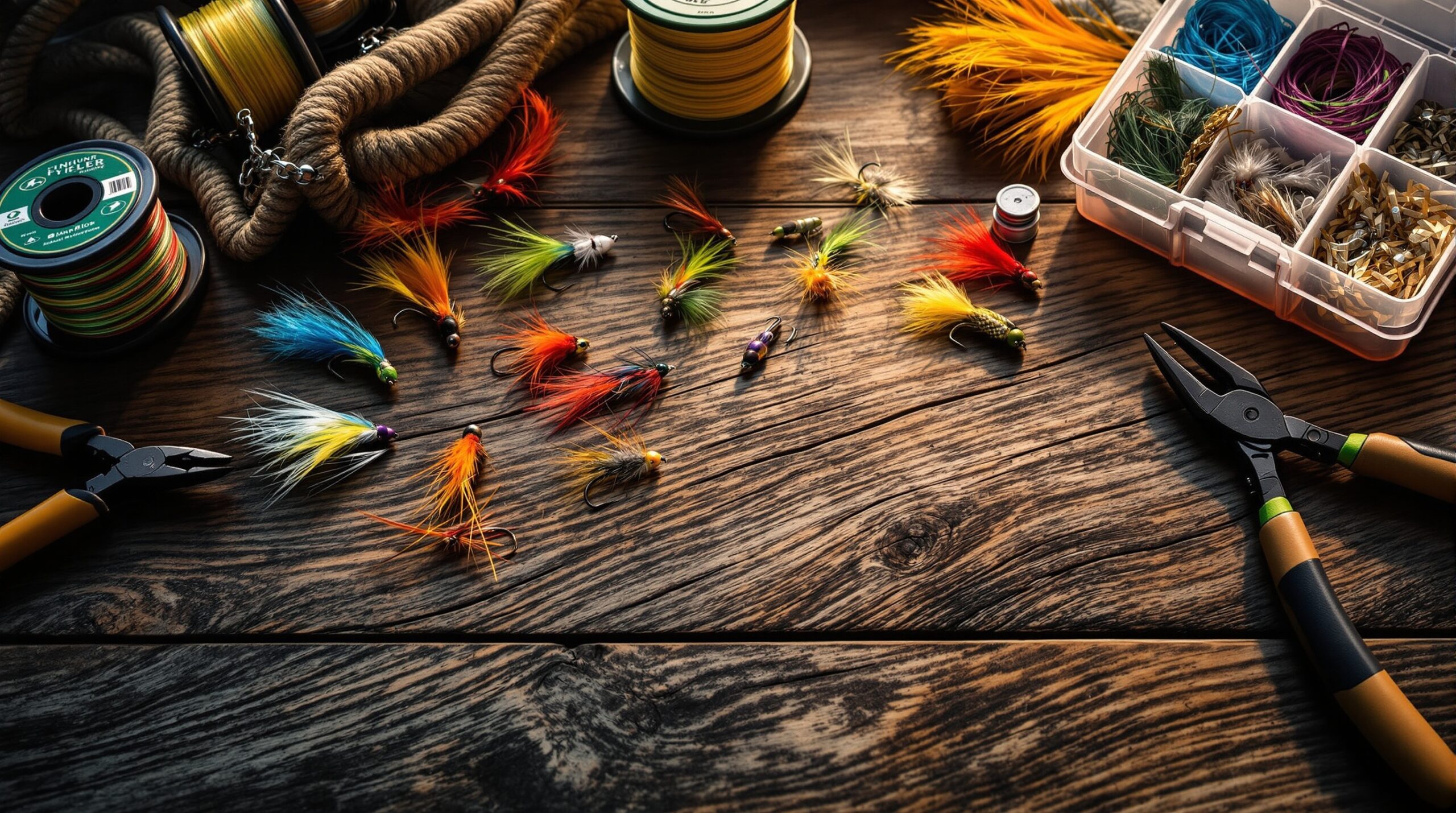
One common pattern that shows up often: new anglers walk into fly shops and feel pressured to buy dozens of different patterns, thinking variety equals success. Then they spend more time choosing flies than fishing them. Your fly selection should counter this instinct to purchase variety. As one experienced guide at Middle River Outfitters admits, “I basically use about a dozen or so type of fly patterns,” demonstrating that even seasoned anglers rely on proven patterns rather than endless options.
Purchase 6-12 flies spanning three categories that cover most trout fishing situations. Dry flies for surface feeding include Elk Hair Caddis, Adams, and Royal Wulff in sizes 12-16. Nymphs for subsurface presentation feature Pheasant Tail, Hare’s Ear, and Prince Nymph in sizes 12-16. Streamers for aggressive fish center on Woolly Bugger patterns in multiple colors, sizes 6-10. This focused collection allows you to learn each pattern’s behavior—how it floats, sinks, or moves in current—rather than juggling dozens of unfamiliar options.
Essential tools fit comfortably in pockets and emphasize fish care alongside fly maintenance. According to Orvis specialists, core accessories include nippers for trimming tippet, forceps or hemostats for safe hook removal, floatant paste or powder to maintain dry fly buoyancy, and split shot for adding weight to nymphs. Polarized sunglasses serve double duty—protecting your eyes from errant casts while cutting surface glare to reveal feeding trout and underwater structure.
What to Skip Initially
Common beginner mistakes involve over-purchasing accessories before understanding their function.
- Elaborate vests and multiple fly boxes: Distract from core skill development of casting and reading water
- Wading staffs and nets: Useful later but unnecessary for shore-based fishing and learning phases
- Specialized lines: Multi-purpose lines serve beginners better than technique-specific options
Practical Setup and Getting Started on the Water
Maybe you’ve wondered how to avoid the common mistakes that frustrate learning—like improper backing attachment or mismatched components that create casting problems. Building your first setup requires prioritizing established manufacturers offering complete pre-rigged systems. Orvis notes that “a beginner fly fisher needs a fly rod, reel, fly line setup (backing, line, leader, tippet), a few flies, and a good pair of polarized sunglasses” to begin fishing productively.
For your first seasons, fish from shore or wade wet in warm weather, postponing wader purchases until you’ve confirmed your commitment and identified your preferred waters. This approach keeps mobility high while allowing you to explore different locations without the constraint of keeping waders dry during hikes to remote streams. When nymphing becomes part of your technique, attach strike indicators like Thingamabobbers above your flies to detect subtle takes, adjusting depth with split shot until achieving proper drift through feeding lanes.
Realistic budgets extend beyond the $350 combo to include flies, tools, tippet replacement, and inevitable losses while learning. Most beginners invest $400-450 total for their first season, with additional flies and tippet material representing ongoing consumables. This investment pays dividends when put toward quality rod/reel/line combinations and guided instruction rather than peripheral equipment that won’t improve your casting or fish-reading skills.
Regional Considerations
The 5-weight standard performs adequately across conditions but optimal gear varies by geography.
- Small mountain streams: May eventually require shorter, lighter rods for tight quarters and rhododendron-choked banks
- Large Western rivers: Reward longer rods and heavier line weights for distance casting
- Local fly shops: Provide terrain-specific guidance for your intended waters
Why Fly Fishing Equipment for Beginners Matters
Starting with appropriate gear accelerates learning by revealing technique rather than masking mistakes with inadequate equipment. The industry’s consolidation around $350 combo systems removes historical barriers that once required intimate knowledge before making your first cast. This democratization allows newcomers to focus immediately on reading rises, achieving proper drift, and understanding how trout feed. That focus is where choice lives—between fumbling with mismatched gear and developing the skills that create lifelong passion for the water.
Conclusion
The essential fly fishing equipment for beginners centers on a versatile 9-foot, 5-weight rod/reel combo, a modest selection of proven fly patterns, and basic tools emphasizing fish care and fly maintenance. This minimalist approach—totaling approximately $350-400 for a complete starter system—keeps focus on technique development rather than gear accumulation. By starting with quality basics from established manufacturers like Orvis, Echo, or Winston, beginners can spend their time where it matters most: practicing their cast, learning to read the water, and experiencing the satisfaction of fooling a rising trout with proper presentation. For those ready to take the next step, exploring complete starter kit options or learning fundamental fly fishing techniques will deepen your connection to this timeless pursuit.
Frequently Asked Questions
What is the best rod weight for beginner fly fishing?
A 5-weight rod is the universal beginner recommendation. It offers enough delicacy for small streams while handling larger waters, making it versatile for most freshwater trout fishing situations.
How much should beginners expect to spend on fly fishing equipment?
Complete starter systems cost approximately $350-400, including a rod/reel combo, flies, essential tools, and accessories. This covers everything needed to begin fishing productively.
How many flies do beginners actually need?
Start with 6-12 flies spanning three categories: dry flies (Elk Hair Caddis, Adams), nymphs (Pheasant Tail, Hare’s Ear), and streamers (Woolly Buggers). Even expert guides use about a dozen patterns.
What does a complete fly fishing combo system include?
Combo systems arrive with backing attached to the reel, weight-forward floating line spooled, and a 9-foot tapered leader. This eliminates guesswork in matching components correctly.
Do beginners need waders to start fly fishing?
No, waders are optional initially. Shore-based fishing and warm-season wet wading eliminate this expense, allowing resources toward quality rod/reel systems and skill development.
What essential tools should beginner fly fishers carry?
Core tools include nippers for trimming tippet, forceps for hook removal, floatant for dry flies, split shot for nymphs, and polarized sunglasses for eye protection and seeing underwater.
Sources
- Middle River Outfitters – Regional outfitter guidance on essential equipment and fly pattern selection
- Fly Fishing Fix – Comprehensive beginner gear recommendations including pricing and combo outfit options
- Fly Fish Food – Video instruction on rod weight and length selection for beginners
- Orvis – Industry leader perspective on minimal viable equipment for new fly fishers
- The Fly Shop – Guidance on versatile line options and terrain-specific considerations
- BC Outdoors Magazine – Historical context on traditional equipment approaches and enduring standards