

Modern fly fishing vests weigh as little as 12 ounces—less than a water bottle—yet organize everything you need for seamless presentation during critical hatches. The right vest transforms cluttered frustration into focused efficiency on the water, but choosing between mesh construction, water-resistant nylon, and feature-packed designs requires understanding your actual fishing style. A fly fishing vest is not just storage. It is structured gear organization that keeps essential tackle accessible during active feeding periods when seconds determine whether you match the hatch or watch fish refuse your pattern. This guide synthesizes hands-on testing to match vest features to your conditions, body type, and budget.
Quick Answer: The perfect fly fishing vest balances three elements: lightweight construction (12-23 ounces) for all-day comfort, intelligent pocket architecture for quick fly access, and breathable materials matched to your typical conditions—whether warm-weather mesh or water-resistant nylon for wet environments.
Definition: A fly fishing vest is a specialized garment that organizes tackle, flies, and tools for immediate access during active fishing while maintaining mobility and comfort throughout extended sessions on the water.
Key Evidence: According to Field & Stream, premium vests now weigh between 12-23 ounces, with the Orvis Ultralight at just 340 grams.
Context: Modern materials eliminate the fatigue of traditional heavy cotton designs while maintaining essential storage capacity.
Fly fishing vests work because they externalize gear organization, reducing mental load during critical moments and creating muscle memory for tool placement. When you establish consistent pocket assignments, your hands find what you need without breaking focus from the water. The benefit compounds over time as automatic retrieval replaces conscious searching. The sections that follow will examine how to match construction to conditions, prioritize fit over features, and navigate budget options that deliver genuine value for your specific fishing style.
Key Takeaways
- Weight matters for endurance: Modern vests under one pound prevent fatigue during extended sessions while carrying essential gear.
- Breathability determines wearability: Mesh construction and DWR coatings provide all-day comfort across varying conditions.
- Organization beats capacity: Intelligent pocket placement for fly boxes, tippet bars, and D-rings speeds critical fly changes during active feeding.
- Fit requires testing: Even premium vests may sit high on certain body types, restricting casting motion regardless of features.
- Budget options deliver value: Thoughtful designs between $80-$180 offer comparable functionality to flagship models for most anglers.
Match Your Fly Fishing Vest to Actual Water Conditions
Your typical fishing environment should dictate construction priorities, not aspirational scenarios you rarely encounter. For warm-weather sessions—summer bass ponds, lowland trout streams, saltwater flats—mesh or highly ventilated designs like the Bassdash or Simms G3 prevent overheating during long days under direct sun. Research by Field & Stream shows that mesh construction is gaining market share as anglers increasingly prioritize breathability, with models from Simms, Orvis, and Fishpond leading adoption. This shift particularly benefits stillwater enthusiasts fishing during summer, where traditional materials become uncomfortably warm during extended sessions reading the water for rises.
When fishing wet environments or unpredictable weather, lightweight water-resistant nylon options like the Simms Flyweight or Orvis Ultralight protect valuable items like licenses, phones, and dry flies while maintaining breathability. Expert reviewers consistently cite breathable mesh construction and DWR (Durable Water Repellent) coatings as essential features for all-day wear across conditions—from humid lowland streams to high-altitude drift fishing.
According to Into Fly Fishing’s hands-on testers, essential features of a good fly fishing vest include plenty of storage for fly boxes, fly line, leader and flies, as well as a spot for a water bottle, a D-ring, and tippet bars. This establishes that functional design centers on organizing tackle for immediate retrieval during critical moments—like matching a hatch pattern before the rise ends.
Modern Fly Management Systems
Innovation has surpassed traditional methods for faster pattern changes.
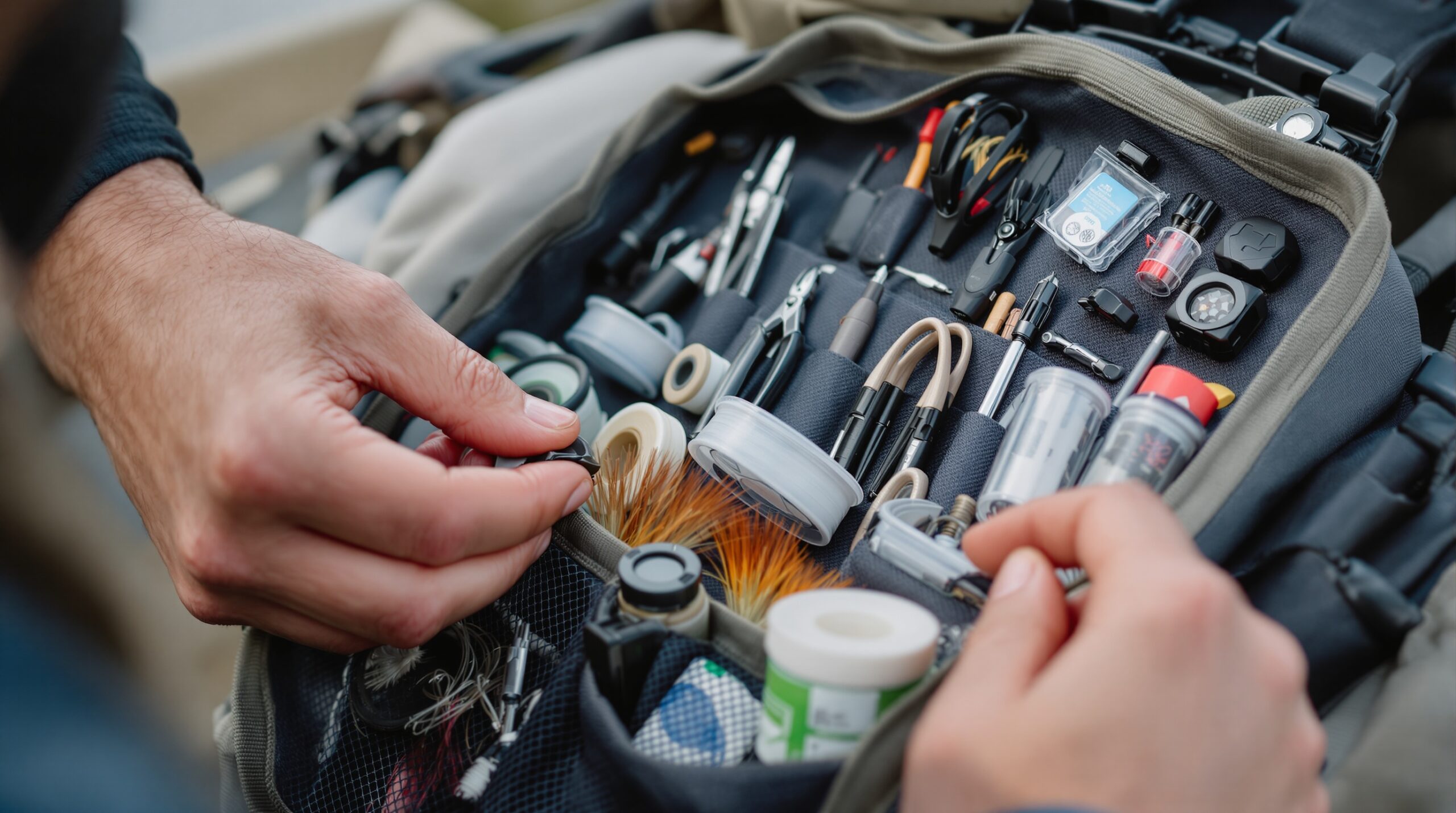
- Zip-away fly docks: The Fishpond Sagebrush Pro’s “pull-down Tacky fly dock that zips away when not in use” is “light-years better than the old wool drying patches”
- Snag-free attachment: Modern Tacky surfaces provide instant attachment and removal without catching leaders
- Active management: Enable pattern changes in seconds during mayfly hatches versus fumbling through pockets
Prioritize Fit and Comfort Over Feature Count
Maybe you’ve tried on vests that looked perfect online but felt restrictive once you started casting—that’s surprisingly common, even with premium brands. Test fit carefully before committing—a vest that restricts casting motion undermines every other feature, regardless of brand reputation or price. Padded shoulder straps and hidden adjustment systems prevent discomfort and avoid creating snag points that disrupt your cast. However, adjustability remains inconsistent across the market—some premium models lack the range needed to accommodate different body types or layering configurations.
Reviews note that even the Simms Flyweight suffers from limited adjustability and may “sit high” on certain body types. This demonstrates that testing fit before committing remains essential, regardless of price—non-adjustable vests that ride high create discomfort that builds throughout the day.
Research by Field & Stream shows that the one-pound threshold has become an informal benchmark, with designs prioritizing intelligent organization that keeps essential items accessible while encouraging anglers to leave redundant gear at home. Premium vests now weigh between 12-23 ounces, with the Orvis Ultralight at just 340 grams and the Simms Flyweight at 453 grams. This weight reduction allows anglers to carry essential gear without fatigue during extended sessions, focusing on technique rather than discomfort.
Budget Wisely—Premium Pricing Doesn’t Guarantee Perfect Performance
A persistent misconception holds that higher prices guarantee superior performance, but testing reveals budget options deliver genuine value for many fishing styles. Budget vests like the Jackson Hole Fly Co model at $84.99 pack similar features to premium options like the Simms Flyweight at $179.95. According to Into Fly Fishing, this finding establishes that thoughtful anglers can access quality organization and comfort without premium pricing—particularly valuable for those splitting time between remote backpacking trips and local waters.
The emergence of hybrid value propositions—vests priced between $80-$85 offering detachable foam systems and vertical pocket organization—indicates manufacturers recognize diverse angler needs beyond premium and budget extremes. While premium vests often justify costs through refined features and durability, the ideal fly fishing vest serves your actual fishing style, not an aspirational version you imagine pursuing someday.
One common pattern looks like this: you purchase a $300 vest with every possible feature, then find yourself reaching for a simpler $80 model because it’s lighter and less precious for everyday use. A vest gathering dust at home serves you far worse than a budget model that accompanies you regularly to the water. Budget options like the Maxcatch or Kylebooker work beautifully for drift-focused trips where you’re carrying smaller box selections and prioritizing mobility over comprehensive tackle access.
However, budget compromises exist. Reviews note finicky zippers or frayed stitching that can fail mid-season on some budget models. Overlooking hardware quality leads to frustration that no amount of pocket organization can overcome.
Common Selection Mistakes
Avoid these pitfalls that undermine otherwise sound choices.
- Ignoring sizing: Non-adjustable vests restrict casting motion and create building discomfort throughout the day
- Non-fly-specific designs: “Fishing vests” lacking tippet bars or proper foam attachment points force improvised solutions
- Capacity over organization: Maximum pocket count matters less than intelligent placement for quick access during active feeding
Why Choosing the Right Fly Fishing Vest Matters
Your vest directly impacts presentation quality during critical moments—the seconds when trout are actively feeding and pattern selection determines success or frustration. Modern designs weighing under one pound with breathable construction and intelligent organization eliminate the fatigue and fumbling that characterized earlier generations. This allows you to focus entirely on reading the water and executing precise casts rather than managing uncomfortable, poorly organized gear. The difference between fumbling through generic pockets while fish rise around you and smoothly switching patterns during a hatch window often determines whether you connect with feeding trout or watch them move on to easier prey.
Conclusion
The perfect fly fishing vest matches your actual conditions and body type rather than following premium brand trends or capacity maximization. Prioritize lightweight construction under one pound, breathable materials appropriate for your climate, and intelligent pocket architecture that keeps essential items accessible during active hatches. Test fit carefully—even premium models may restrict your casting motion if adjustability is limited. Budget options between $80-$180 deliver genuine value for most anglers, while mesh designs continue gaining adoption for warm-weather fishing. Choose based on where you actually fish, not where you imagine fishing someday. The right vest disappears into your routine, becoming as natural as your waders or your favorite rod, supporting countless hours of patient observation and precise presentation on waters that call you back again and again.
Frequently Asked Questions
What is a fly fishing vest?
A fly fishing vest is a specialized garment that organizes tackle, flies, and tools for immediate access during active fishing while maintaining mobility and comfort throughout extended sessions on the water.
How much should a fly fishing vest weigh?
Modern fly fishing vests should weigh between 12-23 ounces (under one pound). Premium models like the Orvis Ultralight weigh just 340 grams, preventing fatigue during extended fishing sessions while carrying essential gear.
What materials are best for fly fishing vests?
Mesh construction offers superior breathability for warm-weather fishing, while lightweight water-resistant nylon with DWR coatings protects gear in wet environments. Both materials should prioritize breathability for all-day comfort.
Do expensive fly fishing vests perform better than budget options?
Not necessarily. Budget vests like the Jackson Hole Fly Co model at $84.99 offer similar features to premium options like the Simms Flyweight at $179.95. Thoughtful designs between $80-$180 deliver genuine value for most anglers.
What features should I prioritize in a fly fishing vest?
Prioritize intelligent pocket placement for fly boxes, tippet bars, and D-rings over maximum capacity. Modern fly management systems like zip-away Tacky fly docks enable pattern changes in seconds during active hatches.
How important is vest fit for fly fishing?
Fit is critical—even premium vests may restrict casting motion if they sit high or lack adjustability. Test fit carefully before purchasing, as padded shoulder straps and proper adjustment systems prevent discomfort during long sessions.
Sources
- Into Fly Fishing – Comprehensive 2026 hands-on testing and buyer’s guide featuring weight specifications, essential features analysis, and comparative reviews across price points
- Midcurrent – Expert gear reviews of premium options including Fishpond Sagebrush Pro, Simms Flyweight, and Jackson Hole Fly Co models with practical field testing insights
- Field & Stream – Technical specifications and consensus features analysis from experienced angling reviewers covering materials, breathability, and all-day comfort factors
- Raprance – Mesh vest comparisons focusing on breathability and sustainability considerations across major manufacturers