

Proper wader fit transforms your fishing experience from uncomfortable distraction to seamless immersion—yet most anglers select fly fishing waders based on their everyday clothing measurements, a critical mistake that leads to leaks, restricted movement, and premature gear failure. Fly fishing waders are not regular clothing scaled up for water use. Rather than following standard apparel sizing, they demand precision across three body measurements matched against brand-specific sizing charts, with manufacturers now offering specialized variants for diverse body types. This guide reveals the measurement fundamentals, body-type categories, and seasonal considerations that ensure your waders disappear into your fishing experience rather than becoming a source of frustration on the water.
Quick Answer: Choosing fly fishing waders that fit perfectly requires measuring your chest circumference at the fullest point, inseam from crotch to floor, and shoe size, then matching these measurements to brand-specific sizing charts rather than standard clothing sizes.
Definition: Fly fishing waders are waterproof garments that extend from chest to foot, designed to keep anglers dry while wading and allowing natural movement for casting and presentation.
Key Evidence: According to Vision Fly Fishing, undersized waders stress seams and significantly increase leak risk, while oversized waders compromise mobility and create entry points for water.
Context: Proper fit ensures waterproof protection while allowing natural casting and wading movement across all fishing conditions.
Wader fit works through three mechanisms: it maintains waterproof integrity by preventing seam stress, it preserves mobility by allowing natural range of motion, and it creates proper seal points that keep water out. When measurements align with manufacturer specifications, the garment functions as intended rather than fighting against your body. Maybe you’ve experienced the frustration of waders that bind when you lift your arm to cast, or felt cold water seeping through stressed seams during a long day on the river—these problems trace back to improper sizing decisions made at purchase.
Key Takeaways
- Body measurements override clothing sizes: Chest, inseam, and shoe size determine proper wader fit, not your typical apparel dimensions
- Brand-specific charts are mandatory: Size dimensions vary substantially across manufacturers like Simms, Vision, and Redington
- Body-type variants eliminate compromise: Long, King, Short, and women’s cuts accommodate diverse proportions
- Seasonal layering requires sizing adjustment: Cold-weather fishing demands one size larger to prevent restriction
- Poor fit creates functional failure: Improper sizing compromises the fundamental waterproof function waders must provide
The Three Essential Body Measurements for Fly Fishing Waders
You might assume your regular clothing size translates to waders, but that assumption leads to poor outcomes. Proper wader sizing begins with understanding the measurement hierarchy that determines fit. For stockingfoot waders, you start by identifying the largest girth measurement among chest, waist, and hip, then match inseam length, followed by bootie size selection. This systematic approach prevents the common scenario where different body measurements suggest conflicting sizes, giving you a clear decision-making framework.
Chest measurement requires wrapping the tape measure around the fullest part of your chest under your arms, ensuring the tape remains level across your back. Notice how this differs from standard clothing chest size because waders must accommodate the full expansion of your ribcage during deep breathing while casting or wading against current. The precision matters because even small variations affect how the waterproof fabric stretches and seals.
Inseam measurement demands equal precision. Measure from your crotch to the floor while standing straight and barefoot, not from your trouser inseam. Pants typically sit below the natural crotch point, making their inseam measurement shorter than what waders require. This difference explains why anglers who rely on clothing inseam often end up with waders that feel too short through the torso.
According to Iwaderfishing research, proper wader sizing requires measuring chest at the fullest part under arms, inseam from crotch to floor, and accurate shoe size, with these body measurements forming the foundation for size selection. Standard apparel sizing fails because it doesn’t account for the unique construction and waterproof requirements that make waders fundamentally different from everyday garments.
Recording Your Measurements
Take measurements in lightweight clothing similar to what you’ll wear fishing for maximum accuracy.
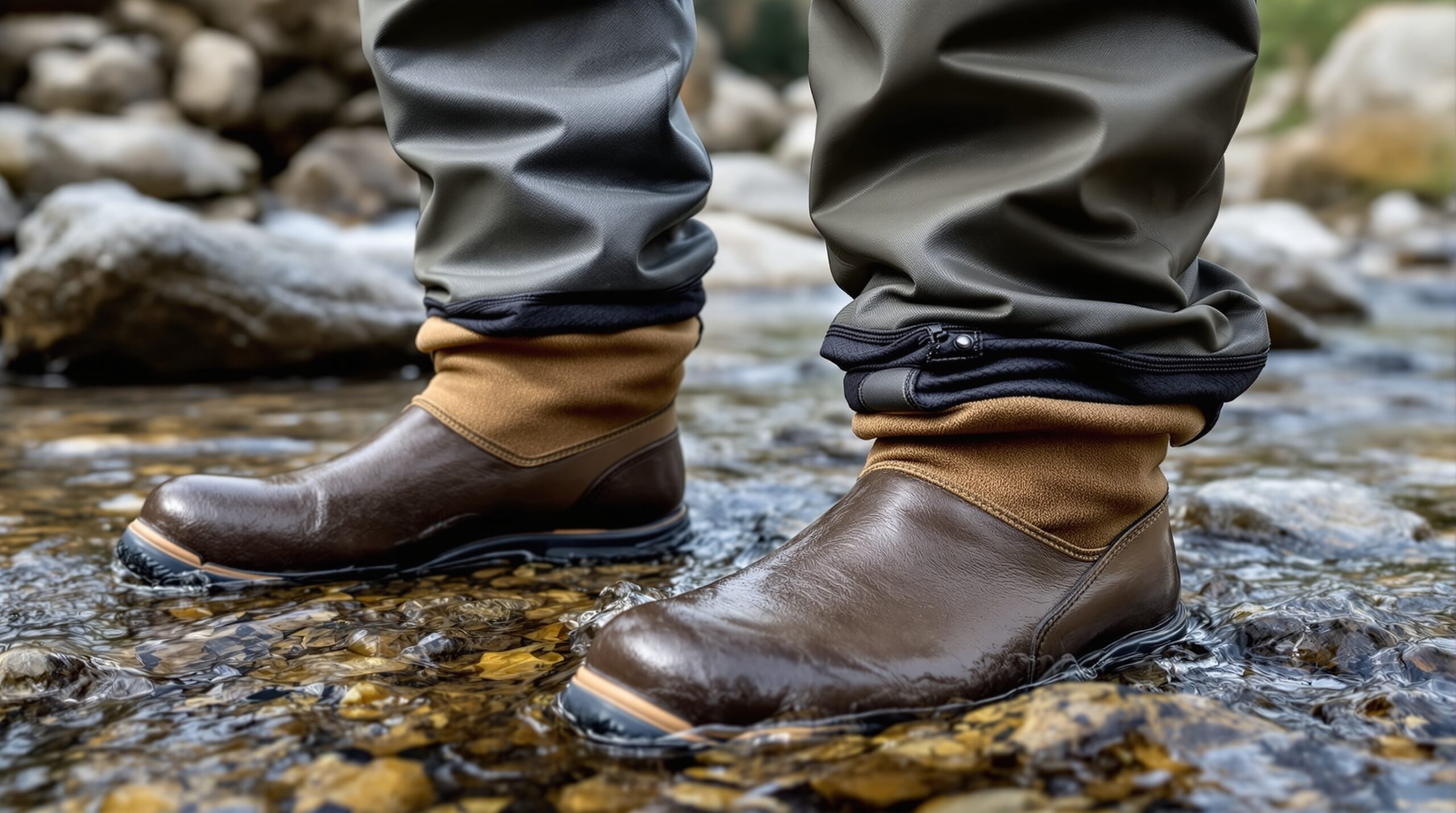
- Chest: Fullest point under arms, tape level around back
- Inseam: Crotch to floor standing barefoot, not trouser inseam
- Waist and hip: Natural waistline and fullest hip point for comprehensive data
- Shoe size: Accurate current size, as feet change over time
Understanding Body-Type Variants and Brand-Specific Charts
One pattern that shows up often looks like this: you find waders with perfect chest fit but legs that are too short, or proper leg length paired with a torso that’s uncomfortably tight. Modern manufacturers recognize that one size chart cannot accommodate the full spectrum of angler body types. Major brands categorize fly fishing waders into Standard builds for average proportions, Long variants for slimmer and taller frames, King sizes for heavier builds with shorter inseams, and Short options, each with distinct chest-to-inseam ratios. This specialization eliminates the frustration of choosing between adequate chest room and proper leg length.
Women’s wader sizing represents a particularly important development in inclusive design. Guideline Fly Fish Canada offers Regular and Queen variants that acknowledge female body proportions require fundamentally different construction rather than simply scaled-down men’s patterns. These dedicated cuts account for differences in hip-to-waist ratios and torso length that affect fit and comfort.
Brand variation presents a persistent challenge that demands attention to detail. Size dimensions vary substantially across manufacturers—Vision’s Standard M features a 117cm chest measurement while comparable medium sizes from other brands show different specifications. This inconsistency means an angler who wears medium in one brand cannot assume the same size translates directly to another maker’s product line.
Expert guidance from Vision Fly Fishing consistently emphasizes the consequences of improper sizing: undersized waders will stress the seams and risk leaks, while they recommend trying on waders at your local shop for the perfect fit. This advice reflects the industry understanding that wader fit affects not just comfort but fundamental functionality.
When Measurements Fall Between Sizes
The common scenario where different body measurements suggest different sizes requires strategic decision-making.
- Prioritize largest girth: Chest, waist, or hip measurement takes precedence for overall fit
- Consider fishing conditions: Size up for cold-weather layering needs, size down for warm-weather minimal clothing
- Seam stress concerns: Too-tight fit compromises waterproof integrity more than slightly loose fit affects mobility
Seasonal Considerations and Common Sizing Mistakes
Temperature considerations significantly influence proper fly fishing waders sizing. You might discover that waders fitting perfectly over summer fishing shirts become restrictive torture devices when you add fleece layers for autumn trout fishing. Anglers planning to fish in cold conditions should size up one increment to accommodate thermal layers without creating restriction that leads to discomfort and potential seam stress. Waders that fit perfectly over a t-shirt become uncomfortably tight over fleece layers, restricting your casting motion and stressing seams at stress points.
The most common mistakes stem from treating waders like regular clothing. Assuming your clothing size translates to waders, failing to account for layering needs, choosing based on price rather than fit, and buying undersized waders hoping they’ll “break in” all lead to poor outcomes. Unlike leather boots, waders don’t stretch meaningfully with use—what you get is what you’ll have for the life of the garment.
Poor fit creates measurable functional consequences beyond mere discomfort. Undersized waders place excessive stress on seams and significantly increase leak risk, while oversized waders create mobility restrictions and gaps where water can enter. The waterproof integrity that defines a wader’s core function becomes compromised when fit is wrong, regardless of material quality or construction.
Value considerations support prioritizing fit over price. Less expensive waders that don’t fit properly deliver worse value than more costly pairs that fit correctly. Poorly fitting waders frustrate you on every outing, develop leaks faster due to stress points, and need replacement sooner than properly fitted gear.
Research by Iwaderfishing shows that anglers should measure chest, inseam, and shoe size first, check brand-specific charts as sizes vary, and factor in layering for cold conditions by sizing up to avoid restriction and leaks. If possible, test waders at local fly shops to assess fit with movement—simulate casting motions, squat down, and walk around to ensure the waders don’t restrict your range of motion.
Why Fly Fishing Waders Fit Matters
Proper wader fit directly determines whether you stay dry and comfortable throughout your fishing day. The difference between correctly sized waders and poor fit extends beyond mere comfort—it affects your casting mobility, wading confidence, gear longevity, and your willingness to spend extended time on the water. When waders fit properly, they become invisible to your fishing experience rather than a constant source of distraction. Poor fit compromises the fundamental promise that makes waders worthwhile: keeping you dry so you can focus on reading water and presenting flies effectively.
Conclusion
Choosing fly fishing waders that fit perfectly begins with accurate body measurements—chest, inseam, and shoe size—matched against manufacturer-specific sizing charts that acknowledge diverse body types through specialized variants. Reject the temptation to rely on standard clothing sizes or compromise on fit for price considerations. Account for seasonal layering needs by sizing up for cold-weather fishing, and whenever possible, try on waders at local fly shops to assess movement and comfort. Properly fitted waders transform from gear you tolerate into equipment that disappears into your fishing experience, keeping you dry and focused on what matters most—the fish rising just beyond your next cast.
Frequently Asked Questions
What are fly fishing waders?
Fly fishing waders are waterproof garments extending from chest to foot that keep anglers dry while wading and allow natural movement for casting and presentation in rivers and streams.
How do I measure myself for fly fishing waders?
Measure chest at fullest point under arms, inseam from crotch to floor barefoot, and current shoe size. These three measurements determine proper wader fit, not standard clothing sizes.
Should I size up fly fishing waders for winter?
Yes, size up one increment for cold-weather fishing to accommodate thermal layers. Waders fitting perfectly over t-shirts become restrictive over fleece layers, stressing seams.
What happens if fly fishing waders don’t fit properly?
Undersized waders stress seams and increase leak risk, while oversized waders compromise mobility and create water entry points. Poor fit compromises waterproof integrity.
Do fly fishing wader sizes vary between brands?
Yes, wader dimensions vary substantially across manufacturers like Simms, Vision, and Redington. Always check brand-specific sizing charts rather than assuming consistent sizing.
What are body-type variants in fly fishing waders?
Manufacturers offer Standard, Long, King, Short, and women’s cuts to accommodate diverse body proportions, eliminating compromise between chest fit and leg length.
Sources
- Vision Fly Fishing – Comprehensive sizing categories including Standard, Long, King, and Short variants with emphasis on body measurements and seam stress from improper fit
- Nile Creek Fly Shop – Detailed dimensional charts for Vision waders in metric measurements covering chest, waist, inseam, and sock length
- Guideline Fly Fish Canada – Women’s wader sizing including Regular and Queen variants with specific body dimension ranges
- Iwaderfishing – Measurement methodology, brand variation warnings, and layering considerations for cold-weather fishing
- Simms Fishing – Sizing hierarchy prioritizing largest girth measurement for stockingfoot wader selection
- Patagonia – Comprehensive fit guidance and self-measurement techniques for accurate sizing
- Orvis – Sizing information covering men’s, women’s, and children’s waders and boots
- Farbank/Redington – Redington wader sizing including Long and King variants with chest, inseam, and shoe size specifications