

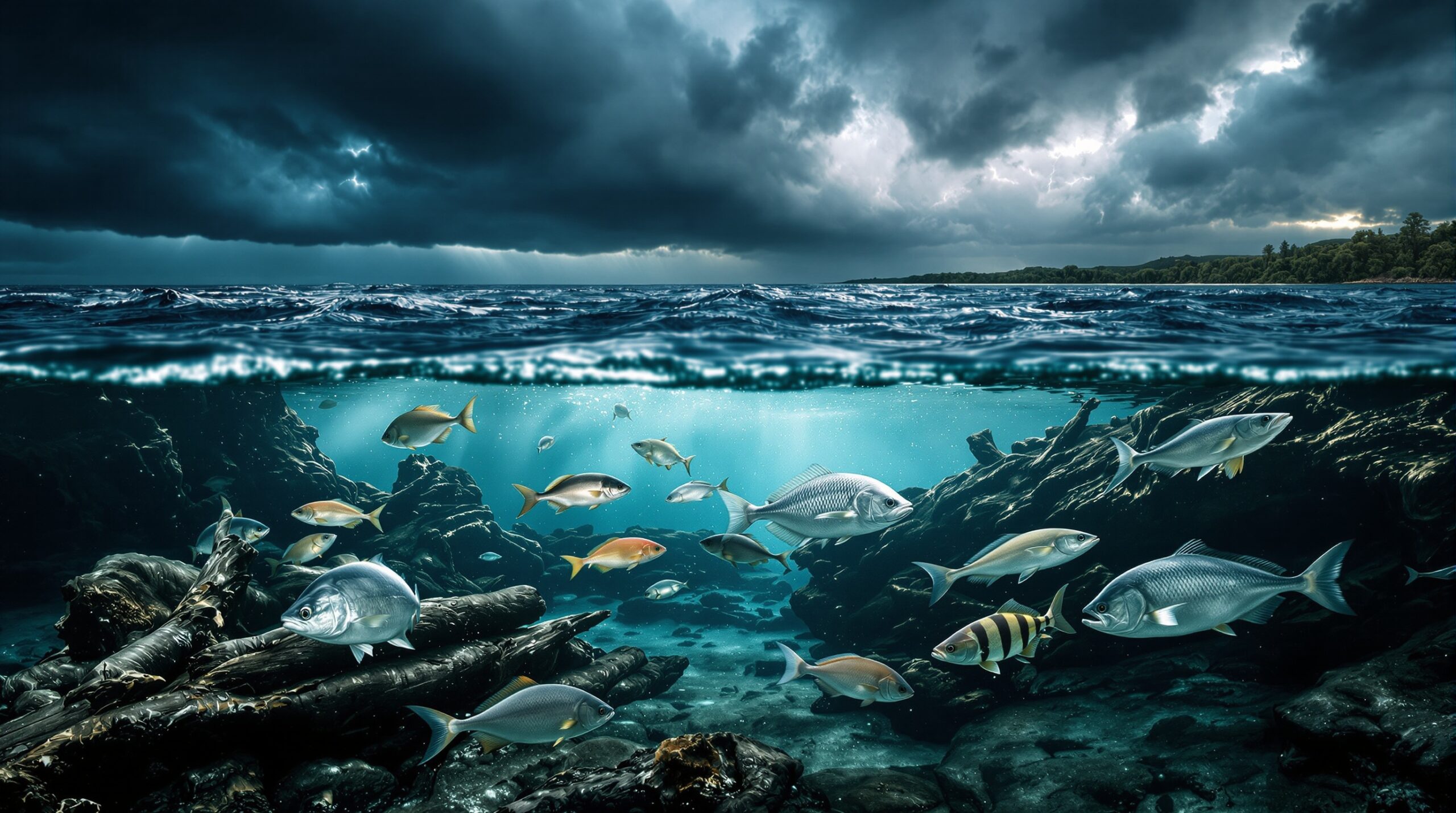
Falling barometric pressure before a storm triggers aggressive feeding behavior across multiple fish species, creating predictable windows where even difficult waters produce consistent action—if you know when to arrive. Understanding weather impact on fish behavior transforms time on the water from guesswork into informed strategy, allowing anglers to anticipate movements before they happen. Weather impact on fish behavior is not random chance or superstition—it is measurable response patterns that allow precise timing of fishing trips around atmospheric conditions. This article reveals how temperature, barometric pressure, and seasonal patterns drive fish movements, providing practical frameworks for predicting where fish will be and when they’ll feed most aggressively.
Quick Answer: Weather impact on fish behavior is primarily driven by water temperature and barometric pressure, with optimal trout activity occurring between 48-65°F and falling pressure triggering feeding frenzies across species, while rising pressure typically depresses activity and pushes fish to thermal refuges.
Definition: Weather impact on fish behavior is the predictable response fish exhibit to atmospheric and water temperature changes, manifesting as altered feeding patterns, location preferences, and activity levels.
Key Evidence: According to Montana Angler, water temperature between 48-65°F represents prime conditions for trout activity, where they move farther from holding lies to intercept food, while above 65°F activity declines as dissolved oxygen drops.
Context: These temperature and pressure thresholds establish the foundation for predicting when fish will actively feed versus when they’ll retreat, fundamentally shaping where and how to fish throughout the day and season.
Maybe you’ve noticed how your best fishing days often happen right before storms roll in, when the air feels heavy and fish seem unusually willing to chase flies they’d normally ignore. Weather patterns create feeding opportunities through predictable cause-and-effect relationships. Temperature changes alter fish metabolism directly, while pressure shifts influence their willingness to move and feed. When you understand these mechanisms, you can position yourself where fish will be rather than where they were.
Key Takeaways
- Temperature drives metabolism – The 48-65°F range creates optimal feeding conditions, while extremes push fish to thermal refuges
- Falling pressure triggers feeding – Pre-storm periods create aggressive feeding windows as fish sense atmospheric changes
- Spring warming signals migration – Bass move to shallow coves when water reaches mid-50s to low 60s°F
- Cloud cover disperses fish – Overcast conditions spread fish activity across water compared to sunny aggregation patterns
- Cyclical patterns concentrate baitfish – Predictable weather patterns every 3-5 days bring upwellings that stack food chains shallow
How Temperature Controls Fish Movement and Feeding Windows
You might have wondered why some days produce rising fish across entire runs while others leave the same water seemingly empty. Water temperature stands as the single most important variable for fish behavior, influencing metabolism, oxygen needs, and feeding activity because fish are cold-blooded creatures whose body functions speed and slow with surrounding water. According to Montana Angler research, stable conditions within the optimal range yield the most consistent fishing results.
Between 48-65°F, trout move farther from holding lies to intercept food actively, creating the most predictable feeding periods. This temperature window triggers increased metabolic activity that drives fish to seek more food while maintaining comfortable energy expenditure. You’ll notice fish rising more frequently, chasing streamers more aggressively, and holding in current where they can intercept drifting insects.
Above 65°F, activity declines as dissolved oxygen drops and metabolic stress increases, pushing fish to springs, seeps, and shaded water where cooler temperatures maintain comfortable conditions. Summer heat transforms productive shallow runs into empty water, forcing fish into deep pools and spring-fed tributaries where temperatures remain stable. This shift demands entirely different location strategies and presentation techniques.
Temperature changes work through three mechanisms: they alter metabolic rates directly, they affect dissolved oxygen levels, and they trigger movement to thermal refuges. Fish respond by adjusting their activity levels and relocating to maintain optimal body temperature. This creates predictable windows where feeding intensifies and predictable refuges where fish concentrate during temperature extremes.
Seasonal implications follow predictable patterns. Spring warming into the mid-50s to low 60s°F triggers bass migration to shallow coves and creek arms for prespawn feeding, creating exceptional opportunities in accessible water. According to Smooth Moves Seats analysis, this temperature threshold signals the beginning of reliable shallow-water fishing that rewards anglers who monitor warming trends.
Reading Temperature Through the Seasons
Temperature-driven movements follow predictable patterns that allow advance positioning.
- Spring: Target shallow warming bays and creek arms as water reaches mid-50s
- Summer: Shift to deep pools, spring-fed tributaries, and shaded banks where cooler water persists
- Fall: Return to accessible water as temperatures moderate, creating the year’s most reliable feeding when fish sense approaching winter
Barometric Pressure Patterns and Pre-Storm Feeding Frenzies
One common pattern looks like this: you check the weather, see storms approaching in 18 hours, and decide to fish anyway despite threatening skies. The session turns into one of your best days of the season, with fish hitting flies they normally refuse and aggressive takes in spots that usually require delicate presentations.
Falling barometric pressure increases fish feeding activity across multiple species, while rising pressure depresses it, creating predictable windows around weather fronts. Research by Angling Edge scientists shows predictable weather patterns every 3-5 days in spring and summer bring upwellings that concentrate baitfish shallow, requiring adjustments during tough bites between favorable windows.
Target the 12-24 hour window before storm systems arrive when this feeding frenzy peaks. Fish seem to anticipate changing conditions and respond by increasing activity levels dramatically. Even normally cautious fish in pressured waters become more willing to take flies during these periods, making falling pressure one of the most reliable predictors for productive sessions.
Immediately after frontal passages when pressure spikes upward, expect tougher fishing as fish retreat deeper or become less willing to move for food. Post-frontal conditions often require slower presentations, smaller flies, and more patient approaches to trigger reluctant fish. Understanding this cycle prevents frustration when yesterday’s hot spot produces nothing after a weather system passes.
Cloudy conditions disperse fish more actively across water compared to sunny aggregation patterns, affecting whether searching patterns or precision presentations prove most effective. According to Fishing Virginia Beach research, overcast days offer better opportunities for covering water with streamers and nymphs, while bright conditions require reading specific lies where fish concentrate.
Practical Strategies for Weather-Based Fish Location
In the optimal 48-65°F range, cover water with searching patterns and faster drifts as fish move more freely to intercept food. Cast prospecting patterns aggressively, reading rises and adjusting fly selection to match active hatches. When temperatures climb above 65°F, shift entirely to springs, seeps, and shaded water where cooler temperatures persist, slowing your drift to accommodate less active fish with reduced metabolic rates.
When forecasts show falling pressure with approaching weather systems, prioritize time on the water over other commitments. These windows often outweigh factors like time of day or moon phase in predicting fish activity. Conversely, after frontal passages when pressure spikes, fish slowly and methodically in deeper lies with longer, more natural drifts that might trigger reluctant fish.
Maybe you’ve experienced that sinking feeling when you arrive at the water and notice the barometer has been climbing steadily for two days—the fish seem to know before you cast your first line. Seasonal location shifts require corresponding strategy changes. Spring warming demands focus on shallow coves and creek arms where fish migrate for spawning and feeding. Summer heat requires deep pools and spring-fed tributaries where comfortable temperatures persist. Fall brings fish back to accessible water as temperatures moderate, creating perhaps the year’s most predictable fishing.
Consistent winds create upwellings every few days that pile cold, nutrient-rich water along certain shorelines, concentrating plankton, baitfish, and predators in accessible shallow water. Learn which wind directions create these conditions on your local waters and position yourself accordingly when those patterns arrive. What appears as difficult casting conditions often signals exceptional feeding activity.
Rapid Response to Rainfall Events
Rainfall rapidly alters small water bodies’ temperature, clarity, and nutrients, shifting fish behavior significantly.
- Immediate impact: Runoff clouds water and may depress feeding temporarily
- Recovery opportunity: Once conditions stabilize, introduced nutrients and terrestrial food sources trigger exceptional hatches
- Timing: Target the 24-48 hours after rainfall subsides for peak surface activity
Why Weather Impact on Fish Behavior Matters
Understanding weather patterns transforms fishing from chance to strategy, allowing anglers to anticipate movements before they occur. Weather impact on fish behavior matters because it creates the difference between random luck and consistent success on the water. As climate patterns shift baseline conditions, recognizing temperature thresholds, pressure trends, and seasonal triggers becomes increasingly valuable for consistently productive time on the water. This knowledge rewards patience with moments of genuine connection to the rhythms of wild fish responding to nature’s signals.
Conclusion
Weather impact on fish behavior follows predictable patterns centered on temperature and barometric pressure, with the 48-65°F range and falling pressure creating optimal feeding conditions. By monitoring these variables and adjusting location, timing, and presentation accordingly—targeting shallow water during spring warming, deep refuges during summer heat, and the hours before storms arrive—anglers transform atmospheric conditions from obstacles into navigation tools. The craft rewards those who learn to read these signals, developing intuitive understanding of when conditions align for exceptional fishing and when patience serves better than persistence. For deeper insights into pressure patterns, explore our guide to barometric pressure fishing, and learn more about seasonal movements in our analysis of trout holding patterns.
Frequently Asked Questions
What does weather impact on fish behavior mean?
Weather impact on fish behavior is the predictable response fish exhibit to atmospheric and water temperature changes, manifesting as altered feeding patterns, location preferences, and activity levels driven by barometric pressure and temperature.
What temperature range creates optimal fish feeding conditions?
The 48-65°F temperature range creates optimal feeding conditions for trout, where they move farther from holding lies to intercept food actively, while temperatures above 65°F depress activity and push fish to thermal refuges.
How does barometric pressure affect fish feeding behavior?
Falling barometric pressure increases fish feeding activity across multiple species, creating aggressive feeding windows 12-24 hours before storms, while rising pressure after fronts depresses activity and makes fish less willing to move.
What happens to fish when water temperatures get too warm?
Above 65°F, fish activity declines as dissolved oxygen drops and metabolic stress increases, pushing fish to springs, seeps, and shaded water where cooler temperatures maintain comfortable conditions and stable oxygen levels.
How do seasonal temperature changes trigger fish movement?
Spring warming into the mid-50s to low 60s°F triggers bass migration to shallow coves for prespawn feeding, while fall cooling brings fish back to accessible water as temperatures moderate, creating predictable seasonal patterns.
What is the difference between fishing before and after weather fronts?
Before fronts with falling pressure, fish feed aggressively and take flies they normally refuse, while after frontal passages with rising pressure, fish retreat deeper and require slower presentations with smaller flies.
Sources
- Montana Angler – Analysis of key variables affecting trout behavior, emphasizing water temperature’s primacy
- Smooth Moves Seats – Overview of barometric pressure effects and seasonal temperature-driven movements
- Angling Edge – Expert perspectives on cyclical weather patterns and their impact on baitfish concentration
- Fishing Virginia Beach – Cloud cover effects on fish distribution and activity patterns
- Fishing Booker – Analysis of precipitation impacts on water conditions and fish behavior
- onX Maps – Seasonal movement patterns and habitat mapping applications