
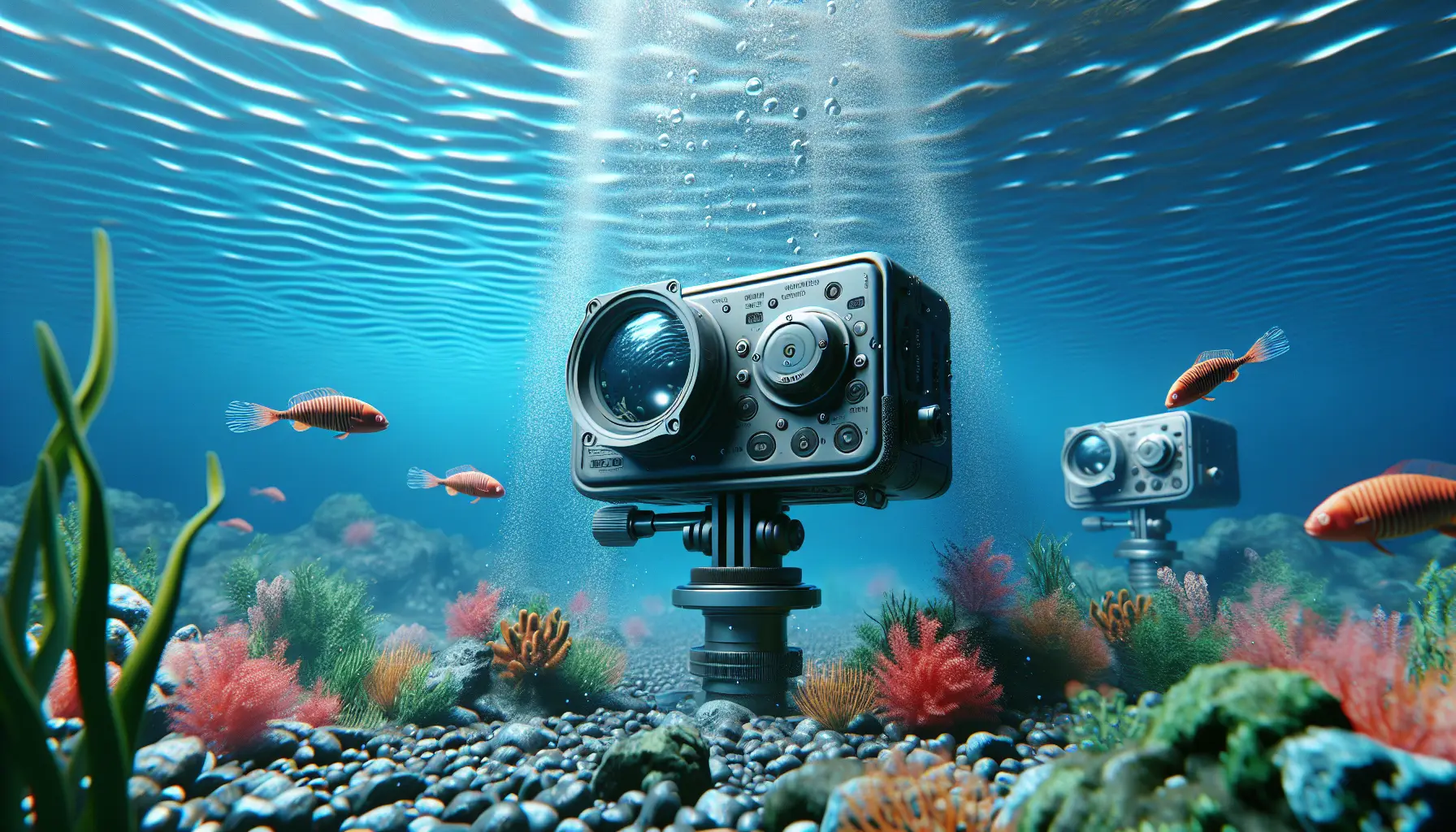
You’ve watched rises from the surface for years, reading the water through ripples and shadows. But what if you could see the complete story unfolding beneath—how trout position themselves before a take, the moment they inspect your pattern, the subtle body language that signals confidence or caution? Modern underwater fishing cameras have evolved from basic fish finders into sophisticated behavioral observation tools that reveal the hidden world where your presentations either succeed or fail.
Underwater fishing cameras are not simple fish detectors or basic recording devices. They are precision observation systems that capture behavioral details invisible from above, allowing you to study feeding mechanics, drift evaluation, and strike patterns with scientific clarity. These cameras serve dual purposes on the water: they provide real-time observation during your drift, showing exactly how fish react to your pattern, and they create reviewable footage that transforms individual experiences into lasting lessons about technique, timing, and presentation.
Quick Answer: Underwater fishing cameras are specialized video systems designed to observe fish behavior beneath the surface, with top models like FishPro HD1080P, FishSure FS5DS1, and Westin Cam offering 1080p resolution, wide-angle lenses up to 195°, and extended battery life for real-time observation and post-session analysis.
Definition: Underwater fishing cameras are waterproof video systems that capture subsurface fish behavior, feeding patterns, and habitat use through real-time viewing and recording capabilities.
Key Evidence: According to professional fishing camera reviews, entry-level systems start at $69.99, while professional-grade cameras with 20-hour battery life and zero-delay viewing are trusted by competitive teams including the Official USA Ice Fishing Team.
Context: Resolution standards of 1080p Full HD have become essential for capturing behavioral details that inform technique adjustments.
Underwater fishing cameras work by providing direct visual access to fish behavior that surface observation cannot reveal. When you deploy a camera, you see how trout position relative to structure, how they track drifting insects, and how they react to your pattern’s entry into their feeding lane. This mechanism transforms guesswork into observation, allowing you to adjust your approach based on what fish actually do rather than what you think they might do. The sections that follow will examine specific camera systems, essential specifications for behavioral study, and practical applications that help you read the water with new clarity.
Key Takeaways
- 1080p Full HD resolution is the minimum standard for capturing strike details and subtle fish behaviors with sufficient clarity for technique refinement
- Wide-angle lenses (130°-195°) reveal complete behavioral context including fish positioning relative to structure, current lanes, and territorial spacing
- Extended battery life (up to 20 hours) in flagship models supports dawn-to-dusk observation without interrupting sessions to recharge equipment
- Entry points under $120 make underwater observation accessible to anglers at any skill level for developing water-reading abilities
- Stabilization technology enables casting applications beyond stationary deployment, allowing documentation of full presentation lifecycle from entry through strike
Essential Specifications for Behavioral Study
Maybe you’ve wondered what actually happens when your nymph disappears into a deep run, or why fish seem to inspect your dry fly for what feels like forever before either taking or turning away. Current flagship underwater fishing cameras deliver 1080p Full HD video quality with viewing angles up to 195°, battery endurance reaching 20 hours, and professional-grade zero-delay viewing trusted for tournament performance. This resolution threshold makes the difference between simple fish detection and detailed behavioral analysis that actually improves your technique on the water.
Resolution standards matter more than you might expect. Research by professional fishing camera specialists shows that systems like FishPro, Westin, and FishSure with 1080p Full HD enable identification of subtle behaviors—hesitation before takes, pattern inspection during hatches, body language during drift. This visual detail provides what’s necessary to adjust techniques with precision. Below this threshold, cameras serve as simple fish detectors; above it, they become educational instruments.
Battery performance varies significantly across price points. You might notice that top-tier models including FishSure FS5DS1 and FishPro HD1080P offer 20 hours of continuous operation, matching the unhurried rhythm of fly fishing from morning rises through evening hatches. Mid-range options like the Dosilkc 7 Inch provide 5-6 hours, while the FarmNix CR110 delivers 8 hours of operation—sufficient for focused observation sessions without the interruption of battery swaps.
Viewing angles determine how much behavioral context you capture. The FishSure FS5DS1 features a 195° perspective with audio capture, revealing not just individual fish but their positioning relative to structure and current lanes. The FarmNix CR110 provides a 130° wide-angle view at 1200TVL resolution, while basic Lucky cameras use 480×272 displays for simple water viewing. Price accessibility starts at $69.99 for the Hopefox model and extends to $119.99 for Eyoyo and Blulive systems, with mid-range options like ZXB priced at $99.99.
Advanced Features for Strike Analysis
Recent innovations address specific needs of technique-focused anglers studying feeding mechanics.
- Adjustable focal length: 2026 FishPro flagship introduces focus control for locking onto individual fish during those moments when they’re deciding whether to commit
- Stabilization systems: Westin Cam incorporates steady-shot stabilizer with Dive Lip feature for maintaining stability during casting scenarios and retrieves
- Recording capability: DVR-equipped systems like Eyoyo EF09R-15 enable full-session logging with 32GB storage for pattern recognition across conditions
Top Camera Systems for Fish Observation
One common pattern shows up often when anglers first start using underwater cameras: they’re amazed by how much fish behavior they’d been missing from surface observation alone. The FishPro HD1080P system is used by the Official USA Ice Fishing Team for tournament performance, offering adjustable focal length and professional-grade zero-delay viewing. This validation from competitive anglers confirms that precision observation matters when behavioral details determine success or failure on the water.
Studies by 2026 fishing camera reviewers show that the FishPro HD1080P ranks highest for 2026 with its adjustable focal length capabilities and zero-delay viewing system. This system allows anglers to lock focus on individual fish during those moments—the pause before a take, the angle of approach to a pattern, the rejection of an unnatural drift. Professional tournament validation demonstrates its reliability under pressure.
The FishSure FS5DS1 features the widest viewing angle at 195°, combined with 1080P HD recording, audio capture, 20-hour battery life, and 32GB storage capacity. This system captures not just fish behavior but environmental sounds—the splash of rises, the movement of water over structure—that add context to visual observation. Professional anglers trust it for comprehensive session documentation.
The Westin Cam pioneers casting-specific design with steady-shot stabilizer technology and a specialized Dive Lip for maintaining camera orientation during active presentations and retrieves. This advancement extends underwater camera utility beyond stationary ice fishing applications, allowing fly fishers to document the complete lifecycle of their cast from entry through drift to strike.
The Eyoyo Series offers affordable entry into behavioral study with DVR-equipped systems featuring 1000TVL resolution, 7-inch 16:9 LCD screens in waterproof cases, and 12-infrared LED arrays. These systems provide the resolution needed for technique refinement without the investment required for professional-grade equipment.
Research from underwater photography experts shows that the OM System TG-7 succeeds the popular Olympus TG-6 with improved focus and exposure controls. They recognize it as “the ultimate camera for the new shooter or first-time underwater photographer” with housing compatibility for detailed macro work studying feeding mechanics and pattern inspection.
Lighting and Depth Capabilities
Illumination systems determine visibility across varying water clarities and depths.
- LED configurations: Systems incorporate 12 to 30 LEDs or infrared arrays for minimizing visible light during sensitive observation periods
- Depth ratings: FarmNix CR110 extends to 98 feet with tether systems, adequate for most applications but constraining in deep-water scenarios
- Water clarity adaptation: Current systems function from gin-clear spring creeks to turbid stillwaters, though optimal configurations vary by environment
Practical Applications for Studying Behavior
Recording strikes—successful and refused—creates a visual library revealing pattern preferences during specific hatches, drift speeds that trigger confidence, and presentation angles that appear natural versus those that alert fish. Maybe you’ve had days when you felt like you were doing everything right but the fish just weren’t responding. This accumulated footage becomes a reference guide that memory alone cannot retain with accuracy, showing you what actually happened versus what you thought happened.
Pre-fishing reconnaissance transforms how you approach new water. Analysis by fishing camera specialists demonstrates that deploying cameras to spot fish and identify structure before making your first cast reduces unproductive water coverage and focuses effort on locations where fish actively hold and feed. This observation reveals not just fish presence but positioning patterns that indicate feeding confidence versus caution.
Real-time drift observation eliminates the guesswork that often determines success or failure in subsurface presentations. Cameras reveal the complete story from the fish’s perspective—how your pattern enters the feeding lane, whether it tracks naturally with current speed, how fish position themselves to inspect or intercept flies. For techniques like nymphing or wet fly swings where much of the action occurs beneath the surface, this visual feedback proves invaluable.
Post-session analysis transforms individual experiences into cumulative learning. The Westin Escape model with 1080p stabilization during retrieves allows frame-by-frame examination of strikes, showing whether fish commit from below, chase from behind, or turn away at the last moment. This detailed review reveals presentation flaws invisible from above the water.
Pattern recognition across changing conditions becomes possible through DVR systems that log full sessions. Systems like the Eyoyo EF09R-15 enable documentation of how fish behavior shifts as light changes, how feeding rhythms correspond to hatch intensity, and how structure use varies with water level. This recorded history builds expertise through repeated observation.
Best practices involve patience and subtlety in deployment. You might notice that cameras work most effectively when deployed ahead of fishing rather than simultaneously—observe fish behavior without line disturbance, then remove equipment before making presentations. This sequence provides behavioral baseline information without contaminating observation with angling pressure. Pair camera selection with specific observation goals: housing-protected compacts for macro study of feeding mechanics, dedicated fishing cameras with stabilization for drift analysis.
Common mistakes include overlooking stabilization needs in current-heavy environments where tumbling cameras provide disorienting footage rather than useful information. Deploying cameras without regard for depth ratings risks equipment loss and provides false confidence about capabilities. Focusing solely on fish location while ignoring broader habitat context misses opportunities to understand why fish position where they do.
Why Underwater Fishing Cameras Matter
Underwater fishing cameras democratize behavioral observation, transforming techniques once limited to research biologists into accessible tools for anglers developing water-reading skills. By revealing the complete subsurface environment—fish positioning, feeding mechanics, drift evaluation—these systems accelerate learning through direct observation rather than surface-only guesswork. The technology complements traditional skills, fostering both technical mastery and deeper connection to aquatic environments that surface indicators alone cannot convey.
Conclusion
Modern underwater fishing cameras have evolved into sophisticated behavioral observation tools, with systems ranging from $70 entry-level models to professional-grade equipment offering 1080p resolution, 20-hour battery life, and specialized stabilization for casting applications. Top performers like FishPro HD1080P, FishSure FS5DS1, and Westin Cam enable anglers to study fish reactions, refine presentations through post-session review, and develop water-reading skills through direct observation of subsurface environments. Whether deployed for real-time drift analysis or detailed strike documentation, these cameras serve as educational instruments that complement traditional fly-fishing skills while revealing the hidden world beneath the surface. The next time you’re on the water, consider how much more you might learn by seeing the complete story of each cast—not just the rise at the end, but the entire sequence that leads to that magical moment when fish body language signals commitment, and your pattern disappears in a confident take.
Frequently Asked Questions
What are underwater fishing cameras?
Underwater fishing cameras are waterproof video systems that capture fish behavior beneath the surface through real-time viewing and recording capabilities, allowing anglers to study feeding patterns and habitat use.
How much do underwater fishing cameras cost?
Entry-level underwater fishing cameras start at $69.99 for basic models like Hopefox, with mid-range options priced around $99.99-$119.99, while professional systems used by tournament teams can cost more.
What resolution do I need for studying fish behavior?
1080p Full HD resolution is the minimum standard for capturing strike details and subtle fish behaviors with sufficient clarity for technique refinement and behavioral analysis.
How long do underwater camera batteries last?
Battery life varies from 5-6 hours in mid-range models to 20 hours in flagship systems like FishSure FS5DS1 and FishPro HD1080P, supporting dawn-to-dusk observation sessions.
What viewing angle is best for underwater cameras?
Wide-angle lenses from 130° to 195° reveal complete behavioral context including fish positioning relative to structure, current lanes, and territorial spacing for comprehensive observation.
Can underwater cameras be used while casting?
Yes, advanced models like Westin Cam feature stabilization technology and specialized design for casting applications, enabling documentation of full presentation lifecycle from entry through strike.
Sources
- Westin Fishing Cam – Technical specifications and applications for casting-specific underwater camera systems with stabilization technology
- YouTube – Top Underwater Fishing Cameras 2024 – Comprehensive review of flagship fishing camera models including resolution, battery life, viewing angles, and professional applications
- Backscatter – Expert analysis of compact underwater cameras suitable for behavioral observation and macro photography, including housing requirements
- YouTube – Budget Underwater Cameras – Price comparisons and specifications for entry-level underwater fishing camera systems
- Digital Camera World – Technical specifications and historical context for underwater fishing camera evolution
- YouTube – 2026 Fishing Camera Review – Analysis of emerging technologies and features in next-generation fishing camera systems