
Understanding Fish Behavior
Fish Biology Overview
Fish biology directly impacts hatch matching success in fly fishing. These cold-blooded creatures have specific habitat preferences and feeding patterns essential for anglers to understand.Key Takeaways
- Fish use their lateral line to detect vibrations and movements in water
- Water temperature directly affects fish metabolism and activity levels
- Light levels influence when fish feed most actively
- Understanding insect hatches helps select the right fly patterns
- Mastering hatch matching significantly improves catch rates
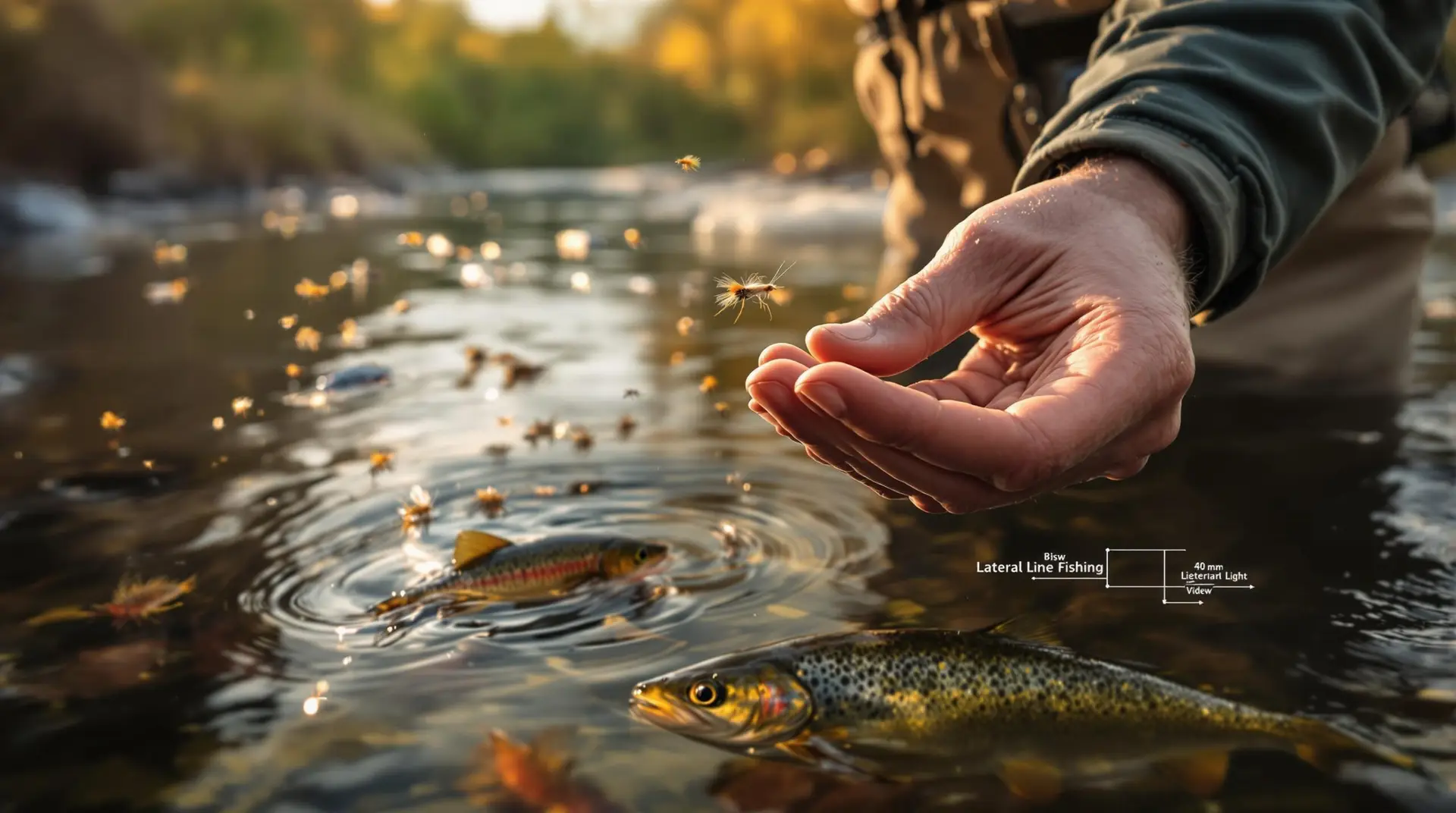
Fish have this cool lateral line that’s like a superpower—it picks up vibrations and movements in the water. It’s key for hunting down meals and dodging those with bigger appetites. Plus, gills let them breathe underwater, dictating their preference for certain aquatic conditions.
Their behavior also ties back to their metabolism, which dances to water temperature’s tune. Warmer waters get them hyped and more active, while cooler temps make them sluggish and lazy.
Each fish species has its own feeding groove, thanks to their built-in biological clocks and what’s on the menu. Some fish are sun chasers, doing their thing during daylight, while others are night owls.
Factors Influencing Fish Behavior
Lots of things shape how fish behave, and understanding these cues is key for smart hatch matching.| Factor | Description |
|---|---|
| Water Temperature | Messes with how fast fish burn energy. |
| Light Levels | Dictates when and where they chow down. |
| Water Flow | Decides their hangout spots. |
| Oxygen Levels | Tells them where they can breathe easy. |
| Food Availability | Directly guides their eating choices. |
Light levels matter big time. Many fish feast during low light times like dawn or dusk. When insects hatch and swarm, fish go into frenzy mode, upping their feeding game.
By cracking the code of these factors, seasoned fly anglers can stay one step ahead, reading fish like a book and mastering hatch matching with ease. Learning to recognize patterns and tweaking their tactics on the fly packs a punch, giving fishermen a golden ticket to success.
Why Hatch Matching Matters
Getting the hang of hatch matching can make or break an intermediate or advanced fly fisher's day on the river. Grasping the how and why behind it can seriously change the game.Hatch Mark Basics
In the world of fly fishing, "hatch marks" refer to the patterns and life stages of bugs that fish chow down on. Figure out these marks, and you're on your way to choosing the right lure for the right time. Much like how a ruler tells you how long something is, hatch marks clue you in on which flies to use by understanding what insects are doing at any given time.| Hatch Type | Bug Stage | Season |
|---|---|---|
| Single mark (') | Bug ready to fly | Spring |
| Double marks ('') | Adult bug | Summer |
| No marks | Water bug stages | All year |
Using It in Fly Fishing
Hatch matching pumps up your fly fishing skills. Nailing that perfect fly choice and presentation makes a world of difference; it's like having bait that wears a fish magnet.Techniques at a Glance:
- Dry Fly Fishing: Mimic those water-surfing adults with classics like the Parachute Adams.
- Nymphing: Go underwater with nymph or larva imitations.
- Emerger Use: Go for flies like the PMD Emerger to match bugs just breaking the surface.
| Technique | Fly Patterns | Focus Bug Stage |
|---|---|---|
| Dry Fly Fishing | Parachute Adams, Stimulator | Water-top adults |
| Nymphing | Bead Head Pheasant Tail, Hare's Ear | Beneath the waves |
| Emerger Use | PMD Emerger, Elk Wing Caddis | Surface escapees |
By picking up on hatch marks and weaving them into your fly fishing playbook, your success rate will soar, making your time on the water way more gratifying. Mastering hatch matching is your ticket to becoming an ace angler.
Advanced Techniques for Hatch Matching
Cranking up your fly fishing game often means getting the knack of matching those hatches just right. It's like having the right recipe for grandma's secret pie. Some snazzy techniques like Response Surface Models (RSMs) and taking a closer look at the nature of things with mechanistic info can really boost your fly fishing smarts.Implementing Response Surface Models
So, what's the deal with RSMs, you ask? Well, these are game-changers for figuring out the best spots and moves when you've got a bunch of stuff going on. Picture it like seasoning your dish just right – except the dish is a fishing scene. They've been used in high-stakes areas like medicine to see how different meds mix and match (NCBI). For fly fishing, RSMs can help untangle the web of what bugs are buzzing around and how fish are reacting.With RSMs, folks can:
- Measure how well different types of flies work when the weather or water mood swings.
- Pick the ultimate fly mix to imitate a whole smorgasbord of hatches all at once.
- Fine-tune how you throw those flies out there to maximize the chance of getting a bite.
Applying Mechanistic Information in Synergy Analysis
Now, let's talk about putting some science into your fly game. Mechanistic analysis digs into how this, that, and the other thing work together to get the fish biting, kind of like getting why peanut butter and jelly just work (NCBI).Using this info can:
- Point out which flies best mimic the real deal that fish love munching on.
- Give you a leg up with measures that are based on how flies act and why fish go nuts over them.
- Help you group flies into power teams, ready for the next big fishing tournament.
| Model Type | Applicability | Key Perk |
|---|---|---|
| Response Surface Models (RSMs) | Mix-and-match optimization | Spot-on prediction and tweaking |
| Mechanistic Synergy Analysis | Peeking into nature's playbook | Better fly picks down the line |
Enhancing Fly Fishing Strategies
Catching fish using sophisticated tricks is like solving a delicious puzzle. You need some fancy thinking mixed with just the right gear! Let's break down what's needed to master this fishy art.Systems Analysis Methods
Understanding how fish, bugs, and water work together is no small feat. Systems analysis methods are here to help you see the whole picture, like a fish detective.- Decoding Ecosystem Jigsaw Puzzles
- Water temperature, bug parties, and fish feasting—it's all a big, interconnected dance. Systems analysis tries to capture how these parts groove together.
- Think of it like changing the dance steps to see what happens. How does a tango turn into a cha-cha if you change the music?
- Fishing Experiment Simulations
- Ever thought about testing different fishing styles without fearing a flop? Simulation techniques let you do just that! Adjust the ingredients, and get a sneak peek into how many fish might bite.
- You get to be the mad scientist of waters—switching up fly types and how you present them to the fish.
- Ecosystem Picture Painting
- Creating mental snapshots (or real drawings) of these watery worlds helps fishermen (and ladies) prepare strategies like generals planning a battle.
- It turns spaghetti-like complexities of an ecosystem into something you can chew—and digest!
Equipment and Tools for Advanced Hatch Matching
Half the battle is having the right gadgets. Like a wizard with a perfect wand, the right fishing tools can make all the difference.Fly Rods and Reels
Your rod and reel need to be in harmony, like a nice duet, to make those fish-fights legendary.| Equipment Type | Unofficial Guide | Examples |
|---|---|---|
| Fly Rods | They control how smooth and far a fly dances to its fish partner | Orvis Helios 3D, Sage X Rod |
| Fly Reels | They're the muscles doing the heavy lifting when the fish powers up! | Hatch Finatic 7+, Hardy Ultralite MTX |
Specialized Flies
The little, tricky baits you use depend on your watery target's appetite. Picking a fly is an art—what looks tasty to a fish today?| Fly Type | Tell Me More | Examples |
|---|---|---|
| Dry Flies | These mimic bugs skimming water, showing off at the surface | Parachute Adams, Elk Wing Caddis |
| Nymphs | Underwater babies, helping catch fish who love the subaquatic vibe | PMD Emerger, Pheasant Tail |
| Attractors | Eye-catching baits that scream 'Hey, over here!' to any fish | Stimulator, Royal Wulff |
Additional Gear
- Line: Your dance partner needs the right slick-dancing shoes—a line with perfect buoyancy.
- Leader: Acts like the guide, ensuring your fly lands just so.
- Tippet: Fine thread that needs to be buddies with both fly and fish size.