
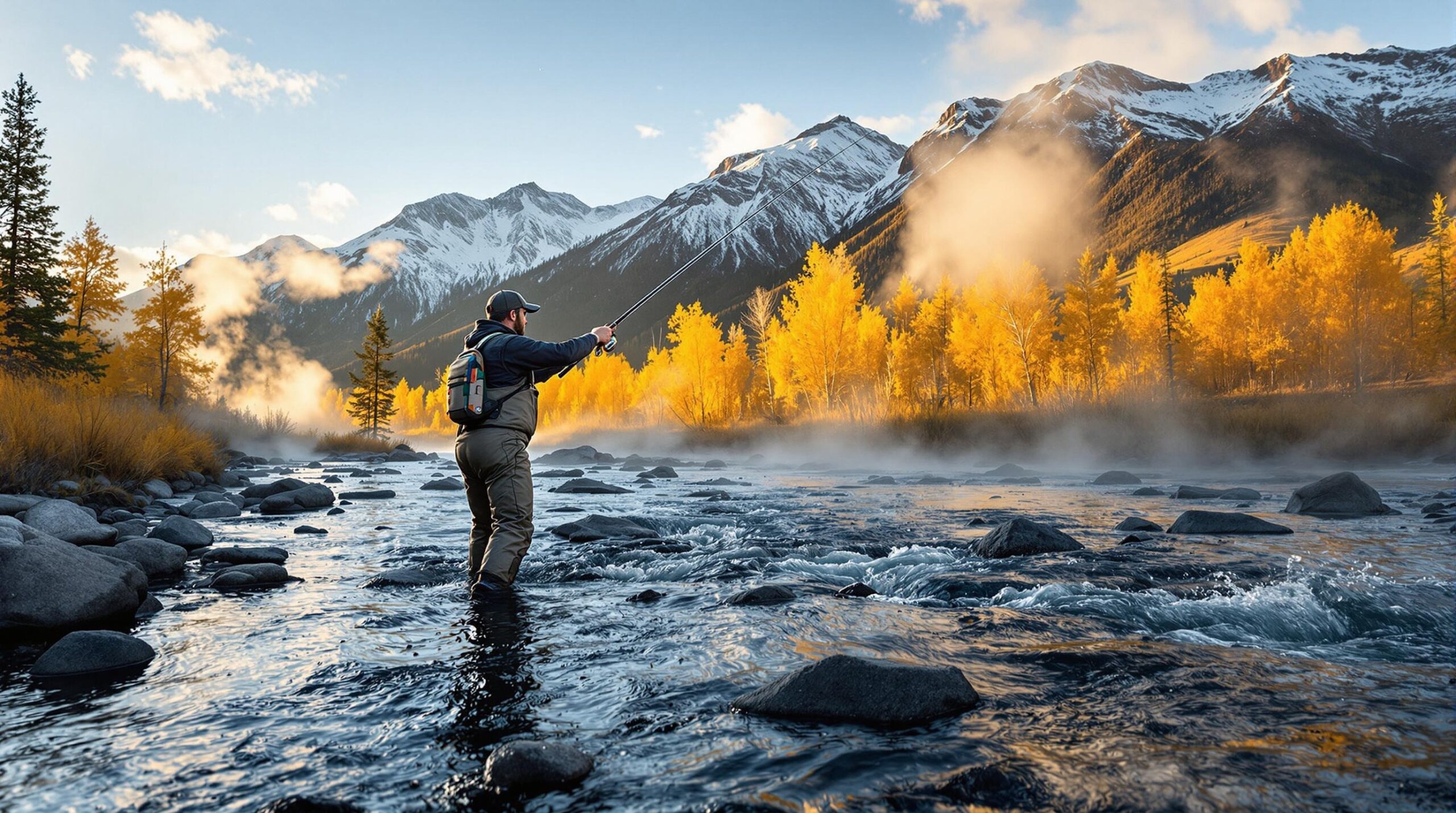
Picture yourself standing knee-deep in the Firehole River as steam rises from nearby thermal features, your dry fly drifting perfectly through a feeding lane where cutthroat trout sip emerging caddis. This scene captures what makes Yellowstone National Park one of the premier destinations for the best fly fishing vacations in North America. The park’s fishing season opens Memorial Day weekend and runs through early November, with select waters now open year-round following 2024 expansions.
Maybe you’ve planned trips around general “good fishing” advice, only to arrive during runoff or extreme heat when conditions challenge even experienced anglers. Understanding seasonal patterns transforms timing decisions from guesswork into strategic planning that aligns your visit with nature’s rhythms. You might discover that a perfectly timed September visit produces more memorable fish than a week in peak summer crowds.
Seasonal fishing in Yellowstone is not just about when waters are open—it is about matching your presentation to predictable patterns of hatches, water temperatures, and fish behavior that change dramatically from spring runoff through winter’s technical challenges. Rather than hoping for good conditions, you can fish during proven windows when everything aligns.
Quick Answer: The best fly fishing vacations in Yellowstone occur during July-August for consistent dry-fly action with predictable hatches, or September-October for trophy trout over 20 inches exhibiting aggressive fall feeding behavior.
Definition: Seasonal fishing in Yellowstone is a strategic approach that times visits to match specific windows when water conditions, hatches, and fish behavior align optimally across the park’s diverse watersheds.
Key Evidence: According to Yellowstone Forever, “July and August are our fair-weather months, with the most consistent hatches and favorable stream conditions.”
Context: Elevation above 7,000 feet causes earlier seasonal transitions than comparable latitudes at lower elevations.
Seasonal fishing works because Yellowstone’s high elevation creates predictable patterns of snowmelt, water temperature, and insect emergence that repeat annually. When you match your timing to these natural cycles, you shift from hoping for good conditions to fishing during proven windows of opportunity. The benefit comes from understanding that a July visit targets entirely different presentations and waters than an October trip. What comes up consistently is that patient observation of these patterns reveals nature operates on schedules more reliable than any calendar.
Key Takeaways
- Summer peak (July-August) delivers the most consistent hatches and optimal dry-fly conditions park-wide for reliable surface activity across diverse watersheds
- Fall trophy season (September-October) produces the largest trout over 20 inches due to aggressive pre-winter feeding behavior when fish chase baitfish
- Year-round access expanded in November 2024 to include two additional winter fishing locations, extending opportunities for technical presentations
- Temperature monitoring essential as rivers close when water exceeds 72-80°F to protect fish health during summer heat waves
- Staggered season openings range from Memorial Day to July 15 depending on specific watersheds, allowing anglers to target waters at their prime
Planning the Best Fly Fishing Vacations by Season
Summer fishing from July through August represents the gold standard for Yellowstone dry-fly experiences. You’ll find predictable surface activity across the park’s diverse watersheds, from the thermal-influenced Firehole to backcountry gems like Slough Creek. Research by Craig Mathews, co-owner of West Yellowstone Fly Fishing Shop, shows that “July and August are our fair-weather months, with the most consistent hatches and favorable stream conditions.” This window delivers reliable caddis emergences, pale morning dun hatches, and terrestrial activity that keeps trout looking up throughout the day.
Fall transforms the fishing entirely, shifting focus toward trophy opportunities. Studies by Montana Angler show that October ranks as the best month for trout over 20 inches, particularly on the Madison River inside the park and Lewis River. These larger fish exhibit aggressive feeding behavior as they prepare for winter, making them more willing to chase streamers and take chances on larger dry flies during drake hatches.
One common pattern looks like this: anglers arrive in early September expecting summer conditions, only to discover fish have already shifted into fall feeding mode. Water temperatures drop quickly at elevation, triggering behavioral changes weeks before similar transitions occur at lower elevations. This creates opportunities for those who recognize the shift and adjust their approach accordingly.
Seasonal Access and Regulations
Different waters open on staggered schedules designed to match optimal conditions rather than arbitrary calendar dates.
- General season: Memorial Day weekend through first Sunday in November covers most park waters
- Delayed openings: Yellowstone Lake (June 15), portions of Yellowstone River below the Lake (July 15), Madison River upstream of West Yellowstone
- Year-round waters: Select sections of Madison, Yellowstone, and Gardner Rivers plus two locations added November 2024
Summer and Fall Fishing Strategies
Summer hatch progression follows a predictable pattern that guides fly selection and timing. Maybe you’ve experienced the magic of arriving just as salmonfly and golden stonefly hatches kick off the prime season, then watched conditions transition to pale morning duns and consistent caddis activity through midsummer. As August arrives, terrestrial patterns like hoppers and beetles become increasingly effective, especially during windy afternoons when grasshoppers end up on the water naturally.
Temperature management becomes essential during peak summer. Water temperature monitoring by the National Park Service shows certain rivers like the Firehole close when temperatures exceed 72-80°F to protect fish health. This creates opportunities to demonstrate conservation ethics while discovering new water. High-elevation streams like Slough Creek hit their prime in late July and August precisely when lower-elevation rivers begin warming to stressful levels for trout.
Fall brings a complete shift in strategy and rewards. September through October deliver drake hatches, Blue-Winged Olives, and increasingly effective streamer fishing as trout chase baitfish in preparation for winter. Cooler temperatures eliminate the need to stop during midday heat, allowing you to work through runs methodically without pressure from other anglers. Notice how the serenity of fall fishing combines with some of the year’s most aggressive fish behavior.
Spring and Winter Techniques
Shoulder seasons require different approaches but offer solitude and technical challenges that appeal to dedicated anglers.
- Spring focus (March-May): Target late morning through mid-afternoon in deep runs using nymph rigs; Blue-Winged Olive hatches trigger dry-fly opportunities
- Winter presentations: Focus midday hours with midge patterns and small nymphs drifted slowly through deep, soft water
- Firehole advantage: Thermal warming causes this river to clear weeks before other waters during spring runoff
Timing Your Visit for Optimal Conditions
Runoff navigation requires patience and local knowledge. Late May through June presents murky conditions on most waters as snowmelt turns rivers the color of chocolate milk. The Firehole River typically clears first, offering early-season opportunities thanks to thermal warming that accelerates snowmelt and settling. This creates a narrow window where one river fishes well while others remain unfishable.
The peak dry-fly window runs from mid-July through August, providing the most reliable surface activity across diverse watersheds. This period represents the sweet spot for those planning the best fly fishing vacations focused on classic presentations and predictable hatches. Water temperatures remain comfortable for fish, insect activity peaks, and weather patterns stabilize into the fair conditions that make casting a pleasure rather than a battle.
Trophy fish timing shifts the calendar toward fall. Plan trips for late September through October to target aggressive pre-winter feeding when fish over 20 inches become most catchable. These larger trout abandon their usual caution, chasing streamers and taking risks they avoid during summer’s abundant food supply. The National Park Service’s 2024 expansion of year-round fishing access reflects recognition that winter angling, when conducted responsibly, poses minimal risk to trout populations.
Rather than week-long summer visits, experienced anglers increasingly target specific three- to four-day windows aligned with particular hatches. You might time visits for the salmonfly emergence, the hopper peak, or the fall drake hatches. This approach maximizes time when presentations align perfectly with fish behavior while acknowledging that Yellowstone’s weather can shift conditions quickly.

Why Seasonal Timing Matters
Yellowstone’s elevation above 7,000 feet creates distinct seasonal windows that shift earlier than comparable latitudes at lower elevations. Understanding these patterns transforms good fishing trips into exceptional experiences aligned with natural rhythms. The difference between consistent action and challenging conditions often comes down to timing your visit within two-week windows when specific waters hit their prime. What becomes clear through seasons of observation is that nature operates on schedules more reliable than any fishing report, and those who learn to read these patterns find themselves fishing during the windows when everything aligns perfectly.
Conclusion
Yellowstone offers world-class fly fishing across four distinct seasons, each presenting unique opportunities for anglers willing to match their timing to natural patterns. Summer’s July-August window delivers the most consistent hatches and predictable dry-fly action park-wide, making it ideal for those seeking reliable surface activity and the classic rhythm of rising trout. Fall’s September-October period produces the largest fish exhibiting aggressive feeding behavior before winter, rewarding those who focus on trophy potential over comfortable conditions. Spring and winter offer technical challenges and solitude for dedicated anglers seeking the meditative quality of careful presentations. Success comes from understanding how elevation, temperature, and hatch timing interact, then planning your visit around specific windows when conditions align perfectly. Learn more about specific rivers and techniques to make the most of your time on these legendary waters, or explore additional Yellowstone fishing destinations beyond the park’s most famous streams.
Sources
- National Park Service – Yellowstone – Official fishing regulations, season dates, and recent policy changes including 2024 year-round expansion
- Yellowstone Forever – Expert perspectives from Craig Mathews and practical fly fishing guidance
- Montana Angler – Seasonal analysis and trophy fish timing recommendations
- Rising Trout Fly Fishing – Comprehensive seasonal strategies and water temperature considerations
- Yellowstone National Park Lodges – General seasonal overview and visitor-focused fishing information