
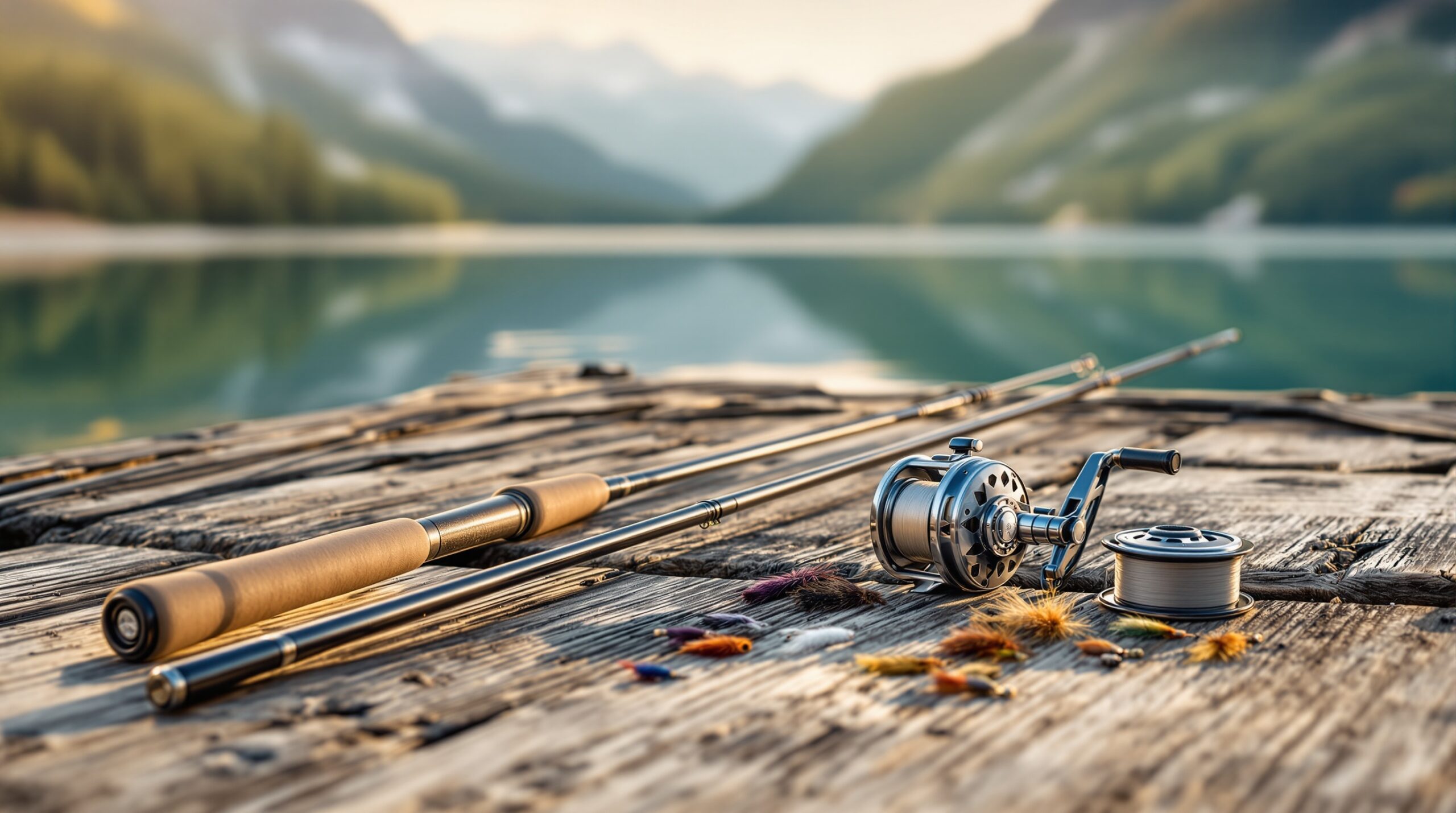
Maybe you’ve stood in a fly shop or scrolled through endless online options, wondering how anyone chooses their first fly fishing combo from the overwhelming array of rods, reels, and mysterious weight numbers. The good news is that pre-matched combos have eliminated the setup complexity that once discouraged beginners, with complete rod-reel-line systems now available under $200 that would have cost $400+ twenty years ago. Modern combos remove the guesswork from component matching, allowing newcomers to focus on casting mechanics rather than troubleshooting gear incompatibilities. This guide explains how to select your first combo based on target species, water types, and budget, while avoiding common pitfalls that waste money and create frustration on the water.
Quick Answer: Choose a 9-foot, 5-6 weight fly fishing combo with medium-fast action in the $100-200 range, which provides versatile performance for trout, bass, and panfish while supporting skill development through forgiving flex and pre-matched components that eliminate setup errors.
Definition: A fly fishing combo is a pre-matched rod-reel-line system designed to work together without compatibility issues, removing the technical knowledge barrier that once required understanding weight matching and component selection.
Key Evidence: According to Into Fly Fishing, combos under $80 often feature binding reels and fragile construction, while the $100-200 range delivers balanced quality with durable materials and smooth drag systems.
Context: This price threshold represents where materials and construction quality support learning rather than hinder it.
Key Takeaways
- 9-foot, 5-6 weight rods offer maximum versatility across trout, bass, and panfish without specialized equipment for each species
- $100-200 price range provides the optimal balance between quality components and accessibility for beginners
- Pre-matched combos eliminate component compatibility errors that plague self-assembled setups
- Medium-fast actions flex through casting mistakes while providing feedback on timing and loop control
- Complete kits with flies and accessories accelerate time from purchase to first cast
Understanding Fly Fishing Combo Components
When you look at a fly fishing combo, you're seeing three elements—rod, reel, and line—packaged into a pre-matched system designed to work together without compatibility issues. Modern beginner combos typically include 4-piece 9-foot rods (4-8 weight), large-arbor reels with smooth drag, pre-spooled weight-forward floating line, leader, and backing. This complete approach removes the technical knowledge barrier that once required understanding weight matching, backing capacity, and line taper selection before making your first cast.The 4-piece rod design balances portability with performance, fitting in closets and backpacks while maintaining the casting characteristics needed for proper line loading. Large-arbor reels have replaced narrow-spool models across all price points, retrieving line efficiently and reducing memory coils that tangle during presentations. Factory pre-spooling ensures proper backing-to-line connections, preventing the setup failures that plague self-assembled systems where beginners discover problems only after losing their first fish to failed knots.
Contemporary combos like the Orvis Encounter set the standard with advanced design and factory pre-spooling under $200, while the Echo Base Kit adds lifetime warranties and visual alignment systems that simplify rod assembly. Research by Treeline Review shows the Echo Base Kit features “durable rig with a lifetime warranty, versatility, beginner-friendly, easy set-up” that creates conditions for sustainable learning rather than early frustration.
Why Pre-Matched Systems Matter
Self-assembled setups require understanding weight compatibility and backing installation that beginners typically lack.
- Mismatched line weights: Prevent proper rod loading and accurate casting
- Backing capacity errors: Cause reel overfill or insufficient line capacity for runs
- Improper knot connections: Fail during fish fights when adrenaline runs high
Selecting the Right Rod Weight and Length for Your Fishing
You might notice that 9-foot, 5-6 weight configurations dominate beginner recommendations for compelling reasons: this setup handles trout, bass, and panfish across rivers and lakes without requiring specialized equipment for each scenario. Research by Wired2Fish shows consensus across gear reviews favors this configuration for versatility on multiple species. The length provides sufficient line control for mending and drift management, while the weight range casts both delicate dry flies and weighted nymphs effectively.However, environmental factors demand adjustment from this standard. Tight creeks with overhanging branches punish 9-foot rods, making 6-7 foot models more practical despite reduced casting distance. Youth anglers benefit from shorter, lighter outfits that match their physical proportions and developing coordination. Maybe you’ve found yourself fighting the rod rather than working with it—that’s your signal to consider scaled-down equipment that matches your water and physical situation.
Medium-fast actions provide the forgiving flex needed for learning, flexing through timing mistakes while offering feedback about loop control and line loading. The Echo Base Kit exemplifies this balance with beginner-friendly design that supports learning curves rather than punishing minor errors. Fast-action rods demand precision that beginners haven’t developed, creating frustration rather than building confidence during those first weeks on the water.
Budget Considerations and What to Avoid in Your First Fly Fishing Combo
One common pattern looks like this: an enthusiastic beginner buys the cheapest combo available to "test their interest," only to discover that binding reels and fragile construction make casting feel impossible. The $100-200 range represents where materials, drag systems, and rod actions support skill development rather than hinder it. According to Into Fly Fishing, combos under $80 often feature unreliable components like binding reels or fragile rods, while the $100-200 range delivers balanced quality with durable construction.Below this threshold, quality compromises manifest as binding drag systems, heavy swing weights, and fragile tip sections that fail under normal use—creating frustration that poisons perception of fly fishing itself. Contemporary mid-range combos incorporate IM8 graphite construction and lifetime warranties that would have been unthinkable at accessible price points twenty years ago. The Greys Fin Fly Combo demonstrates exceptional value in matched components, with field testing confirming “for the money this a hard combo to beat.”
Complete kits like the Wild Water Deluxe include rod, reel, 18 flies, case, and tools for immediate fishing readiness, eliminating the paralysis of pattern selection and accessory decisions that delay water time. This approach gets you from purchase to first cast in hours rather than weeks of research, where real learning happens through experience rather than specification sheets.
Common Purchasing Mistakes
Beginners make predictable errors that waste money and create early frustration on the water.- False economy: Buying sub-$80 combos to "test interest" results in binding drags that misrepresent the sport
- Premature specialization: Purchasing saltwater or small-stream equipment before mastering general techniques
- Overinvestment: Choosing premium combos ($300+) before developing sensitivity to appreciate performance differences
Why Your First Fly Fishing Combo Matters
Quality first experiences with properly matched combos create lifelong participants, while frustrating encounters with binding reels and mismatched lines drive permanent exits from the sport. Your initial combo shapes whether you develop casting competence and confidence or abandon the pursuit after unsuccessful outings. The right equipment doesn't guarantee success, but wrong equipment virtually ensures frustration that overshadows the rewards of time on the water. Notice how equipment becomes invisible when it works properly—that's the sweet spot where reading rises and feeling that first tug on a perfectly drifted pattern becomes your focus instead of fighting your gear.Conclusion
Selecting your first fly fishing combo succeeds when you prioritize the 9-foot, 5-6 weight configuration in the $100-200 range, adjusted for specific water types and physical considerations. Pre-matched systems eliminate the setup complexity that once created barriers to entry, allowing you to focus on presentation and drift rather than troubleshooting gear incompatibilities. Consider exploring a complete starter kit that includes accessories beyond just the rod and reel. Remember that combos represent learning tools rather than lifetime investments—your first outfit builds the casting competence and equipment understanding that informs eventual upgrades based on actual preferences rather than marketing claims. If the learning curve feels steep initially, that's normal—fly fishing for beginners feels challenging until muscle memory develops and water reading becomes intuitive.Sources
- Wired2Fish - Comprehensive buyer's guide evaluating beginner combo value propositions, component quality, and versatility across price ranges and manufacturers
- Wild Water Fly Fishing - Analysis of matched rod-reel systems with emphasis on family kits, component matching principles, and complete package approaches
- Treeline Review - Field-tested evaluations of beginner combos focusing on ease of use, durability features, and learning curve support
- Into Fly Fishing - Budget-focused examination of price-to-quality relationships, historical pricing context, and common beginner purchasing mistakes