
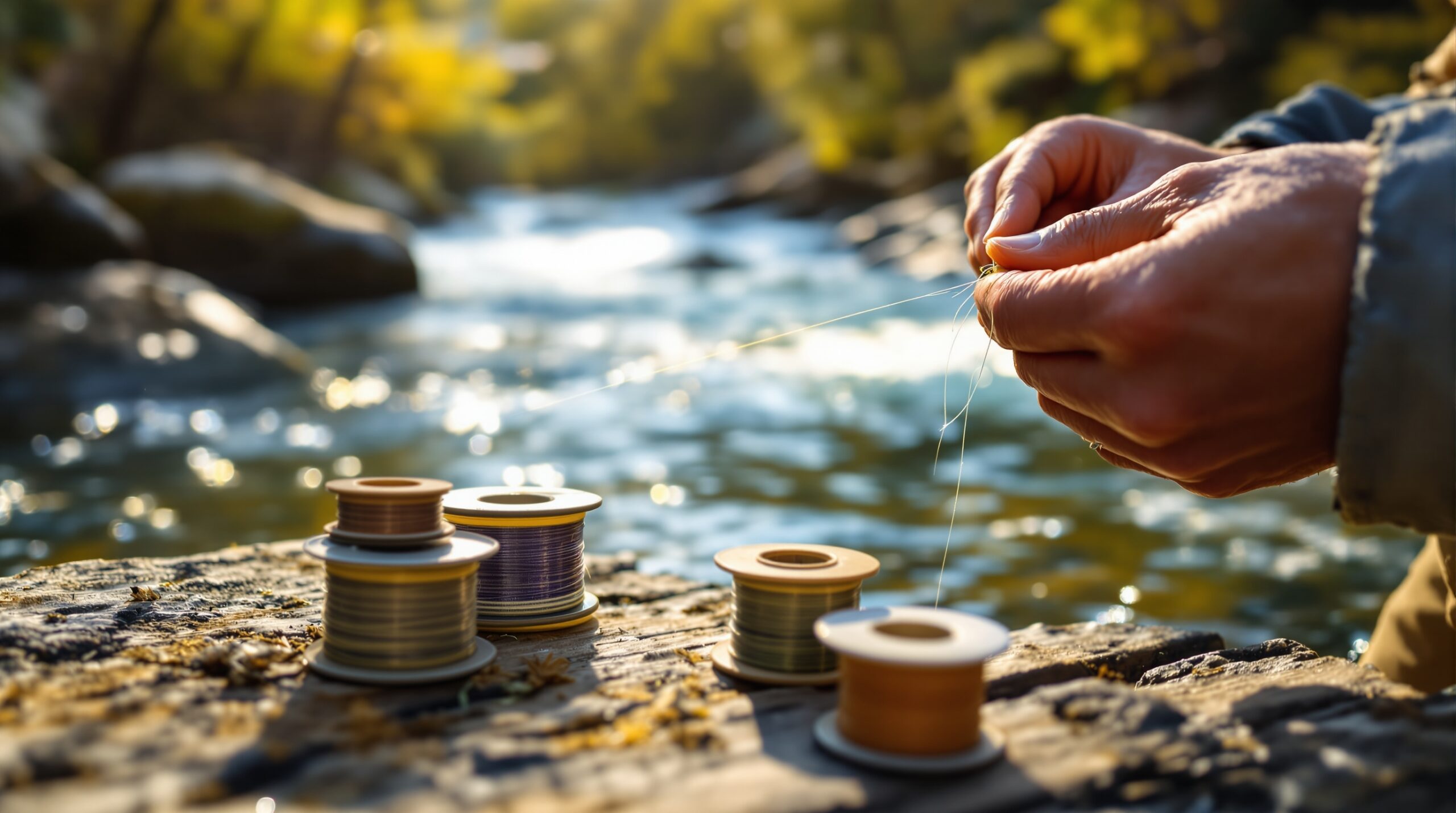
Standing streamside watching trout refuse your perfectly drifted fly feels frustrating—until you realize the problem isn’t your cast but your nearly-visible tippet cutting through gin-clear water like a shadow line. Selecting the right fly fishing tippet transforms presentation quality from amateur to expert, affecting everything from drift naturalness to hook-setting success.
Fly fishing tippet is not just thin fishing line—it is the critical final connection that balances invisibility against strength for natural presentation. The decision balances delicacy against durability. This guide synthesizes expert consensus and field-proven methods to help you confidently match tippet diameter to fly size, water conditions, and fishing technique every time you approach the water.
Quick Answer: Choosing the right fly fishing tippet requires matching diameter to fly size using the divide-by-3-or-4 formula (a size 16 fly uses 4X-5X tippet), then adjusting for water clarity and technique—finer tippets (6X-7X) for clear water and dry flies, heavier options (0X-3X) for streamers and larger fish.
Definition: Fly fishing tippet is the final, uniform-diameter section of monofilament that connects your leader to the fly, providing the critical balance between invisibility and strength needed for successful presentation.
Key Evidence: According to Jackson Hole Fly Company, tippet sizes range from 0X to 8X, with diameters between 0.003 and 0.007 inches and breaking strengths from 1.75 to 6 pounds for trout applications.
Context: This standardized X-rating system provides uniform measurements across all manufacturers, ensuring predictable performance regardless of brand.
Key Takeaways
- Fly size formula: Divide fly size by 3-4 to determine tippet size (size 16 fly = 4X-5X tippet) according to Orvis experts
- Material selection: Use nylon for dry flies (suppleness), fluorocarbon for nymphs and streamers (invisibility and abrasion resistance)
- Clarity adjustments: Extend to 6X or finer in clear water; use heavier tippet in dirty or windy conditions
- Application ranges: Dry flies require 5X-7X, nymphs need 4X-5X, streamers demand 0X-3X according to Red's Fly Fishing
- Tippet length: Add 12-24 inch sections to leaders for optimal presentation balance
Understanding the Fly Fishing Tippet Size System
You might notice that tippet packaging seems designed to confuse—those X numbers, diameter measurements, and breaking strengths create unnecessary complexity until you understand the underlying logic. The X-rating system runs from 0X (thickest, strongest) to 8X (finest, most delicate), providing standardized diameter measurements that allow confident purchasing across manufacturers. Research by Jackson Hole Fly Company shows these measurements remain consistent regardless of brand, eliminating guesswork when you're standing in the fly shop.The foundational formula comes from Orvis experts who recommend dividing fly size by 3-4 to determine appropriate tippet size—a size 16 fly pairs with approximately 4X-5X tippet, while size 18-20 flies typically use 6X-7X. This calculation provides a starting framework that works across most freshwater trout scenarios without memorizing complex charts. When you’re switching between a size 12 Adams and a size 18 Blue-Winged Olive, the math gives you confidence.
Breaking strength correlation follows a predictable pattern. Lower X numbers indicate greater strength (0X handles larger fish and heavier flies), while higher numbers sacrifice durability for invisibility. For trout fishing, 4X-5X tippet offers roughly 4-6 pound breaking strength—adequate for most situations while maintaining reasonable stealth. The system provides standardized diameter measurements across manufacturers, with sizes from 0X to 8X covering applications from heavy streamers to ultra-delicate dry fly presentations.
When to Adjust from the Formula
The divide-by-3-or-4 formula establishes your baseline, but field conditions demand adjustments based on what you observe on the water.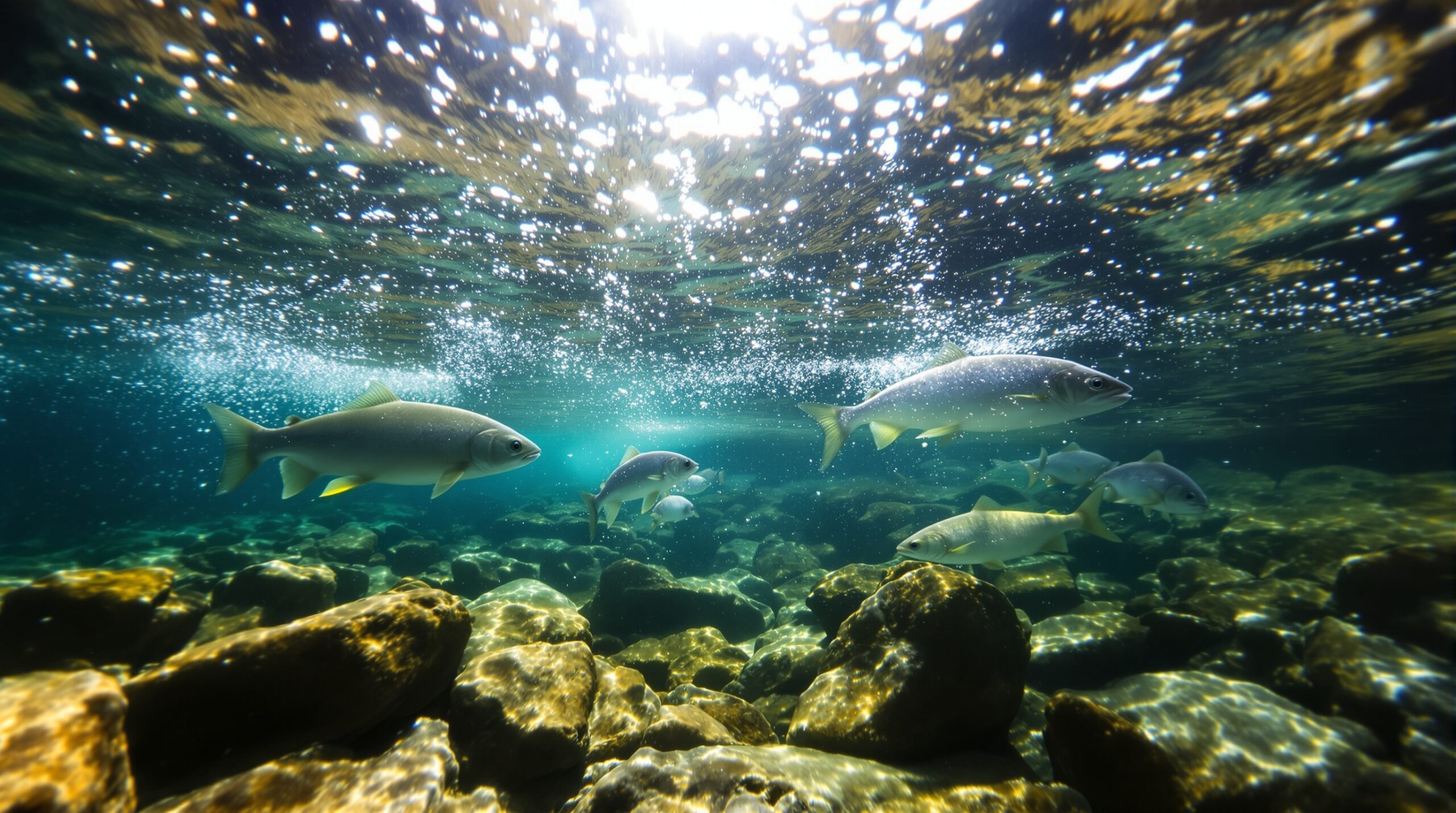
- Clear water with spooky fish: Extend to 24-inch sections of 6X or finer for additional stealth, especially in spring creeks where educated trout inspect everything
- Windy or turbulent conditions: Use heavier tippet for better casting control and turnover—delicate 7X becomes useless when you can't present your fly accurately
- Larger-than-expected fish: Drop down in X-number (increase diameter) to prevent heartbreak when that surprise brown trout takes your size 16 dry fly
Material Selection for Different Techniques
One common pattern shows up often: anglers choose tippet material based on habit rather than technique, missing the performance difference between nylon and fluorocarbon in different water columns. The material divide shapes your entire presentation strategy. Nylon tippet offers suppleness ideal for dry fly presentations, allowing the tippet to undulate naturally with surface currents for drag-free drift, while fluorocarbon provides superior invisibility and abrasion resistance for nymphs and streamers. According to Red's Fly Fishing, this distinction directly impacts how your fly behaves in different water columns.Nylon advantages become obvious during mayfly hatches when delicate presentation matters most. Products like RIO Suppleflex dominate dry fly fishing because slight stretch cushions delicate hook sets on light tippets, preventing breakage when a trout takes. The material’s suppleness creates natural movement on the water’s surface, mimicking the behavior of real insects drifting with the current. You notice the difference immediately when your fly rides the surface tension rather than cutting through it.
Fluorocarbon benefits shine during subsurface fishing where stealth and durability compete for importance. Scientific Anglers Absolute Trout Supreme and RIO Fluoroflex have become standards for nymphing and streamer work due to near-invisibility underwater (refractive index matches water) and superior durability when bouncing flies along rocky bottoms. Fluorocarbon also sinks faster than nylon, helping nymphs reach feeding zones more efficiently where trout actually feed.
Application-Specific Material Guidelines
Match your tippet material to the water column you're fishing for optimal presentation and durability.- Dry flies: 5X-7X nylon for patterns sized #6-22, prioritizing suppleness for natural surface drift
- Nymphs: 4X-5X fluorocarbon for sizes #8-22, balancing invisibility with abrasion resistance
- Streamers: 0X-3X fluorocarbon for larger imitations, providing strength and stealth for aggressive presentations
Practical Application and Common Mistakes
Maybe you've experienced that sinking feeling when a perfect cast results in immediate refusal—often the culprit isn't fly selection but tippet visibility or inappropriate diameter for conditions. Establishing your baseline setup creates consistency in your approach. For typical spring creek scenarios with size 16 mayfly dries, start with a 9-foot 5X leader and add a 12-inch section of 5X tippet. This combination provides adequate strength (roughly 4-5 pound test) while allowing soft presentation essential for spooky trout. Research from Jackson Hole Fly Company confirms these proportions work across diverse trout waters.Common mistakes center on mismatching diameter to conditions. Too-thick tippet creates drag that prevents natural drift, causing flies to skate unnaturally across the surface—fish detect this immediately and refuse. Too-fine tippet leads to frustrating breakage, especially with heavier-than-expected fish or wind knots that weaken the line by 50% or more. Another frequent error involves failing to adjust for clarity changes. The 5X that worked perfectly in morning shade may prove inadequate when afternoon sun illuminates crystal-clear water, making tippet visible as a shadow line trailing your fly.
Leader length variations demand attention based on casting conditions. Use 7.5-foot leaders when wind complicates casting or when fishing large streamers requiring turnover power; extend to 12 feet for slow, clear water where longer separation between fly line and fly prevents spooking fish. The principle remains consistent: more separation equals more stealth, but only if you can cast accurately. An adaptive mindset separates successful anglers from frustrated ones. When conditions change mid-session—clouds alter water visibility, wind picks up, or surprise hatches emerge—adjust accordingly.
Essential On-Stream Adjustments
Successful anglers carry versatile tippet ranges and adjust based on real-time observations rather than rigid adherence to formulas.- Carry 3X through 7X spools: Covers realistic trout scenarios without excessive choice paralysis—you'll use these sizes consistently
- Use tippet rings: Preserve leader length while experimenting with different sizes and materials throughout the day
- Log successful setups: Note which tippet sizes worked for specific flies, water types, conditions in your fishing journal—patterns emerge informing future decisions
Why Fly Fishing Tippet Selection Matters
Tippet represents your final connection to the fish—the most scrutinized element in clear water where educated trout inspect everything before committing. Proper selection balances invisibility with strength, enabling natural presentation that fools selective fish while providing confidence to set hooks firmly and land trophy catches. The difference between 5X and 6X tippet often determines whether that rising brown trout takes your fly or swims away. Mastering tippet choice transforms frustrating refusals into consistent hookups, elevating your effectiveness across diverse conditions and techniques while deepening your connection to the rhythms of moving water.Conclusion
Choosing the right fly fishing tippet every time centers on the divide-by-3-or-4 formula as your starting point, then adapting for water clarity, fishing technique, and conditions you encounter on the water. Match nylon to dry flies for natural drift, fluorocarbon to subsurface presentations for invisibility and durability. Carry 3X through 7X spools to cover realistic scenarios, and develop the adaptive mindset that reads changing conditions throughout your day on the stream. Consider exploring leader selection and essential knots to complete your connection system. The tippet that connects your carefully presented fly to a rising trout deserves as much consideration as rod selection—it's the final detail separating frustration from consistent success and peaceful moments watching your fly drift naturally with the current.Sources
- Jackson Hole Fly Company - Comprehensive guidance on tippet-to-leader matching, sizing ranges, and length adjustments for varying conditions
- Red's Fly Fishing - Material selection principles for different techniques and application-specific tippet ranges
- Orvis How to Fly Fish - Fly size-to-tippet calculation formula and expert recommendations for average conditions
- Guide Fly Fishing UK - Fluorocarbon material properties and specialized product applications
- Yellow Dog Flyfishing - Saltwater tippet requirements and bite tippet applications
- The Fly Fishing Basics - Material choice considerations for surface versus subsurface presentations