
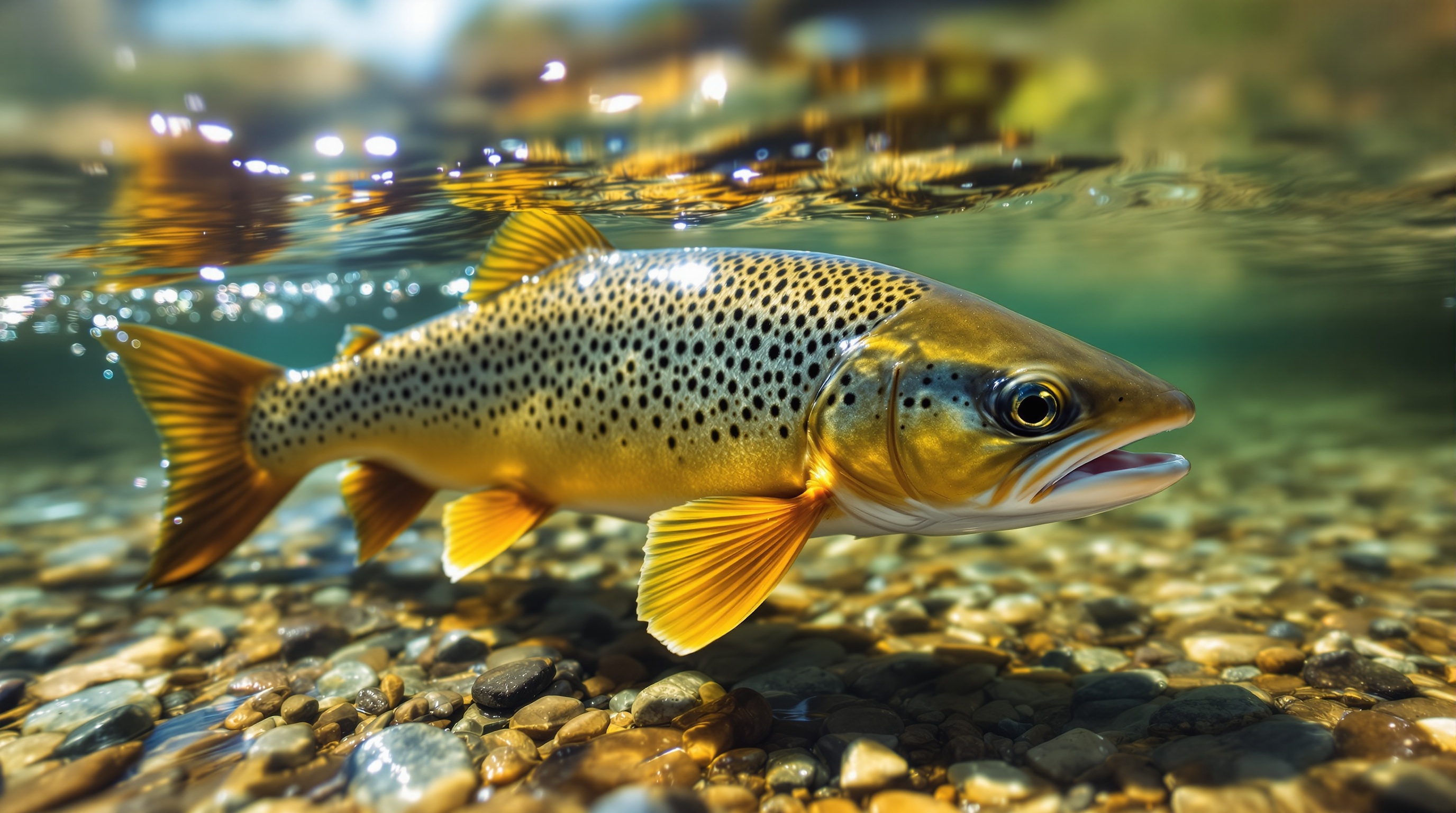
Most anglers blame the fly when a fish refuses. More often the fish told you it was done well before the cast, through its fins, posture, and color. Learning to read those signals is the difference between casting to a fish that will eat and casting to one that already knows you are there.
Quick Answer: Fish communicate using body language through fin position, body coloration, posture, swimming pace, and gill movement. These signals reveal whether a fish is actively feeding, holding calmly, defending territory, or spooked. For an angler, they tell you which fish will eat and which has already detected you.
Definition: Fish body language is the set of nonverbal signals (fin and body movement, posture, swimming pattern, and dynamic color change) that fish use to communicate state and intent. For an angler it is a real-time read on whether a fish is catchable.
Key Evidence: Peer-reviewed research on cichlids (John et al., University of Bonn, 2021) found that fish dynamically adjust body coloration to signal dominance and intent during social interaction, confirming these shifts are deliberate communication rather than random variation.
Context: Short, accurate observation outperforms covering water. The angler who reads fins, posture, and gill rate before casting consistently outfishes the one who casts first and watches second.
The 7 signs anglers should know
Fin position: relaxed and fanned versus clamped tight to the body
Body posture and angle: level holding versus a head-down feeding tilt
Coloration: darkening, brightening, or a sudden flush during aggression or spawning
Swimming pace: a slow, deliberate hold versus a fast, erratic dart
Gill (operculum) rate: steady breathing versus rapid, stressed pumping
Feeding posture: tipping, rising, or rotating to intercept drifting food
Flight response: bolting, sinking, or breaking from a holding lie
The rest of this guide covers what each sign means on the water and how to use it.
1. Fin position
Fins are the fastest read you get. A fish with its dorsal and pectoral fins relaxed and slightly fanned is comfortable and holding. When those fins clamp flat against the body, the fish is tense, often because it has detected pressure, a shadow, or line drag. A trout that flares its fins briefly before settling is orienting, frequently a precursor to moving on a food item.
On the water: fanned fins on a holding fish means you can present. Clamped fins mean rest the lie and recast with a longer, drag-free drift.
2. Body posture and angle
A fish sitting level in the current is conserving energy and watching the drift lane. When it tilts head-down, drops toward the bottom, or angles upward toward the surface, it is positioning to feed. A side-on, hunched, or listing posture in a wild fish usually signals an injured or post-spawn animal, which is rarely worth your effort.
The feeding tilt is the single most useful posture to recognize. A trout that rotates nose-down over gravel is nymphing. One that lifts and hangs high in the column is watching for emergers.
3. Coloration
Color shifts happen faster than most anglers expect. A fish that darkens is often stressed or asserting dominance over a lie. Brightening and high contrast, especially flushed cheeks or vivid flank color, points to spawning condition or aggression. Sudden pallor can mean a fish has been startled and is preparing to flee.
Reading color depends on actually seeing into the water, which is its own skill. See trout vision and water clarity for how light and depth distort what you are looking at.
4. Swimming pace
Pace reads as mood. A fish that holds and makes short, deliberate moves to intercept food is feeding and catchable. Fast, erratic, direction-changing movement is a flight or alarm pattern, and it tends to be contagious: one spooked fish that bolts through a pool will shut down the others. If the pace in a run goes from slow to frantic, stop casting and wait.
5. Gill (operculum) movement
Watch the gill plates. A steady, even pumping rate is a calm fish. Rapid, exaggerated gill movement signals stress, exhaustion, or low oxygen, common after a fight or in warm, thin water. This sign matters most at the net: a fish gulping hard needs full revival before release, facing into current until it kicks off on its own.
6. Feeding posture
Feeding has a recognizable shape. Tipping (nose-down rooting on the bottom), rising (lifting toward the surface), and lateral rotation (turning to take a drifting item) all tell you where in the water column the fish is eating. Match your presentation to the posture: a tipping fish wants a dead-drifted nymph near the bottom, a riser wants a dry or emerger in the film. Guessing wrong puts your fly in the wrong lane no matter how good the cast is.
7. Flight response
The spook is the sign you most want to avoid triggering. A fish that sinks slowly out of its lie can sometimes be left to reset. One that bolts hard, flashes, or breaks downstream is done for now, and often takes the pool with it. Approach low, keep your shadow and rod flash off the water, and lengthen your leader in clear conditions. If you do not know the terms here, the fly fishing glossary covers leader, drift, and lie.
Putting it together on the water
Read the signs as a stack, not in isolation. Fanned fins plus a level-to-tilted posture plus a steady gill rate plus deliberate feeding movement is the profile of a catchable, actively feeding fish. Clamped fins, darkened color, and erratic pace is a fish that has clocked you. The best anglers spend more time watching than casting, because every cast to a spooked fish makes the next one harder.
Get the Fish Behavior Cheat Sheet
Want these 7 signs on a single printable card for your vest or boat bag? Download the free Fish Behavior Cheat Sheet(PDF) and get our reading-the-water guides by email.
Sources
John, L., Rick, I. P., Vitt, S., and Thünken, T. (2021). Body coloration as a dynamic signal during intrasexual communication in a cichlid fish. BMC (University of Bonn / University of Tübingen). Establishes that fish adjust coloration to signal dominance and intent alongside display behavior.
Field study of the grouper Variola louti (Red Sea coral reef): documents rapid, behavior-linked body color change in a wild fish, supporting color as a real-time behavioral signal outside the aquarium.