
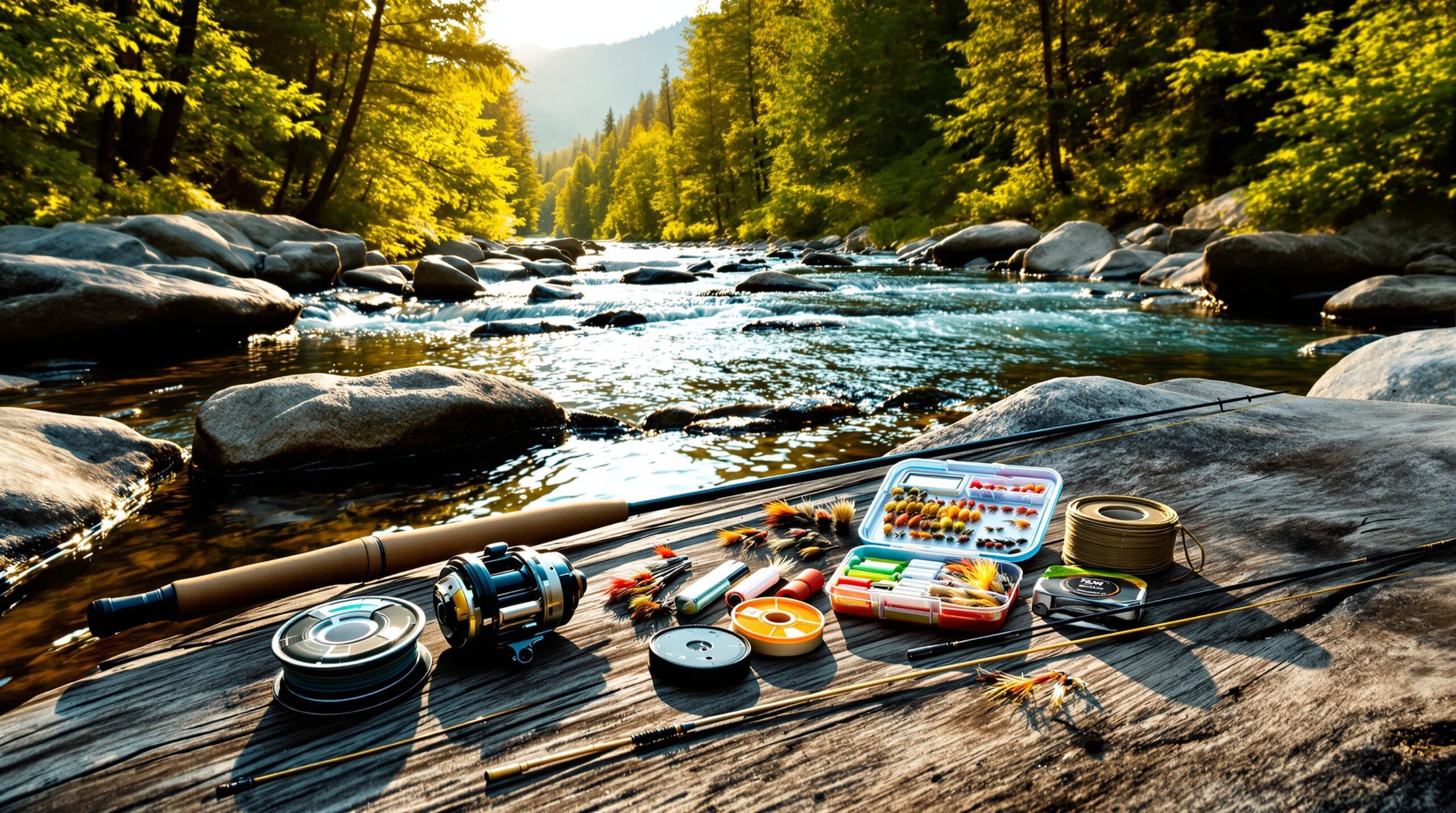
Standing at the edge of your first trout stream with a tangle of line and confusion about what connects to what represents a common beginning—but it doesn’t have to be yours. The array of fly fishing equipment can overwhelm newcomers, with seven essential components that must work as an integrated system rather than random purchases. Fly fishing equipment for beginners is not a collection of random gear purchases but a matched system of seven components that work together to cast weightless flies using the weight of the line itself. This guide cuts through the complexity to show you exactly what fly fishing equipment for beginners you need, how each piece functions within the complete setup, and why certain choices matter more than others during your critical learning phase.
Quick Answer: Beginners need seven essential components for a complete fly fishing setup: a matched-weight fly rod and reel (typically 4-5 weight for trout), backing, weight-forward floating line, leader, tippet in multiple sizes (3x-6x), and basic flies, plus polarized sunglasses and appropriately-sized forceps for fish handling.
Definition: Fly fishing equipment for beginners is a matched system of seven components that work together to cast weightless flies using the weight of the line itself, requiring balance between rod, reel, and line for proper presentation.
Key Evidence: According to Ontario Trout and Steelhead, the fly reel weight must match your rod weight exactly—a 5-weight rod requires a 5-weight reel for proper balance and casting performance.
Context: This matched system ensures the rod loads properly during casting, allowing you to develop clean mechanics rather than compensating for equipment imbalances.
Key Takeaways
- Matched weight systems are non-negotiable—your rod, reel, and line must share the same weight rating for balanced performance
- Floating lines offer maximum versatility for beginners, handling both surface presentations and depths up to 20 feet
- Pre-strung combo packages teach proper rigging before your line inevitably breaks or wears
- Tippet variety matters—stock 3x, 4x, 5x, and 6x spools for different conditions
- Polarized sunglasses have evolved from accessory to essential equipment for seeing fish and underwater structure
The Seven-Component System That Forms Your Complete Setup
You might assume fly fishing equipment means buying whatever looks good, but research by My Outdoor Basecamp shows the fly rod serves as the foundation for your setup and determines what additional equipment you'll need. This principle simplifies what could otherwise become overwhelming—rather than making seven independent decisions, your rod choice cascades through every other component. The seven essential components work as an integrated chain: rod, reel, backing, fly line, leader, tippet, and flies.For trout in smaller rivers, select a rod in the 2-weight to 5-weight range, with 4-5 weight offering the most versatility for learning. This middle ground handles everything from delicate dry fly presentations during sparse hatches to larger streamers when you want to explore subsurface patterns. Once you’ve chosen your rod weight, your reel must match exactly—if you select a 5-weight rod, you must pair it with a 5-weight reel. This balance affects how the rod loads during casting and how it feels through hours on the water.
Studies by BC Outdoors Magazine demonstrate that weight-forward floating line provides the easiest casting, best visibility, and most versatility for learning. These lines work for surface fishing and can reach depths of 20 feet or more, handling the vast majority of situations you’ll encounter during your first seasons. Backing, leader, and tippet create the connection system between your fly line and fly—each serves a specific function in the energy transfer that allows delicate presentation of weightless imitations.
Why Combo Packages Serve Beginners Best
Pre-assembled kits offer more than convenience—they provide education about proper assembly.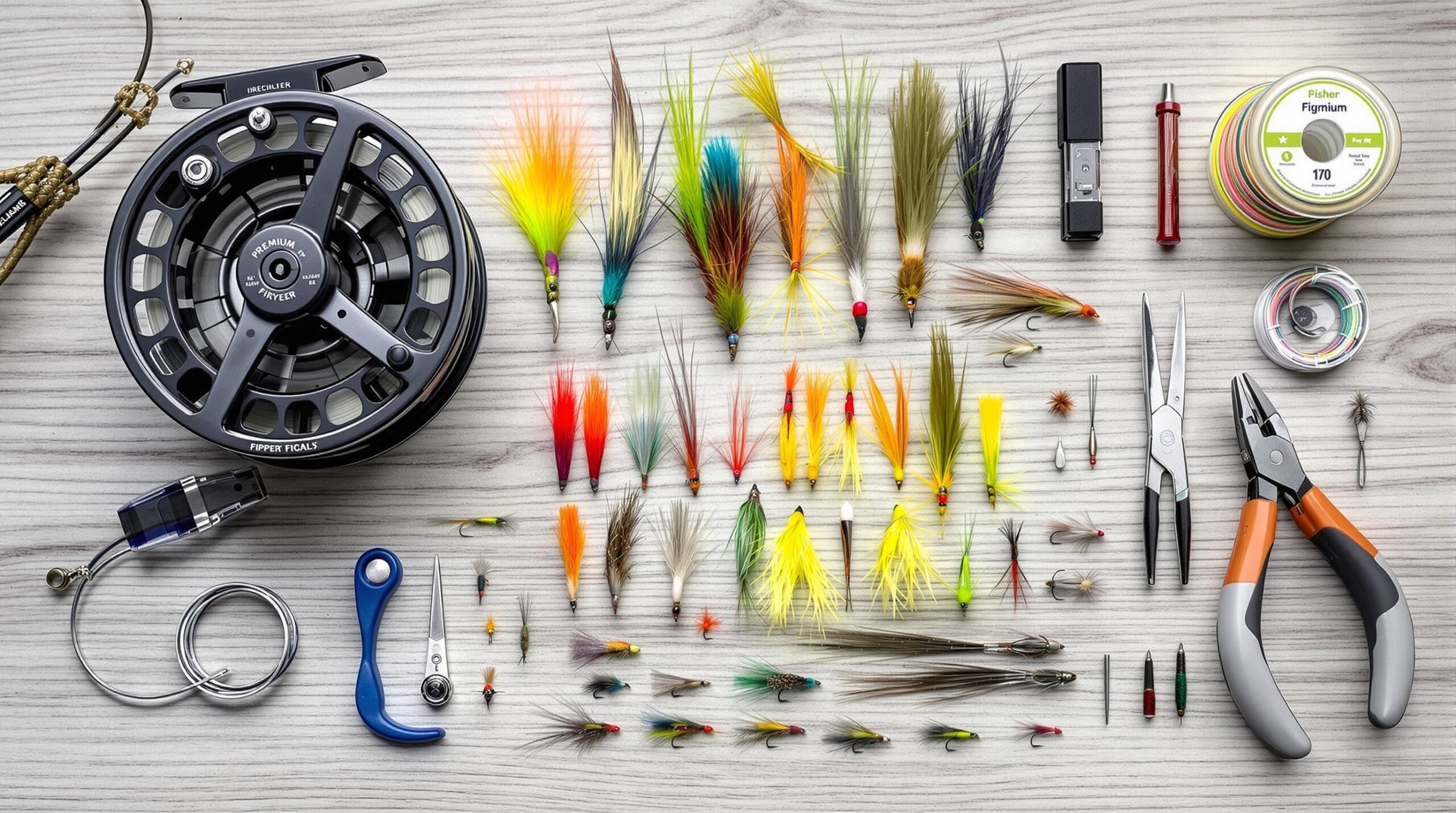
- Proper rigging demonstration: Combos come pre-strung, showing you how backing connects to reel, fly line attaches to backing, and leader connects in sequence
- Verified compatibility: Eliminates guesswork about component matching during the learning phase
- Immediate usability: Allows focus on casting and water time rather than assembly research
Essential Accessories That Transform Theory Into Practice
One common pattern looks like this: you arrive at the stream excited to fish, only to discover you can't see where your fly lands or where fish might be holding. According to Orvis, polarized sunglasses have elevated from optional to essential—they fundamentally change your ability to see fish, underwater structure, and how your fly drifts. This visibility transforms random casting into targeted presentations, allowing you to identify holding water, spot cruising fish, and observe how your fly moves relative to structure.Tool sizing matters for the species you’re pursuing. Research from Ontario Trout and Steelhead emphasizes forceps specifically sized for trout rather than general-purpose pliers. This distinction makes hook removal from small fish possible without causing harm—oversized tools turn a delicate operation into an unnecessarily difficult one that risks injuring the fish.
Your tippet collection requires multiple sizes: 3x, 4x, 5x, and 6x spools to handle varying conditions, fly sizes, and fish wariness. The X-system runs counterintuitively—larger numbers mean thinner tippet—so 6x represents your most delicate option for small flies and cautious fish, while 3x handles larger patterns and provides more insurance against break-offs during the learning process. You might find yourself standing streamside with a perfect hatch happening but the wrong tippet size—that’s when having variety in your vest pays off. Add quality line nippers for clean cuts when changing tippet or trimming knots, as clean cuts reduce line failure at critical moments.
Building Your Accessory Kit
Start with these essential accessories that match your target species rather than aspirational fishing.- Polarized sunglasses: Choose amber or copper lenses for overcast conditions, gray for bright sun
- Trout-sized forceps: 4-5 inch length provides control without overwhelming small fish
- Line nippers: Sharp, precise cuts prevent fraying that weakens connections
Building Your First Setup Without Common Beginner Mistakes
Start with equipment geared to fish under the 10-pound mark if targeting trout, as recommended by BC Outdoors Magazine. This focus prevents the common mistake of purchasing equipment for aspirational fishing rather than your actual initial conditions. A properly scaled setup for small trout streams teaches better technique than powerful gear designed for species you won't pursue for years.While combo packages provide excellent learning platforms, experienced anglers from Wired2Fish note that replacing the existing line in combo packages with higher-quality line makes a world of difference in casting performance. This upgrade consideration balances accessibility with performance—selective improvements can enhance your experience without requiring a complete custom build from the start.
Notice how floating lines work for both surface fishing and can reach depths of 20 feet or more. This range handles the vast majority of situations beginners encounter, eliminating the need to master multiple line types before developing fundamental skills. Avoid the accumulation trap—a handful of proven fly patterns in appropriate sizes serves you better than dozens of variations you don’t yet know how to fish effectively.
If purchasing a combo, photograph or diagram how the components connect when you first unpack the kit. You’ll need to replicate these connections after your first inevitable break-off or tangle. Understanding the sequence from backing to reel to fly line to leader to tippet creates the foundation for maintaining your setup throughout your time on the water.
Smart Purchasing Sequence
Follow this order to build your fly fishing equipment for beginners setup without costly mistakes.- Rod weight first: Choose 4-5 weight for trout versatility, then match all other components
- Combo or custom: Combos teach rigging, custom builds offer performance upgrades
- Line upgrade: Consider replacing combo line with premium floating line for better casting
Why Fly Fishing Equipment Choices Matter
The equipment you select shapes not just your first season but your entire path in the sport. Properly matched components allow you to develop clean casting mechanics, understand how presentation affects fish behavior, and build confidence through consistent performance. Equipment mismatched to your actual fishing conditions creates frustration that hampers skill development—properly balanced components allow you to focus on learning to read the water rather than compensating for gear problems. The difference between those who continue fly fishing and those who abandon it after initial frustration often traces back to whether their equipment supported learning or created unnecessary obstacles during the critical first months on the water.Conclusion
Your complete fly fishing setup begins with understanding that seven components must work as an integrated system, not random purchases. A matched-weight rod and reel in the 4-5 weight range, paired with weight-forward floating line and multiple tippet sizes, creates the foundation for learning proper technique. Add polarized sunglasses and appropriately-sized tools, and you have everything needed to focus on what matters most—time on the water developing your casting, learning to read currents, and experiencing the rhythm of the sport. The beauty of fly fishing lies not in accumulating gear, but in understanding how each piece serves your growing connection to the water and the patterns that emerge when you're properly equipped to notice them.Sources
- My Outdoor Basecamp - Comprehensive beginner setup guide covering rod, reel, and line system assembly
- Middle River Outfitters - Essential equipment list focusing on tools and accessories
- Tsylos Park Lodge & Fishing Camp - Seven-component system framework for complete beginner setups
- Orvis - Foundational gear recommendations emphasizing polarized sunglasses and basic fly selection
- Ontario Trout and Steelhead - Rod weight selection and matching requirements for balanced systems
- Wired2Fish - Combo package analysis and line quality considerations
- BC Outdoors Magazine - Floating line versatility and equipment selection for fish under 10 pounds