
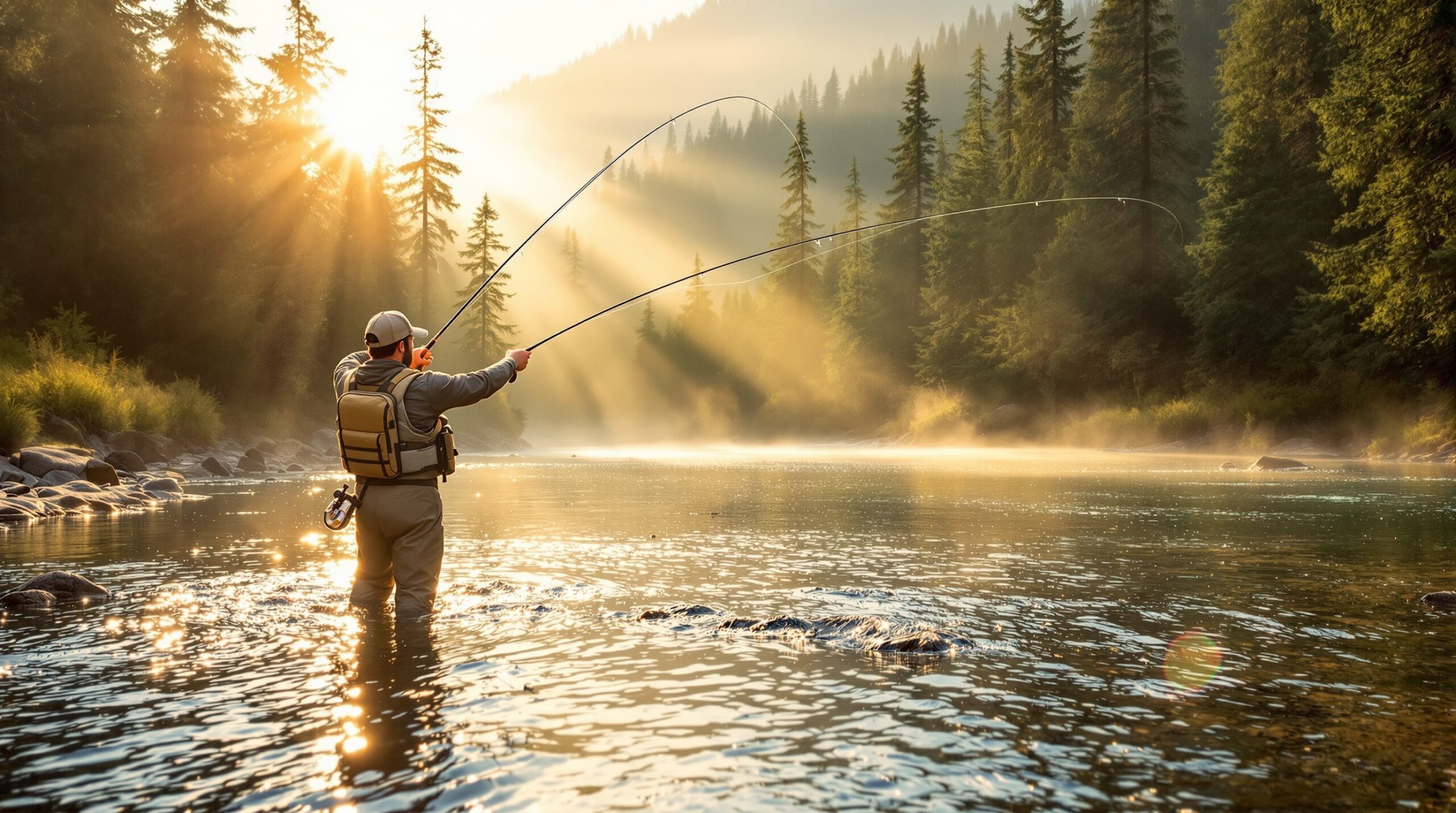
Fly fishing blends contemplative technique with nature immersion, but beginners often feel overwhelmed by perceived complexity and equipment choices that seem designed to confuse rather than clarify. Fly fishing for beginners is not about accumulating expensive gear but about understanding how rod, reel, and line function together. According to expert Tom Rosenbauer, success starts with radical simplicity: “when you get started in fly fishing keep it simple at first… you need a rod a reel and line… a pair of snips to cut your line you need a box of flies.” This guide cuts through confusion to focus on matched gear, basic casting mechanics, and reading water—the three foundations that unlock this graceful craft for those new to fly fishing for beginners.
Quick Answer: Fly fishing for beginners requires three matched components—a 5-weight rod, reel, and line—plus basic terminal tackle and yard practice mastering the two-part casting rhythm before stepping onto the water to target trout along current seams.
Definition: Fly fishing for beginners is the process of learning to cast weighted line that carries an artificial fly to feeding fish using matched rod, reel, and line systems.
Key Evidence: According to Ontario Trout and Steelhead, essential gear includes rod, reel, and line where all three components match in weight, plus leader, tippet, nippers, forceps, net, and polarized sunglasses.
Context: This weight-matching system allows the rod to load properly during casts, making natural presentation physically possible.
Key Takeaways
- Matched gear is foundational – 5-weight rod systems with matching reel and line handle most trout water while remaining manageable for new casters
- Casting timing outweighs distance – the pause between back cast and forward cast allows line to straighten, preventing collapsed presentations
- Natural drift determines success – fish immediately detect drag (unnatural fly movement), making mending essential for convincing presentation
- Seams concentrate fish – trout position along boundaries between fast and slow water where they expend minimal energy while feeding
- Practice before the water – developing muscle memory in your yard separates skill building from execution pressure
Essential Gear for Fly Fishing for Beginners
You might notice that fly fishing shops display overwhelming walls of equipment, but starting requires matched components that work as a system rather than individual pieces chosen separately. The key insight that transforms confusion into clarity: a 5-weight or 6-weight rod requires a reel and line of identical weight designation—this allows the rod to load properly when you cast, making natural presentation physically possible.Research by Ontario Trout and Steelhead experts shows the 5-weight has emerged as the beginner standard, offering versatility across most trout water without overwhelming new casters. This weight handles everything from small mountain streams to medium-sized rivers where you’ll likely spend your first seasons on the water. The system functions through physics: when you cast, the line’s weight bends the rod, storing energy that releases to propel your fly forward.
Your complete starter system includes matched rod, reel, and line (5-weight or 6-weight), leader and tippet for connecting fly to line, basic fly selection with nymphs and dry flies for your region, nippers for cutting line, forceps for hook removal, landing net, and polarized sunglasses to reduce surface glare when reading water. Consider overlining—using slightly heavier line than rod specification (7-weight line on 6-weight rod)—to help the rod load more easily during short practice casts.
One common pattern that shows up often: beginners accumulate gear before understanding what they actually need, creating decision paralysis rather than confidence. Keep your initial investment minimal, focusing on functional matched systems rather than premium materials or extensive fly collections. The serenity of a day spent practicing your presentation matters more than the brand name on your rod.
What to Avoid as a Beginner
New fly anglers make predictable equipment mistakes that complicate rather than simplify learning.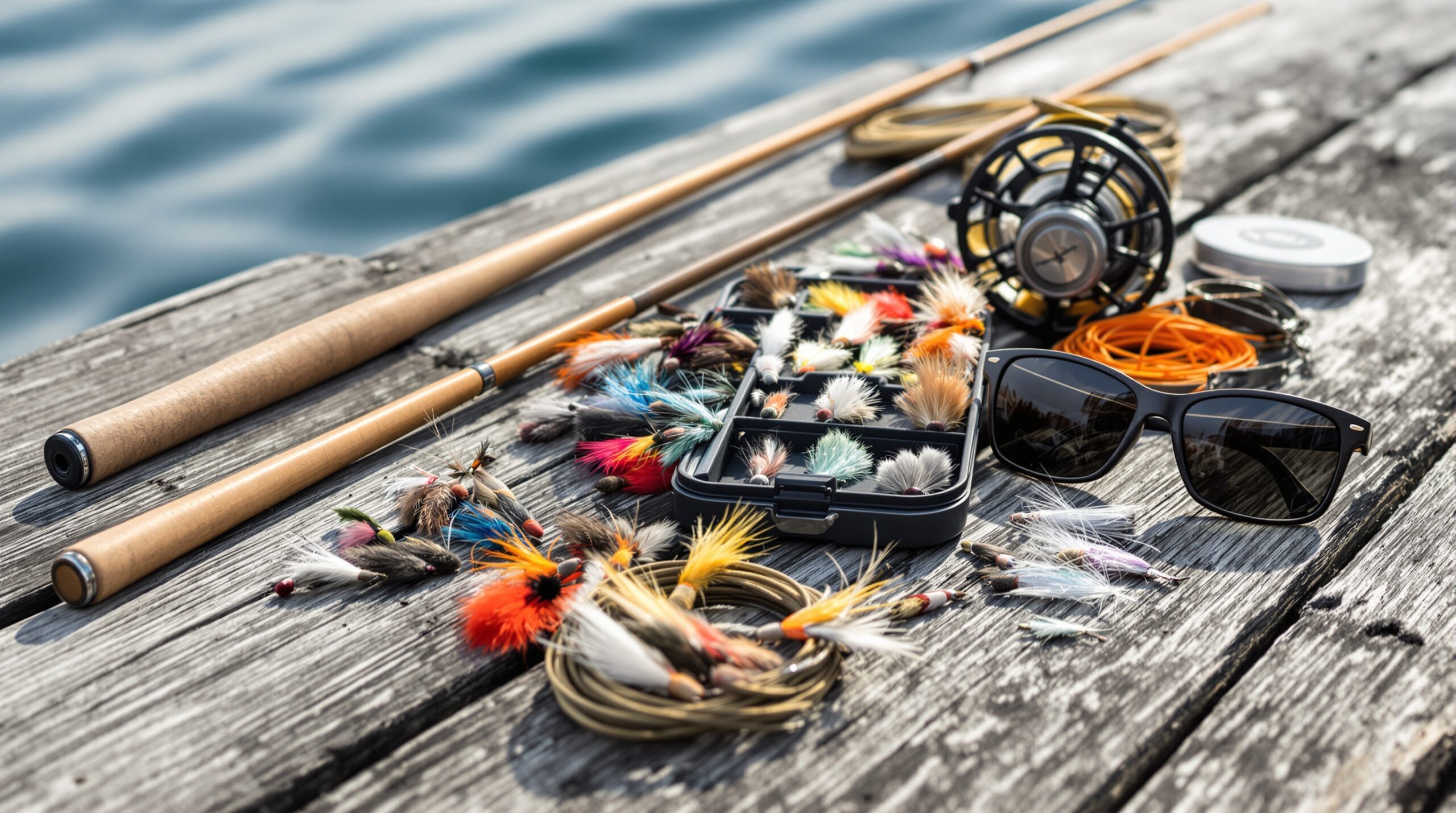
- Mismatched components: Buying rod, reel, and line of different weights prevents proper loading
- Gadget accumulation: Adding unnecessary tools before mastering fundamentals creates decision fatigue
- Premium fixation: Expensive equipment doesn't compensate for lack of technique or water reading skills
- Extensive fly collections: Start with 6-8 proven local patterns rather than hundreds of specialty flies
Mastering the Basic Cast
Maybe you've tried casting and watched your line collapse in a heap, wondering what went wrong. The answer lies in understanding that fly casting differs fundamentally from spinning or baitcasting because the weight of the line loads the rod rather than the weight of a lure. This distinction changes everything about timing and technique, requiring patience to develop the rhythm that makes natural presentation possible.Execute the back cast by bringing the rod low then stopping sharply to load it—you should feel the rod bend. Pause while the line straightens behind you. Then snap forward and stop, dropping the rod tip to lay the line straight. Research by The Fly Crate instructors shows this sequence—back stop, pause, forward stop—forms the foundation of all fly casting. Rushing through the pause prevents the rod from bending properly, resulting in collapsed casts and poor fly placement that spooks fish.
Hold the rod with your thumb on top, grip relaxed not clenched. Keep your elbow relatively still, using forearm rotation. Stop the rod crisply rather than following through like a baseball swing. Let the rod do the work—power comes from loading, not muscle. Beginners can let the line touch the ground behind them initially to confirm it has straightened before starting the forward cast.
Spend time in your yard before attempting to fish, allowing muscle memory to develop without the distraction of current, fish, and foot placement. According to Wet Fly Swing experts, this practice approach separates skill development from execution pressure. Start with short casts of 10-20 feet, extending distance gradually as timing becomes consistent. The patience you develop during yard practice translates directly to success on the water, where fly fishing for beginners feels hard until the fundamentals become second nature.
Reading Water and Presentation
You might assume that fly fishing success depends on perfect casting technique, but understanding where fish hold and how to present your fly naturally matters just as much. Trout position themselves along seams—the boundaries between fast and slow water—where they expend minimal energy while food drifts past, making these transition zones the most productive areas for beginners to target.Research from The Fly Crate biologists confirms that understanding fish behavior and habitat selection matters as much as casting skill. Position yourself downstream and off to the side of your target. Cast upstream along the inside edge of the seam first, letting your fly drift naturally with the current. Look for edges where pocket water meets slower current, often along boulders, banks, or depth changes where trout can hold without fighting the flow.
Common beginner mistakes include ignoring drag—unnatural movement of the fly caused by current pulling the line—which fish immediately detect and reject. According to BC Fishn guides, learning to mend by lifting your rod and repositioning the line to match current speed without moving the fly becomes essential for convincing presentation. Watch your line—if it moves faster or slower than surrounding water, trout will refuse your presentation immediately.
Target small, willing fish first rather than trophy hunting. Catching a modest trout on a clean presentation teaches more than spending hours pursuing difficult fish in challenging water. Studies from Fish Talk Magazine researchers show that beginners who focus on technique over size develop skills faster and maintain interest longer. Notice where you see rises, how your fly lands, and whether your drift looks natural—these observations build the pattern recognition that defines skilled fly fishing.
Grid Method for Covering Water
Systematic water coverage prevents spooking fish while providing thorough presentation to holding areas.- Start close: Begin with short casts to near water before extending distance
- Work upstream: Move methodically against current to avoid alerting fish ahead
- Quarter sections: Cover water in imaginary grid squares, presenting to each zone before moving
- Observe before casting: Spend 2-3 minutes watching for rises and current patterns
Why Fly Fishing for Beginners Matters
Fly fishing offers accessible entry into a contemplative outdoor tradition that rewards observation and patience over equipment or conquest mentality. Starting with simplified matched gear and fundamental techniques removes barriers that make the craft seem exclusive or overly complex. Mastering basic presentation and water reading creates foundation for lifetime progression while connecting anglers to natural systems and seasonal rhythms that deepen with experience. The craft teaches you to read water like a book, understanding how current flows, where insects hatch, and how fish position themselves to feed efficiently throughout the day.Conclusion
Fly fishing for beginners succeeds through matched 5-weight equipment, yard practice of the two-part casting rhythm, and understanding that fish respond to natural drift along current seams rather than distance or flashy presentations. Tom Rosenbauer's emphasis on simplicity cuts through marketing complexity: rod, reel, matched line, basic flies, and terminal tackle provide everything needed to start. Target small willing fish first, practice mending to eliminate drag, and build confidence through successful presentations before progressing to challenging water. Remember that your fly fishing gear list should remain minimal until you understand what you actually need through time on the water. The fundamentals unlock a lifetime of learning and connection to this graceful craft, where each cast becomes a conversation with the current and each rise a moment of pure anticipation.Sources
- YouTube - Fly Fishing Basics with Tom Rosenbauer - Expert guidance on essential beginner gear and simplifying the entry process
- Wet Fly Swing - Comprehensive beginner instruction emphasizing practice before stream time
- The Fly Crate - Step-by-step casting mechanics, water reading techniques, and seam fishing strategies
- BC Fishn - Guidance on natural drift, drag detection, and common beginner mistakes
- Ontario Trout and Steelhead - Essential beginner gear specifications and weight-matching systems
- Fish Talk Magazine - Ten foundational lessons covering common mistakes and best practices for new anglers