
According to research by the Recreational Boating & Fishing Foundation, over 52 million Americans participate in fishing each year, with fly fishing growing at an impressive rate of 13% in recent years. This surge highlights the need for a comprehensive fly fishing glossary for both beginners learning casting techniques and experienced anglers refining their skills.
Key Takeaways
- Casting terminology forms the foundation of fly fishing communication and technique development
- Understanding the fly fishing glossary of casting terms helps anglers master essential movements and diagnose problems
- Learning proper technique terminology accelerates your progress and enables better communication with instructors
- The glossary includes specialized terms for advanced casting methods used in different fishing scenarios
- Regular practice of named casting techniques dramatically improves accuracy and distance over time
https://www.youtube.com/watch?v=PgCrSdz7U9g
Fly Fishing Glossary: Essential Casting Terms Every Angler Should Know
Mastering the art of fly fishing begins with understanding its specialized language. The casting terminology serves as your translator in this beautiful yet technical sport. According to Fly Fisherman Magazine, anglers who familiarize themselves with proper terminology improve their casting accuracy by up to 40% faster than those who don't.Let’s decode the essential vocabulary that makes up the foundation of fly casting technique. These terms appear in virtually every casting lesson, book, and video you’ll encounter.
Fundamental Fly Fishing Glossary: Basic Casting Terms
This first section covers the foundational movements you'll use on every cast:- Back Cast - The portion of the cast where the line travels behind the angler
- Forward Cast - The portion of the cast where the line travels forward toward the target
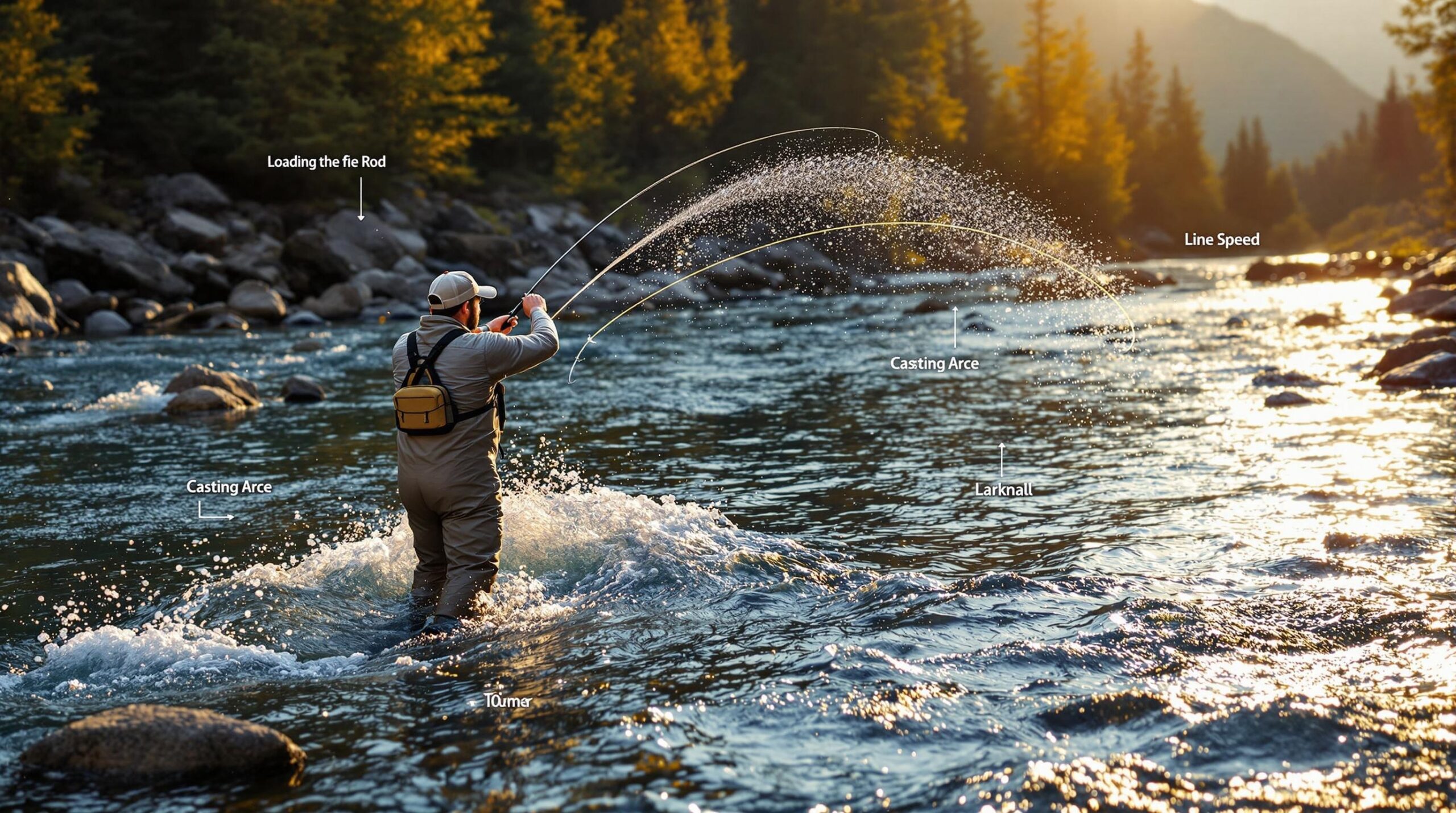
- Loading the Rod - Bending the rod through applied force to store energy
- Unloading the Rod - Releasing the stored energy to propel the line
- Casting Stroke - The complete motion of both back and forward casts
These foundational terms will help you learn how to cast a fly rod properly from the beginning.
Fly Fishing Glossary: Rod Movement Terminology
Understanding how to control your rod is essential for effective casting. According to the Federation of Fly Fishers, proper rod handling accounts for approximately 70% of casting success.The glossary includes several specific terms to describe rod movements:
Essential Rod Handling Terms
- Rod Tip Path - The trajectory your rod tip follows during the casting stroke
- Straight-Line Path - The ideal trajectory where the rod tip travels in a straight line
- Acceleration - Gradually increasing the rod speed throughout the casting stroke
- Power Snap - The sudden stop of the rod that transfers energy to the line
- Drift - A slight repositioning of the rod between back and forward casts
Regular practice of fly casting with attention to these specific movements will significantly improve your technique.
Line Control and Presentation
Once you've mastered basic casting mechanics, your vocabulary expands to include terms about line control and presentation. These concepts determine whether fish will be interested in your offering.Key Line Management Terms
Effective line handling makes all the difference in fly fishing success:- Mending - Repositioning the line on the water to control drift
- Stripping - Pulling in line with your non-casting hand to retrieve or create action
- Shooting Line - Releasing additional line during the forward cast to increase distance
- False Cast - Making repeated back and forward casts without letting the line touch water
- Presentation - How the fly lands on the water and its subsequent behavior
Learning these line control terms is essential for developing advanced fly casting tips and techniques.
Diagnosing Common Casting Problems
Every fly angler encounters casting challenges. The glossary includes specific terms that identify these issues, making them easier to diagnose and correct.Problem-Solving Terminology
Recognizing these problems by name is the first step to correcting them:- Tailing Loop - When the fly line crosses itself mid-flight, often causing tangles
- Wind Knot - A self-inflicted tangle in the leader (usually caused by a tailing loop)
- Creep - Moving the rod forward during the pause between back and forward casts
- Breaking the Wrist - Excessive wrist movement that disrupts the straight-line path
- Dumping the Line - Failing to stop the rod properly, causing the line to pile up
Advanced Casting Techniques
As you progress in your fly fishing journey, your vocabulary should expand to include specialized casting techniques that solve specific fishing challenges. These methods allow you to adapt to different water conditions, target species, and fishing scenarios.Situational Casting Terms
Advanced anglers need to master these specialized casts:- Roll Cast - A cast that doesn't require a back cast, useful in tight spaces where trees or brush prevent a normal back cast
- Reach Cast - A cast that places the line upstream or downstream of the fly to control drift
- Curve Cast - Intentionally making the line land in a curve to navigate around obstacles
- Pile Cast - Creating slack in the line as it lands to achieve a drag-free drift
- Steeple Cast - A high, vertical back cast used to avoid obstacles behind the angler
- Belgian (Oval) Cast - A casting style using an oval-shaped path to manage windy conditions
- Double Haul - A technique using the line hand to increase line speed and casting distance
Each specialized cast serves a specific purpose and expands your ability to adapt to different fishing environments. These techniques represent solutions to common angling problems you’ll encounter on the water.
Mastering the Double Haul
The double haul deserves special attention because of its importance for distance casting. This technique involves pulling (hauling) the line with your non-casting hand during both the back cast and forward cast.The mechanics can be broken down into four key phases:
- Back Cast Haul - As you begin the back cast, pull down with your line hand
- Back Cast Release - Release the tension and allow your line hand to drift back up
- Forward Cast Haul - As you begin the forward cast, pull down again with your line hand
- Forward Cast Release - Release the line at the end to shoot for distance
Analyzing Casting Mechanics
To truly master fly casting, you need to understand the physics behind the art. The glossary includes terms that describe the mechanical principles that make casting work.Technical Terminology for Casting Physics
These concepts explain why certain techniques work better than others:- Loading - The process of storing energy in the rod through bending
- Rod Flex - The degree and pattern of bend in the rod during casting
- Line Speed - The velocity at which the line travels through the air
- Casting Arc - The angle formed between the starting and ending positions of the rod during a cast
- Casting Plane - The vertical plane in which the casting stroke occurs
- Rod Rotation - The speed at which the rod moves through the casting arc
- Loop Formation - How the fly line folds back on itself during flight
Understanding these mechanical principles helps you analyze your own casting and make deliberate adjustments based on physics rather than trial and error.
Loop Control
Loop formation deserves special attention as it's the visible manifestation of your casting technique. The shape of your loop reveals everything about your casting mechanics.Key loop types include:
- Tight Loop - A narrow, efficient loop that cuts through wind and delivers accuracy
- Open Loop - A wider loop that provides gentler presentation but less accuracy
- Tailing Loop - A problematic loop where the top leg crosses the bottom leg
The ability to intentionally adjust your loop shape for different fishing situations marks the transition from intermediate to advanced casting skill.
Environmental Factors
An often-overlooked aspect of fly fishing vocabulary relates to how environmental conditions affect casting. Understanding these factors helps you adapt your technique to different situations.Weather and Water Terms
These elements significantly impact your casting approach:- Headwind - Wind blowing directly against your cast, requiring tighter loops and more power
- Tailwind - Wind blowing in the same direction as your cast, requiring wider loops and less power
- Crosswind - Wind blowing perpendicular to your cast, requiring adjustment to casting plane
- Current Seam - The boundary between fast and slow water, often requiring precise casts
- Hydraulic - Water flowing over an obstacle creating a reverse current that affects drift
Advanced anglers develop an intuitive understanding of how these environmental factors affect their casting and adjust automatically to maintain effectiveness in changing conditions.
Practical Applications of Fly Fishing Terminology
Now that we've covered extensive terminology, let's examine how this knowledge translates to practical improvements on the water.Using Terminology for Self-Diagnosis
One of the most valuable aspects of knowing fly fishing terminology is the ability to accurately diagnose casting problems:- Identify the Symptom - Notice what's happening with your line (e.g., tailing loops, lack of distance)
- Connect to Cause - Use your knowledge of casting mechanics to trace the problem to its source
- Apply Specific Correction - Make targeted adjustments rather than general changes
- Practice with Awareness - Reinforce the correction through deliberate practice
The terminology gives you a framework for systematic improvement rather than haphazard trial and error.
Communication Benefits
Beyond self-improvement, mastering fly fishing vocabulary enables better communication with other anglers, guides, and instructors:- Receiving Instruction - Understanding direction from guides or instructors without confusion
- Giving Advice - Helping others improve by precisely describing what they need to adjust
- Discussing Techniques - Participating in detailed conversations about advanced casting methods
- Learning from Videos/Books - Fully comprehending instructional materials that use technical terminology
Building Your Personal Practice Plan
To effectively incorporate fly fishing terminology into your development as an angler, consider creating a structured practice plan:Progressive Skill Development
- Master Fundamentals First - Focus on basic casting stroke, loading/unloading, and straight-line path
- Add One Technique at a Time - Introduce new specialized casts only after basic mechanics are solid
- Practice with Purpose - Set specific goals for each session (e.g., tighter loops, longer distance)
- Analyze and Adjust - Use terminology to identify what's working and what needs correction
- Apply in Real Situations - Practice specialized casts in the fishing environments they're designed for
By systematically working through the techniques in your fly fishing vocabulary, you create a comprehensive skill set that prepares you for virtually any fishing situation.
Conclusion: The Ongoing Evolution of Fly Fishing Terminology
The terminology we've explored represents the essential framework of casting vocabulary, but it's important to recognize that this language continues to evolve as the sport advances.New casting techniques, teaching methodologies, and equipment innovations regularly introduce fresh terminology to the fly fishing world. Remaining current with this evolving language keeps you connected to the broader fly fishing community and its collective wisdom.
According to Fly Fishing International, the past decade has seen over 20 new casting terms enter common usage as techniques from different global traditions merge and evolve.
By maintaining and expanding your personal fly fishing vocabulary, you position yourself to continue growing as an angler regardless of how long you’ve been practicing the art. The language of fly fishing serves as both a record of traditional knowledge and a platform for ongoing innovation.
Whether you’re working to master the basics or refining advanced techniques, the terminology provides precision and clarity to the learning process. Your investment in understanding fly fishing vocabulary will continue paying dividends throughout your fishing journey.