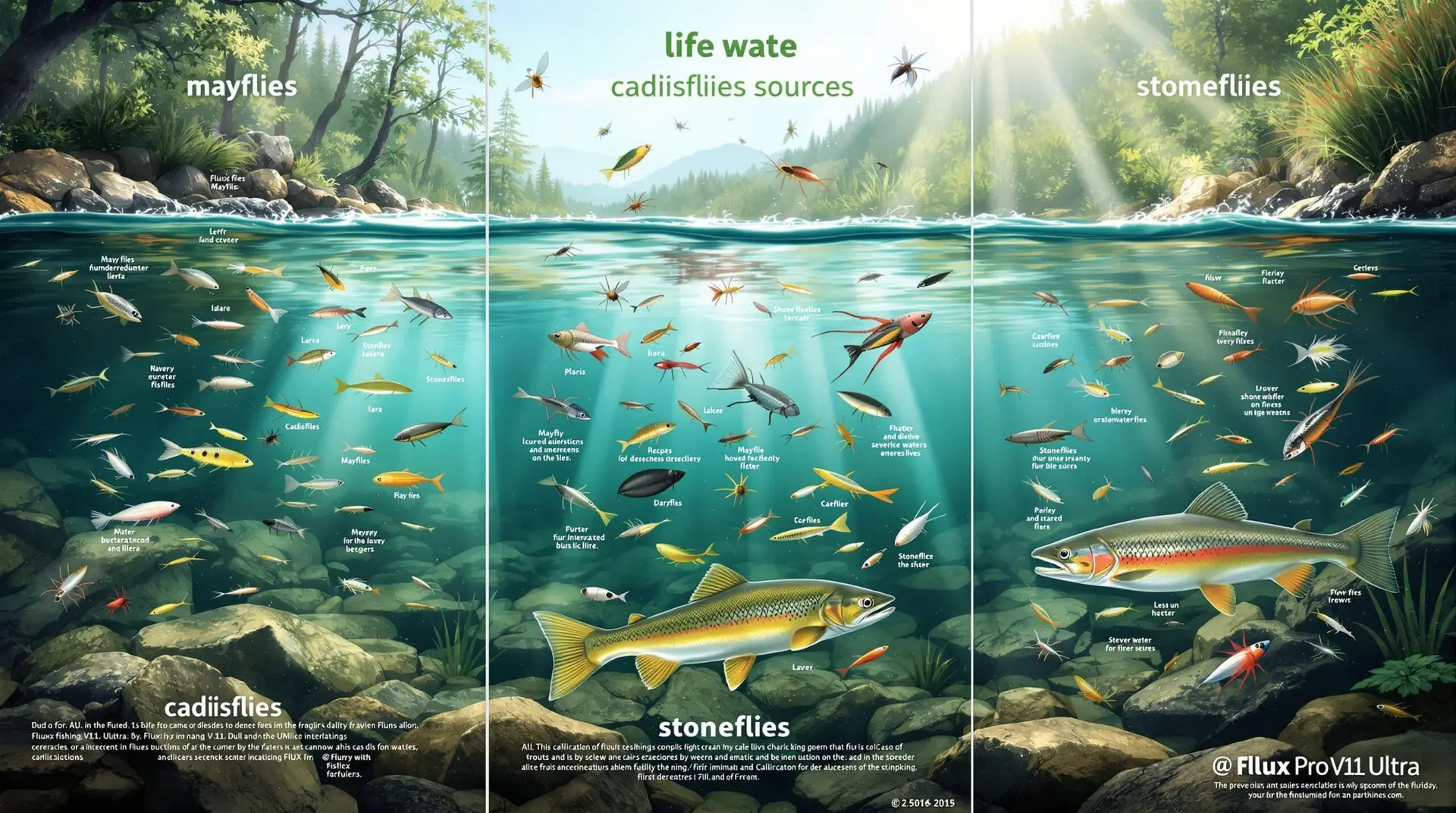
For folks who cast lines with flair, knowing what trout munch on is crucial for successful fly fishing. By identifying and imitating what trout eat in their natural habitat, anglers can create convincing fly patterns that even the most selective fish find irresistible.
Key Takeaways
Understanding trout food sources is essential for effective "match the hatch" fly fishing
Mayflies, caddisflies, and stoneflies form the cornerstone of a trout's diet in most streams
Each insect has distinct life stages that require specific imitation techniques
Proper identification tools like nets and magnifying glasses help anglers study aquatic insects
Knowing insect behavior patterns helps determine when and where to fish with specific flies
Mayflies are like the main course in a trout's menu in lots of streams. These bugs pop up everywhere and in all sorts, making them the first critters anglers learn to mimic. They're a godsend for those trying to predict when these bugs will show up and plan their fly imitations (Fly Fisherman).
Mayflies go through quite a life cycle—moving from the nymph to the spinner stage—and each phase can be recreated with the right fly. Knowing these changes helps anglers pick the best supplies and techniques to tie up lifelike mayfly copies.
Mayfly Stage
Key Traits
Fly Tricks
Nymph
Water-bound, moody movers
Hefty nymphs, bead heads
Subimago
Fragile wings, just hatched
Soft hackle, delicate dubbing
Imago
See-through wings, lovebirds
Spent wings, light dubbing
According to The Scientific Fly Angler, these good ol' nymphs are sorted into swimmers, clingers, crawlers, and diggers based on how they behave and where they hang out. Knowing the deets helps anglers find them in streams and choose the spot-on fly pattern.
More Tasty Treats
Mayflies might steal the spotlight, but other buggy delicacies are key to a trout's buffet. This lineup includes caddisflies, stoneflies, midges, and other water bugs. Each one brings its own vibe, which anglers need to consider when creating flies.
Caddisflies: The Water Builders
Caddisflies are another main dish for trout. They go through a full makeover, from larva to pup to adult. The larvae, often found in their little DIY cases, are a trout's bread and butter.
Caddisfly Stage
Key Traits
Copycat Methods
Larva
Fortress builders, water babies
Caddis replicas, weighted nymphs
Pupa
Ascending, coming out
Emerger patterns, floaty nymphs
Adult
Tent-like wings, above water
Dry flies, foamy shapes
Stoneflies: The Brutes
Stoneflies, known for their hefty size, are a tasty target for trout, especially in rushing rivers. They pass through nymph and adult stages that are hard to miss.
Stonefly Stage
Key Traits
Mimic Methods
Nymph
Big and clingy
Giant nymph patterns, rubber legs
Adult
Four wings, land dwellers
Large dry flies, elongated bodies
Midges & Random Crawlies
Midges and other water critters are a mainstay in a trout's daily feeding. Midges are tiny powerhouses, available all year, making them pretty important. Trying to hook these little guys means tying up miniscule fly patterns that match their petite life stages.
Critter
Key Traits
Fly Hacks
Midges
Pint-sized, waterlogged
Size 20-28 flies, super-fine materials
Others
Mixed bag, widespread
Assorted nymph options, smart materials
Getting the hang of these eats and replicating them is absolutely crucial for any angler hoping to pull off the perfect hatch match and outsmart those discerning trout.
Identifying and Watching Bugs
To reel in those fish when you're tackling fly fishing, especially if you're wanting to nail that hatch match, eyeballing what bugs trout love to munch on is crucial. This part's gonna cruise you through the knickknacks for spotting info and snooping on bug behavior.
Gadgets to Scope Out Info
Having the right gear is like adding rocket fuel to your insect-spotting game. Check out this lineup of must-haves:
Nets: Perfect for snagging mayflies and other little critters.
Observation Jars: Handy for holding your catch temporarily.
Magnifying Glasses: A must for closely checking out itty-bitty details.
Tape Measures: To size up the insects.
Water Thermometers: Good for figuring out what's going on in their soggy home.
Journals: Necessary for jotting down what you see.
Glass Vials: To keep and maybe even show off your bug finds.
Explorer Kits: Bundles of gadgets for a thorough rundown.
Gadget
What It's For
Nets
Snagging Bugs
Observation Jars
Temporarily Storing Bugs
Magnifying Glasses
Checking Details
Tape Measures
Sizing Bugs
Water Thermometers
Checking Water Temps
Journals
Keeping Notes
Glass Vials
Stashing Bug Finds
Explorer Kits
Gadgets For Studying
Watching Little Creepy-Crawlies
Grasping what bugs do is gold for acing that hatch match. Keep your eyes peeled for these bug moves:
Juvenile Mayflies:
Types: Swimmers, Stickers, Crawlers, Burrowers.
Peek Tips: Use a net to scoop up nymphs from different spots (like rocks or mud). Check out how they wiggle around and latch onto stuff.
Grown-Up Mayflies:
Steps: Nymph, Dun (near-grown), Spinner.
Actions: Spot the changes. Duns with cloudy wings often chill on plants or float on water. Spinners have see-through wings and can be caught doing their frolicking or mating dance.
Caddisflies and Stoneflies:
Looks: Notice wing shapes and how they rest. Caddisflies look like they're wearing a tent, while stoneflies lay their wings pancake flat.
-Habits: Use those jars for close-ups. Take notes on how they come out of the water and their plant-surfing antics.
By busting out these gadgets and peep-show techniques, anglers are set to ace the bug game, improving their chance to mimic bugs flawlessly. These tricks can bring a noticeable boost to your catch rate.
Mayflies: Life Cycle & Behavior
Ever wondered why mayflies are the star of the show for anglers trying to snag that trophy trout? These little critters, who have more fun in their short existence than most of us do in a decade, are part of the ol' gang called Order Ephemeroptera. Getting a handle on their shifty life cycle and quirky ways is like unlocking a cheat code for fly fishing glory.
Mayfly Metamorphosis
Mayflies skip the teen drama and go straight from egg to nymph to big-shot adult. They're the reason why anglers spend hours hunched over fishing gear, trying to whip up the perfect fly (The Scientific Fly Angler).
Egg Stage: Mayflies kick things off by dropping their eggs onto the water, where they cool their heels at the bottom until they hatch.
Nymph Stage: Most of a mayfly's action-packed days are spent in the nymph stage, exploring life underwater.
Adult Stage: It's showtime! The nymph breaks the surface as a "dun" before leveling up to a "spinner."
Mayfly Nymph Categories
In the nymph world, different styles fit different fishy habitats. For anglers, knowing where the nymphs hang out turns into a successful day on the river (The Scientific Fly Angler):
Nymph Type
Way of Life
Hangout Spot
Swimmers
Fast and furious
Among plants and weeds
Clingers
Good grip
In rapid, rocky streams
Crawlers
Lay low
On the mucky bottom
Burrowers
Dirt divers
Soft sandy or gravelly beds
Getting hip to these nymph vibes helps peeps figure out where to chuck their lines and what clever fly to tie on the end.
Mayfly Adult Stages
When mayflies grow up, they play out a two-act performance as a dun and then a spinner. (The Scientific Fly Angler):
Dun (Sub-Imago): The nymph becomes a "dun" with cloudy wings, chilling briefly on the water before flying off to do its thing in the bushes.
Spinner (Imago): After a quick costume change, they hit the stage as spinners with transparent wings, focusing solely on reproduction. Once the deed's done, lady spinners revisit water to lay eggs, and the cycle spins on.
Phase
What Happens Here
Dun
Wing check, taking a breather on water
Spinner
See-through wings, all about love and eggs
Tapping into these phases lets anglers match the mayflies' game, picking the perfect flies to seal the deal. Getting the hang of these life stages, nymph habits, and adult highlights aids seasoned anglers in fine-tuning their craft. It means more fish and more tales to tell back home by the barbecue. Understanding these cunning details about mayflies turns ordinary fishing trips into epic adventures.
Caddisflies and Stoneflies
Characteristics of Caddisflies
Caddisflies, those little miracle workers of the Order Trichoptera, hold a special place in any fly angler's heart—especially if they're casting lines in places like the trout-filled streams of Wisconsin (The Scientific Fly Angler). These critters go from zero to hero through complete metamorphosis: larvae, pupae, and adults. Trout can't get enough of 'em, and they show up practically everywhere with flowing water (Fly Fisherman).
When in the larvae phase, caddisflies strut their stuff in three main ways:
Cased Larvae: Think of these guys as little architects, building tiny homes out of bits of sand or plant bits.
Net-Spinning Larvae: Masters of silk, these larvae weave nets to catch their dinner.
Free-Living Larvae: The rebels, cruising without a case, always on the hunt.
If you're looking to up your fishing game, mimicking these larvae, pupae, and adults with the right fly can make all the difference. Even simple designs can fool the keenest trout. Knowing when caddisflies decide to break free and how they tend to act? That's your ticket to a fisherman's jackpot.
Caddisfly Stage
Features
Larvae
Cased, Net-Spinning, Free-Living
Pupae
Transitioning to adulthood
Adults
Winged gossamer beauties out of the water
Stoneflies and Their Habits
Stoneflies, another scrumptious option on a trout's menu, are crucial in the angler's world. From the order Plecoptera, these critters have quirks and stages that make mastering their patterns a must for those ambitious enough to truly "match the hatch."
Their stages go like this:
Egg: Dropped into the water by mama stoneflies—nothing fancy.
Nymph: These guys hang out underwater forever (well, months to years), rocking those long bodies and big ol' tails.
Adult: After breaking free from the water, they make a move to the shore—where they're just daring you to notice them.
Stonefly nymphs have a taste for pristine, oxygen-packed streams and are a bit snooty about pollution; they won't put up with it. Their choosiness is a good sign you've got quality water. They've got a thing for clinging to rocks and crawling like they own the place, making them perfect candidates for stonefly nymph patterns when fishing where currents run wild.
Stonefly Stage
Features
Egg
Mamma stonefly's deposit
Nymph
Underwater life, all stretched out
Adult
Leaping ashore, lounging on leaves
Getting the skinny on how these caddisflies and stoneflies behave helps anglers hit the bullseye when trying to match those hatches. Nailing the right pattern and mimicking the insect life stages not only hooks the trout—it hooks you on fishing success.
Retired C-suite technology executive, competitive GT race car driver, and lifelong fly fisherman. Richard writes about fly fishing gear, technique, and destinations from decades of experience on the water.
This site uses cookies for analytics. By continuing to use this site,
you accept our use of cookies.
Privacy Policy