
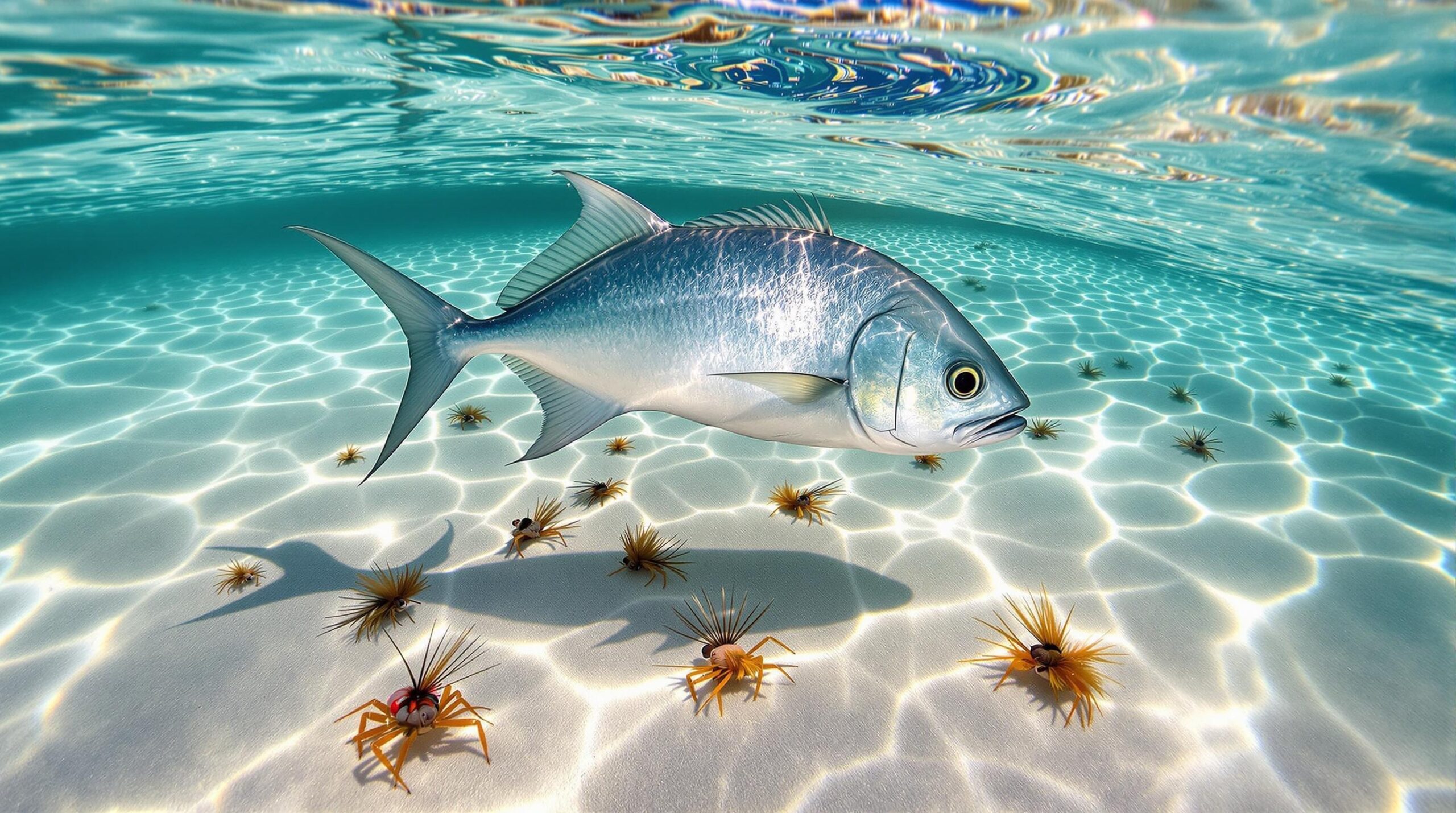
Picture this: you’re standing on a Yucatan flat, watching a school of permit cruise through crystal-clear water, their black-tipped fins cutting the surface like prehistoric ghosts. You’ve got the perfect cast lined up, but here’s the thing—your Bahamas crab pattern that worked so well in shallow water just isn’t cutting it in Mexico’s deeper bays. Maybe you’ve experienced that sinking feeling when a permit swims right over your fly, completely ignoring what worked perfectly in the Caribbean. Permit fishing in Mexico’s Yucatan Peninsula demands specialized fly patterns that balance quick sink rates with realistic profiles, a combination that separates productive days from frustrating refusals in the deeper bays of Ascension Bay and Xcalak.
Permit fly patterns are not generic crab imitations that work everywhere. They are environment-specific tools refined by guides who understand that Mexico’s deeper waters require heavier flies that descend rapidly without excessive splash. These flies must match local crustaceans over turtle grass and sand bottoms while reaching permit feeding at six to eight feet before they spook.
This guide reveals which permit fly patterns local guides trust, why they work in Mexican conditions, and how to select the right fly for varying flat environments.
Quick Answer: The best permit fly patterns for Mexico are crab imitations that sink quickly in deeper bay waters, with the Raghead Crab, Pato’s Crab, and EP Crab serving as essential patterns that combine natural olive and tan colorations with chartreuse accents for visual triggers.
Definition: Permit fly patterns are specialized crab imitations designed to match local crustaceans while achieving proper sink rates and natural presentation in specific flat environments.
Key Evidence: According to Aardvark McLeod, the Raghead Crab “has become one of the go-to flies for anglers fishing Mexican waters” and “does a little bit of everything rather well” across varied flat conditions.
Context: These patterns reflect decades of local guide refinement specifically for Yucatan Peninsula conditions where depth and turtle grass coverage dictate fly selection.
You might notice that successful permit patterns feel different in your hand than typical shallow-water flies. They carry more weight, sink faster, and often feature bright accent colors that seem almost gaudy compared to subtle Caribbean patterns. This isn’t accident—it’s adaptation. The right pattern combines visual realism that convinces selective permit with mechanical properties that function properly in Mexican bay conditions. Success comes from understanding that these fish respond to patterns refined by guides who spend 200-plus days annually on these specific flats.
Key Takeaways
- Raghead Crab dominance: Versatile foundation pattern that performs consistently across varying Mexican flat conditions and permit behavior
- Regional adaptation matters: Pato’s Crab, developed by Ascension Bay guides, “quickly earned a spot as a go-to fly among permit guides throughout the region” according to Yellow Dog Flyfishing
- Weight requirements differ: Mexican bays demand heavier flies than Caribbean shallows to achieve “quick sink on a good hook” without alarming splashdown
- Synthetic materials advance: EP Crab and Flexo variants offer enhanced durability while maintaining realistic profiles with chartreuse thread accents
- Color selection focuses: Natural tan and olive tones matching local crustaceans, accented with bright yellow or red lead eyes for visual triggers and sink control
Essential Permit Fly Patterns for Mexican Waters
The Raghead Crab stands as the versatile foundation for Mexico permit fishing. According to Aardvark McLeod, it “has become one of the go-to flies for anglers fishing Mexican waters” because it “does a little bit of everything rather well,” serving as a reliable choice when conditions and fish behavior vary throughout the day. This pattern’s soft body compresses naturally when permit mouth it, while rubber legs pulse with minimal movement, creating the subtle action that permit expect from crabs.
Pato’s Crab represents regional development at its finest. Created by an Ascension Bay guide who understood local conditions, this pattern “quickly earned a spot as a go-to fly among permit guides throughout the region,” particularly variants with yellow lead eyes and chartreuse thread for quicker sink rates, according to Yellow Dog Flyfishing. The bright yellow eyes provide both faster descent and visual attraction that proves especially effective in slightly stained water common after weather systems move through the Yucatan.
The EP Crab showcases synthetic material advantages, utilizing synthetic fibers for enhanced durability while creating a mottled crab carapace appearance. Chartreuse thread variants earn particular preference from Mexican guides because they maintain their profile through multiple fish while offering the translucency that mimics natural crustacean shells. For deeper sections, guides prioritize the Danger Muffin, which provides “quick sink on a good hook” without excessive weight that creates alarming splashdown.
Flexo Crab variants demonstrate successful cross-regional adaptation. Originally developed for Indo-Pacific permit, these patterns prove effective in Mexican waters with realistic profiles and quick sink rates in tan and olive colors that match local crustaceans.
Color and Weight Specifications
Natural colors dominate effective Mexican patterns while bright accents provide visual triggers.
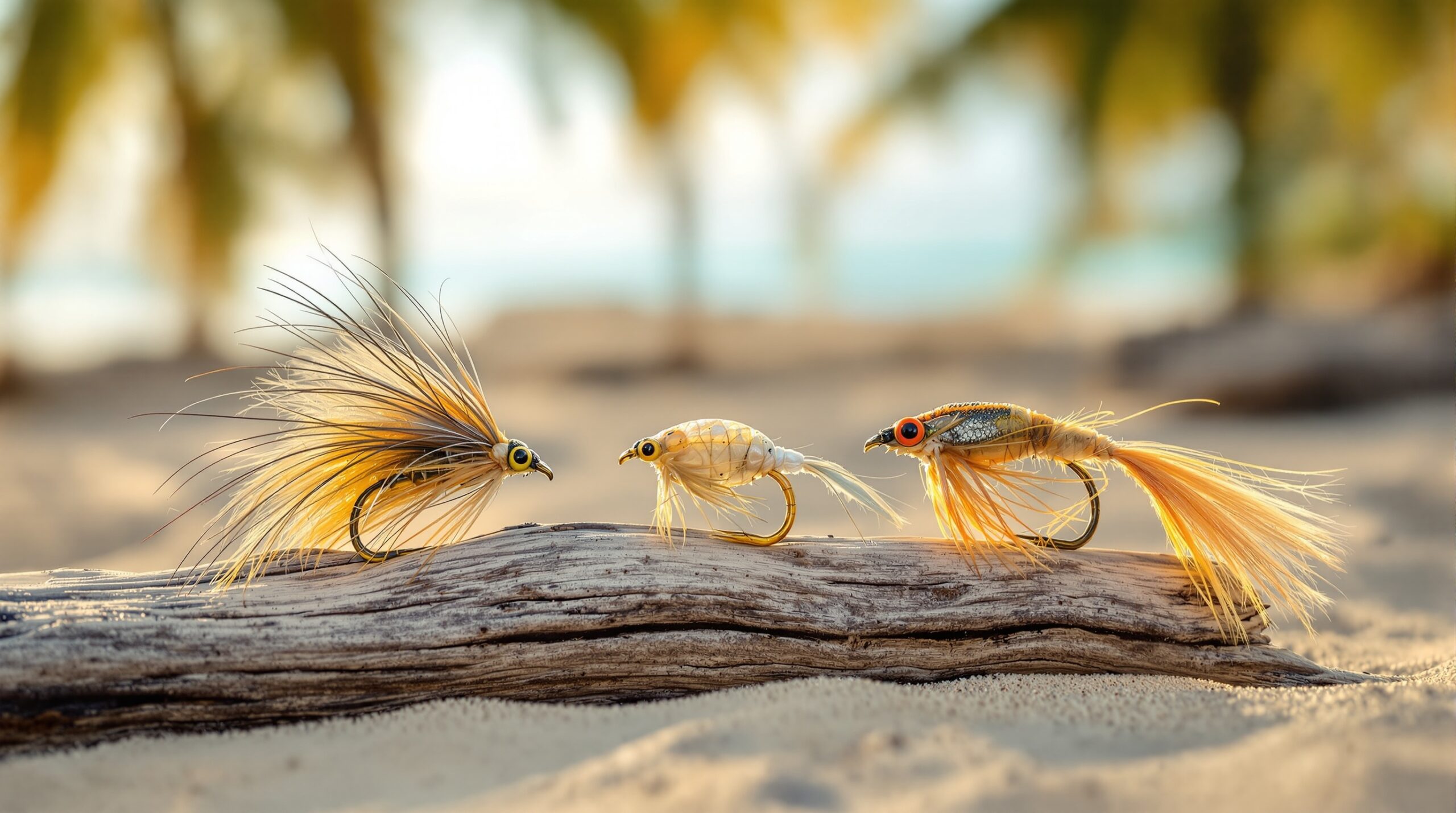
- Natural base tones: Tan and olive matching local crustaceans over turtle grass and sand bottoms
- Bright eye colors: Yellow or red lead eyes provide visual triggers while controlling sink rate
- Chartreuse accents: Thread wraps add attraction without overwhelming natural profile
- Size standards: #2 hooks serve as standard for adult permit in most Mexican bay conditions with Gamakatsu SL12 and SL11 models
Why Mexican Permit Waters Demand Different Fly Characteristics
Depth differences drive pattern selection in Mexican permit fishing more than any other factor. Bays like Ascension Bay feature deeper water than typical Caribbean flats, requiring flies that descend rapidly to reach permit feeding at six to eight feet without creating excessive splash that spooks fish. This fundamental difference means that patterns successful in three-foot Bahamas water often fail in Mexico’s varied depths.
Extensive turtle grass flats where permit feed heavily on small crabs demand specific mechanical properties. Flies need hook-point-up orientation and weighted eyes that prevent snags while maintaining natural presentation. According to Xcalak on the Fly, permit in Mexico respond to specific color combinations reflecting prey species found over turtle grass and sand, reducing overwhelming pattern choices to focused selection of tans, olives, and chartreuse.
Local guides who spend 200-plus days annually on Yucatan flats have refined patterns that address environmental conditions, with practical effectiveness trumping aesthetic perfection. This accumulated knowledge drives the shift toward synthetic materials like EP fibers and flexo, which add bulk and sink rate without proportional weight increases. Hook selection has standardized around Gamakatsu models, particularly SL12 in size #2 and SL11 in sizes #4-6, chosen for strength and hook-set reliability in permit’s notoriously hard mouths.
One common pattern that shows up often looks like this: anglers arrive with shallow-water patterns that worked elsewhere, watch permit ignore perfectly presented flies, then switch to heavier Mexican-specific patterns and immediately start getting follows and takes. The difference isn’t subtle—it’s the gap between fishing and catching.
Attractor Pattern Applications
High-contrast flies break visual patterns when realistic imitations draw inspection without commitment.
- Strong Arm Merkin role: Serves as ice-breaker when permit grow selective on heavily fished flats, offering visual disruption triggering reaction takes
- Strategic contrast use: Guides increasingly recommend carrying both realistic and attractor options, reading permit behavior to determine approach
- Practical results focus: Effective patterns now drive selection over pure realism that once dominated permit community
Selecting and Presenting Flies on Mexican Flats
Building an effective fly box starts with proven patterns in appropriate sizes and colors. Carry six to thirteen patterns with varied weights, sizes, and colors including tan and olive Raghead Crabs in size #2, several Pato’s Crabs with yellow eyes in sizes #2-4, EP Crabs with chartreuse thread in #2-6, and Danger Muffins for deeper presentations, according to Yellow Dog Flyfishing. This selection covers the range of conditions you’ll encounter from shallow turtle grass to deeper bay channels.
Reading conditions determines pattern selection on the water. Match pattern weight to water depth—heavier Danger Muffins or weighted Ragheads for six to eight foot sections, moderately weighted EP Crabs or Pato’s variants for shallower turtle grass flats. Bottom composition matters equally: olive tones over dark turtle grass, tan over sand, and chartreuse accents when slight staining reduces visibility after weather systems.
Presentation mechanics matter more than pattern perfection. Lead cruising or tailing permit three to six feet ahead in their path, allow the fly to settle completely, then execute painfully slow strips that barely move the fly, imitating a crab’s cautious movement across the bottom. The most common mistake involves retrieving too quickly, causing the fly to spin or hop unnaturally, which immediately spooks permit or triggers refusals.
When permit inspect your fly repeatedly without committing, switch strategies rather than patterns. Move from realistic to attractor, or from heavy to lighter presentations. Trust your guide’s recommendations—they understand subtle pattern preferences that vary by location and season from years of daily observation on specific flats. Avoid using damaged patterns that no longer maintain proper orientation or sink rates, as permit notice these details immediately.
You might find yourself changing flies repeatedly when what you really need is better presentation. Focus on reading water and understanding permit behavior rather than constantly switching patterns when fundamentals are sound.
Why Permit Fly Patterns Matter
Pattern selection adapted to Mexican conditions transforms permit fishing from daunting to achievable, with regional fly development reflecting accumulated knowledge from guides spending 200-plus days annually on Yucatan flats. Understanding which patterns local experts trust and why they work specifically in deeper bay environments reduces frustration and increases success rates for one of fly fishing’s most challenging pursuits. The right pattern creates confidence that allows you to focus on presentation and water reading rather than second-guessing your fly choice. That confidence is where choice lives—the space between seeing permit and connecting with them.
Conclusion
The most effective permit fly patterns for Mexico reflect decades of local guide refinement for the Yucatan Peninsula’s unique conditions. The Raghead Crab, Pato’s Crab, and EP Crab form the foundation of successful fly boxes because they balance quick sink rates necessary for deeper bays with realistic profiles matching local crustaceans. Success depends on matching pattern weight to specific flat conditions, trusting guide recommendations over preferences from other regions, and prioritizing presentation quality over pattern perfection.
Build your selection around these proven patterns, maintain fly condition vigilantly, and let proper presentation mechanics deliver results. Consider exploring quality lodges in the Yucatan and ensure you have the right saltwater gear essentials to make the most of your time on these legendary flats. The permit are there—now you know which flies give you the best chance at connecting with them.
Sources
- Yellow Dog Flyfishing – Comprehensive guide to top permit fly patterns by region, including detailed analysis of patterns for Mexican waters
- Aardvark McLeod – Expert outfitter recommendations on essential permit patterns for current season
- YouTube – Fly Pattern Overview – Video guide to permit flies for Mexico destinations with guide insights on pattern selection
- Trident Fly Fishing – Pattern recommendations specifically for Mexico saltwater fishing
- Xcalak on the Fly – Destination lodge perspective on effective patterns for Yucatan Peninsula fisheries