
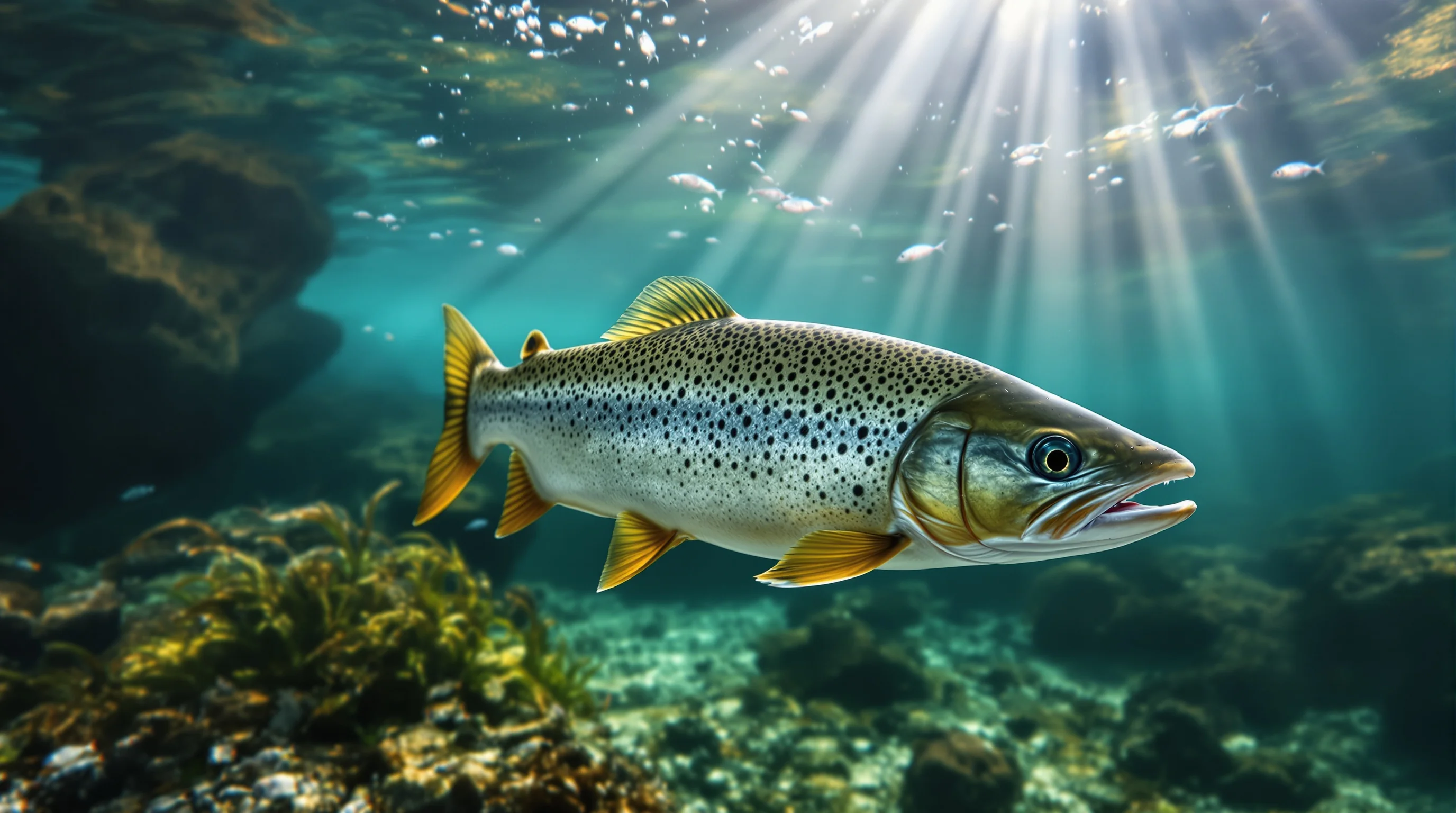
Picture a favorite pool in January, a fly that fished well last spring, and not a single follow. Coastal cutthroat trout diets shift sharply with the seasons, which explains more refusals than most anglers realize. As the Alaska Department of Fish and Game notes, "during the winter, coastal cutthroat trout feed on sticklebacks, gastropods and salmon eggs in addition to insects and young salmon" (ADF&G).
A refusal signals that your fly matches the wrong season, the wrong water, or the wrong form of fish. This article covers the documented diet and habitat of these fish, then shows how that ecology can guide your fly box and presentation.
Quick Answer: Coastal cutthroat trout are opportunistic carnivores whose prey changes with age, location, and season. A fly that worked last month, or on different water, can miss what fish are eating now. Sea-run fish move between insects, young salmon, amphipods, sticklebacks, and salmon eggs. Lake fish shift from sit-and-wait feeding to active cruising past about 14 inches.
Definition: The coastal cutthroat trout is a Pacific salmonid with stream-resident, lake-resident, and sea-run life histories, and its diet and feeding behavior shift by age, habitat, and season.
Key Evidence: According to Alaska Department of Fish and Game, "prey species and feeding techniques vary greatly depending on age, locality and season."
Context: Matching a pattern starts with knowing which form of the fish you're casting to and what that form eats this season.
Key Takeaways
- Opportunistic diet: Coastal cutthroat "eat almost any prey item," and the menu shifts by habitat (Oregon Sea Grant).
- Seasonal shifts: Sea-run fish eat amphipods and young salmon near shore, then add sticklebacks, gastropods, and salmon eggs in winter.
- Size changes tactics: Lake fish of 14 inches or more often cruise and chase small fish along drop-offs.
- Cover matters: Freshwater fish favor deep pools, woody debris, and undercut banks.
- Mixed forms: Several life-history types can share one watershed, so identifying your fish matters as much as identifying the hatch.
What Coastal Cutthroat Trout Eat Changes With Age, Place and Season
Coastal cutthroat trout feed on a wide range of prey, and the species "eat almost any prey item," according to Oregon Sea Grant. The Alaska Department of Fish and Game adds that "prey species and feeding techniques vary greatly depending on age, locality and season" (ADF&G). That is why a fly box built around one river, or one month, often falls short elsewhere.
Sea-run fish follow a documented seasonal sequence. During out-migration, they target insects and young salmon. Once at sea, they feed on amphipods and young salmon. By winter, back in fresh water, they add sticklebacks, gastropods, and salmon eggs.
Oregon Sea Grant also links diet to habitat type:
- Small streams: aquatic and terrestrial invertebrates
- Rivers and lakes: invertebrates and fish
- Ocean: crustaceans and fishes
The mechanism is simple. Cutthroat are generalists, so they key on whatever prey is most available in their water. Availability shifts with migrations, spawning runs, and insect cycles, and the fish shift with it. A fly built for last season's food looks out of place against this season's menu, and a selective fish simply lets it drift past.
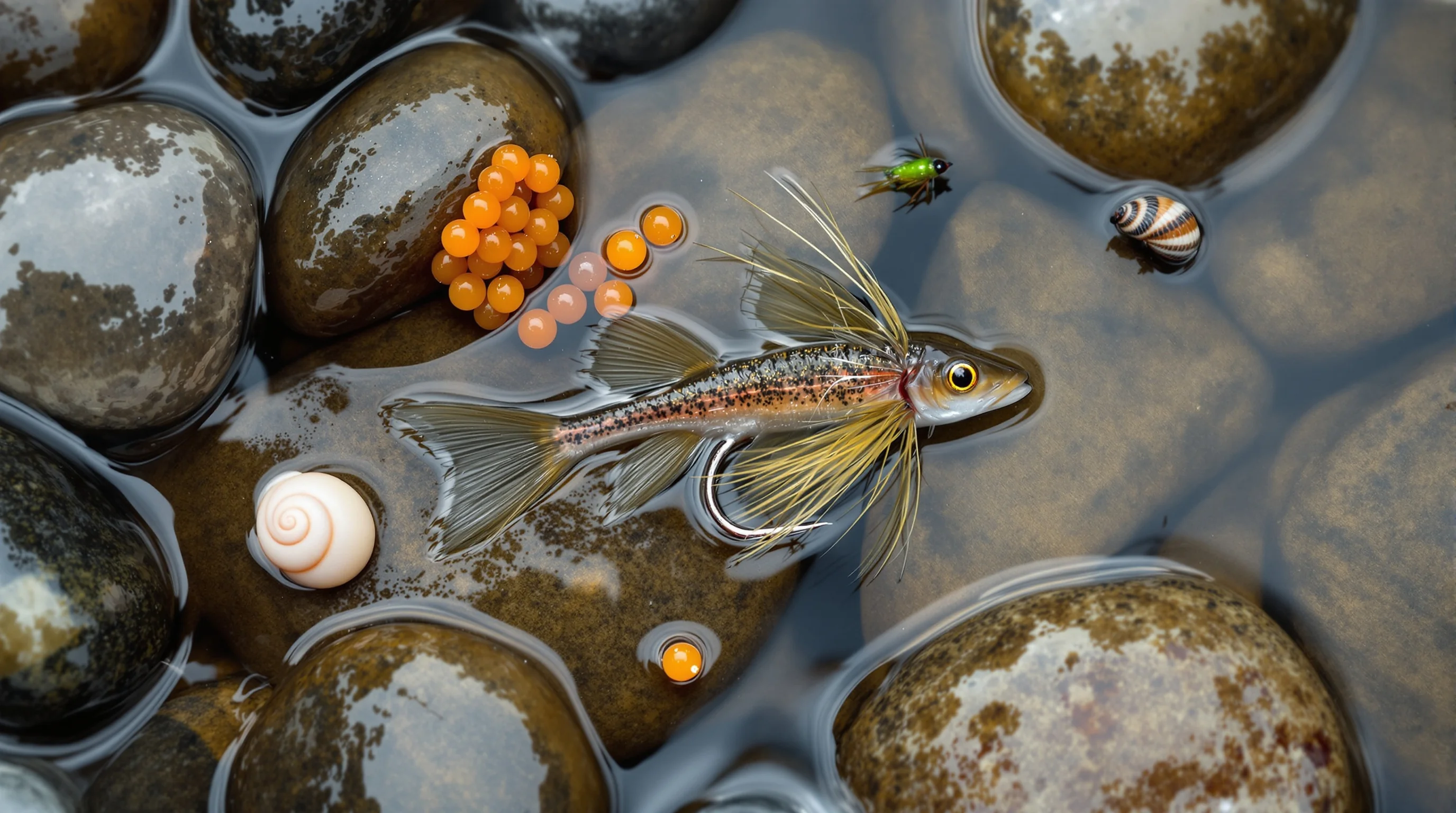
Lake Fish Switch Feeding Styles as They Grow
In lake-resident coastal cutthroat, feeding style changes with size (ADF&G).
- Juveniles: sit and wait near lily pads or logs for passing insects or small fish
- Fish past 14 inches: often cruise actively, chasing small fish along drop-offs and vegetation lines
- Scope: this pattern is documented for lake-resident fish, not stream populations
Where Feeding Happens: Cover, Temperature and Shoreline Habitat
Freshwater coastal cutthroat trout concentrate where cover is thickest. ADF&G reports the species "prefer deeper pool habitat and cover, such as that formed by woody debris and undercut banks," and stream residents often "spend the entire year within relatively small sections of a given stream" (ADF&G). If you've read our guide on understanding selective trout behavior, you'll see why: a fish holding one lie for months learns its food window well.
Anglers in Washington will recognize this from our piece on fly fishing Puget Sound's sea-run cutthroat.
Temperature is a habitat observation rather than a strict angling rule. Across several studies, cutthroat weren't usually found above 71.6°F (22°C), while juveniles favored water near 59°F (15°C), per Oregon Sea Grant.
What Shoreline Forest Means for Lake Diets
A 2025 study of six small British Columbia lakes examined how riparian vegetation, the plant growth along a shoreline, shapes cutthroat diet (Michalski et al., Ecology and Evolution, 2025).
- Intact old forest: fish from this lake ate a diet made up largely of terrestrial invertebrates
- Overhanging cover: terrestrial intake rose with overhanging and submerged vegetation plus decaying wood in the littoral zone
- Scope: these are associations from small lakes, reported in the study abstract alone
Matching Your Fly to the Coastal Cutthroat in Front of You
The research cited here documents ecology, not fly choice. What follows is reasoning built on that ecology and shaped by time on the water, not a controlled study.
Start by identifying the form of fish ahead of you. Coastal cutthroat forms "include sea-run, lake, fluvial, and stream-living," and several can overlap in one watershed (Oregon Sea Grant). Migration type and timing "depends on opportunities and the type of habitat they occupy," notes Trout Unlimited. A stream resident and a sea-run fish fresh from the estuary call for different patterns.
Then match the season. Pull from the documented prey list: a young-salmon imitation during spring out-migration, an egg or stickleback pattern once winter sets in. Fish the cover next, placing your fly near woody debris, undercut banks, or lake drop-offs.
A pattern that shows up often looks like this. An angler fishes a spring smolt pattern through a familiar run in January and gets nothing. After a few fruitless casts, the angler swaps to a small egg pattern near a log jam, and the first fish takes within minutes. Maybe you've had a day like that, where the fish were never gone, just eating something else.
Double-check your identification too. Sea-run and lake cutthroat often lack distinct slash marks and get mistaken for rainbow trout sharing the same water (ADF&G). Handle whatever you catch gently. ADF&G lists improper handling among threats to the species, and NPS notes cutthroat are "vulnerable to angler overharvest because of their predatory nature and willingness to strike a lure" (NPS Glacier Bay).
For more on reading a fish beyond the strike, see our piece on how fish communicate using body language.
Why Coastal Cutthroat Trout Conditions Matter
Coastal cutthroat trout face population declines across much of their range, with more severe pressure in the south, and Oregon lists the species as sensitive. Growth is slow: a three-pound trophy can take 12 years or more to reach that size. Careful handling and release matter here more than with faster-growing species, because a fish lost today represents years of growth that won't be easily replaced.
Conclusion
Coastal cutthroat trout eat what their age, water, and season provide, so a fly that ignores those shifts often gets ignored in return. Reading the form of fish, the season, and the nearby cover will usually tell you more than swapping patterns at random. It's okay to blank now and then; every refusal is information. Consider keeping a simple log of date, water type, and the prey you observe. Over a season, it can help you build a fly box around what these fish actually eat. Tight lines.