
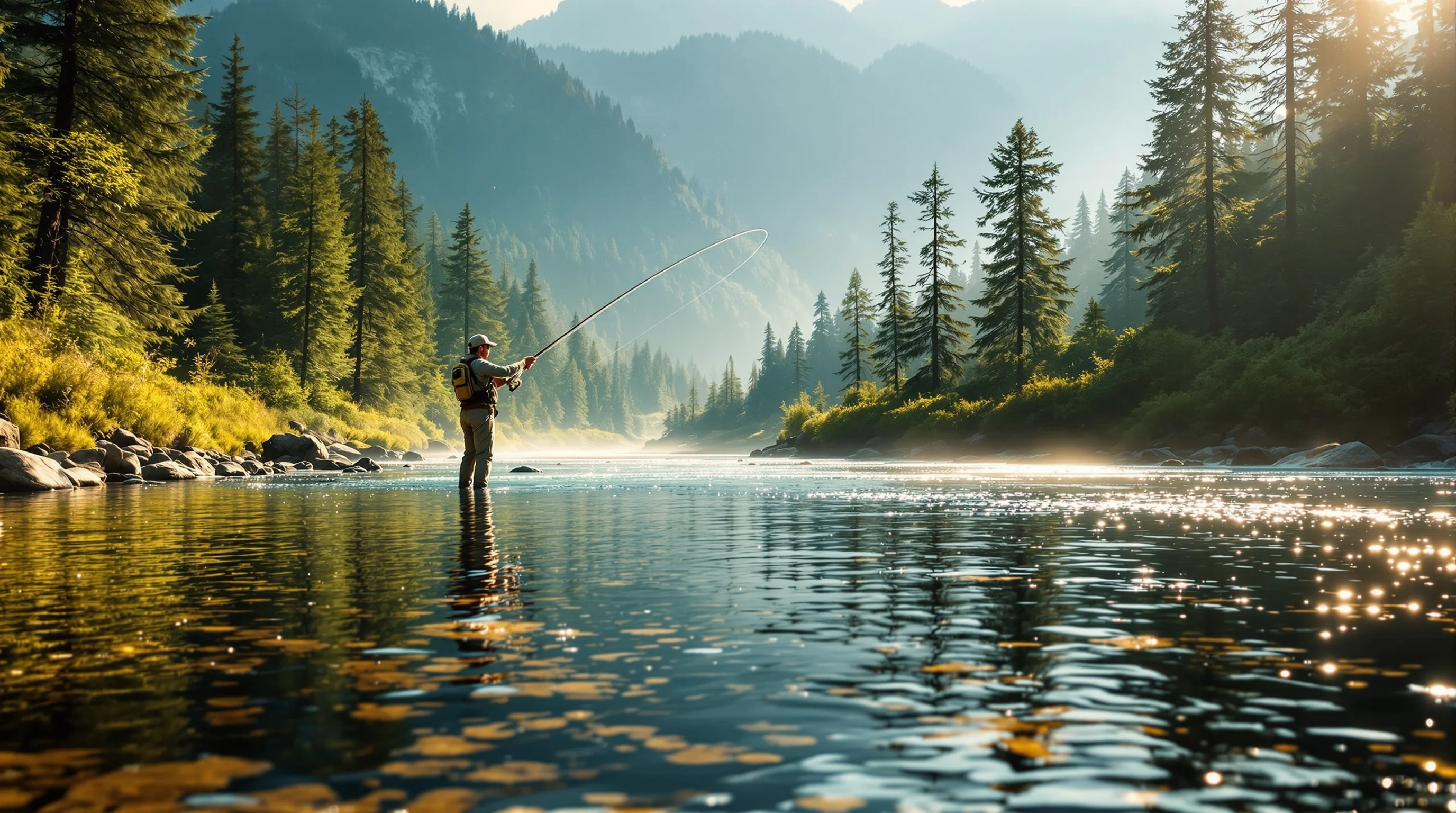
Fly fishing for trout rewards precision over power. Anglers who make deliberate, drag-free presentations to actively feeding fish consistently outperform those who cast farther and cover more water. According to Georgia Wild Trout, fly fishermen "catch more fish because they are making 100 perfect casts and drifts to actively feeding trout", a quiet observation that reframes everything beginners think they know about the sport.
Many new anglers assume fly fishing requires expensive gear, athletic casting, or years of experience before the first fish comes to hand. The fundamentals are more approachable than that. Learning how to fly fish for trout as a beginner comes down to three things: a relaxed cast, an understanding of where trout hold, and a drift that imitates natural food. This guide covers all three, with steps you can apply on your next outing.
Quick Answer: Beginners fly fish for trout by learning a fluid, wrist-driven cast, reading the water to find where trout hold, and presenting the fly with a drag-free drift that imitates natural insects. Short, accurate casts close to likely feeding lies consistently outperform long, powerful ones.
Definition: Fly fishing for trout is a precision method that uses a weighted line to deliver a lightweight fly imitation to feeding fish, relying on natural drift and presentation quality rather than lure action or bait.
Key Evidence: According to Georgia Wild Trout, fly fishermen gain their advantage through "a quiet cast and a drag-free drift with more natural food items" than conventional gear provides.
Context: The advantage of fly fishing is presentation quality, not casting distance or gear complexity.
Fly fishing works because the weighted line carries a nearly weightless fly to feeding fish in a way no other method can replicate. Match the size and drift of what trout are actually eating, present it without drag pulling the fly unnaturally across current lanes, and fish that ignore everything else will take your offering. The sections below walk you through the gear you actually need, how to read the water, and the practical steps that turn a first outing into a real foundation for the sport.
Key Takeaways
- Presentation beats power: A drag-free drift in the right spot outperforms a forceful, wide-coverage approach. (Georgia Wild Trout)
- Casting mechanics: Useful fly casting uses the wrist and forearm, not the full arm and shoulder. (FishTalk Magazine)
- Short casts work: Trout often hold within rod-length of the bank, so accuracy and stealth matter more than distance. (YouTube, Beginner Fly Fishing)
- Gear is simple: A 9-foot leader in 3x or 4x, a 6x tippet, and two knots are all a beginner needs to start. (OARS)
- Professional instruction accelerates progress: Lessons from a recognized instructor compress the learning curve faster than solo practice alone. (Hooked Up Magazine)
Essential Casting and Gear Basics for How to Fly Fish for Trout Beginners
Gear anxiety keeps more beginners off the water than any technical challenge. A functional starter setup is genuinely simple: a 9-foot leader in 3x or 4x, a 6x tippet, and backing on the reel. Two knots handle almost every situation you'll encounter on the water, and both are available as free video tutorials you can watch at home before you ever reach the river. For a full breakdown of what to buy, this beginner equipment guide covers rods, reels, and lines without the gear snobbery.
Casting mechanics are where most beginners develop their first bad habits. FishTalk Magazine puts it plainly: "Casting a fly requires timing and grace, not brute strength or sheer will." The wrist and forearm do the work. Powering the cast with your full arm and shoulder collapses the loop and drops the fly in a heap. Keep your grip light on the cork handle. A relaxed hand lets the rod load properly and deliver the fly quietly, which matters more than distance on almost every cast you'll make.
Practice on dry land before you wade. A yard, a park, a parking lot with enough space behind you, any open area works. Watch for tight, controlled loops forming on both the forward and back cast. That loop shape tells you whether your timing is right. The VFC Fly Fishing Crash Course on YouTube walks through casting mechanics in full and is worth watching several times before your first outing. As Hooked Up Magazine notes, "by far the best way to learn to cast properly is to take some lessons from a recognized instructor or casting school." Even one lesson compresses what might take months of solo practice into a single morning.
Two Knots Every Beginner Needs
Knot tying is a practical skill best practiced at home with warm hands, not learned streamside for the first time.
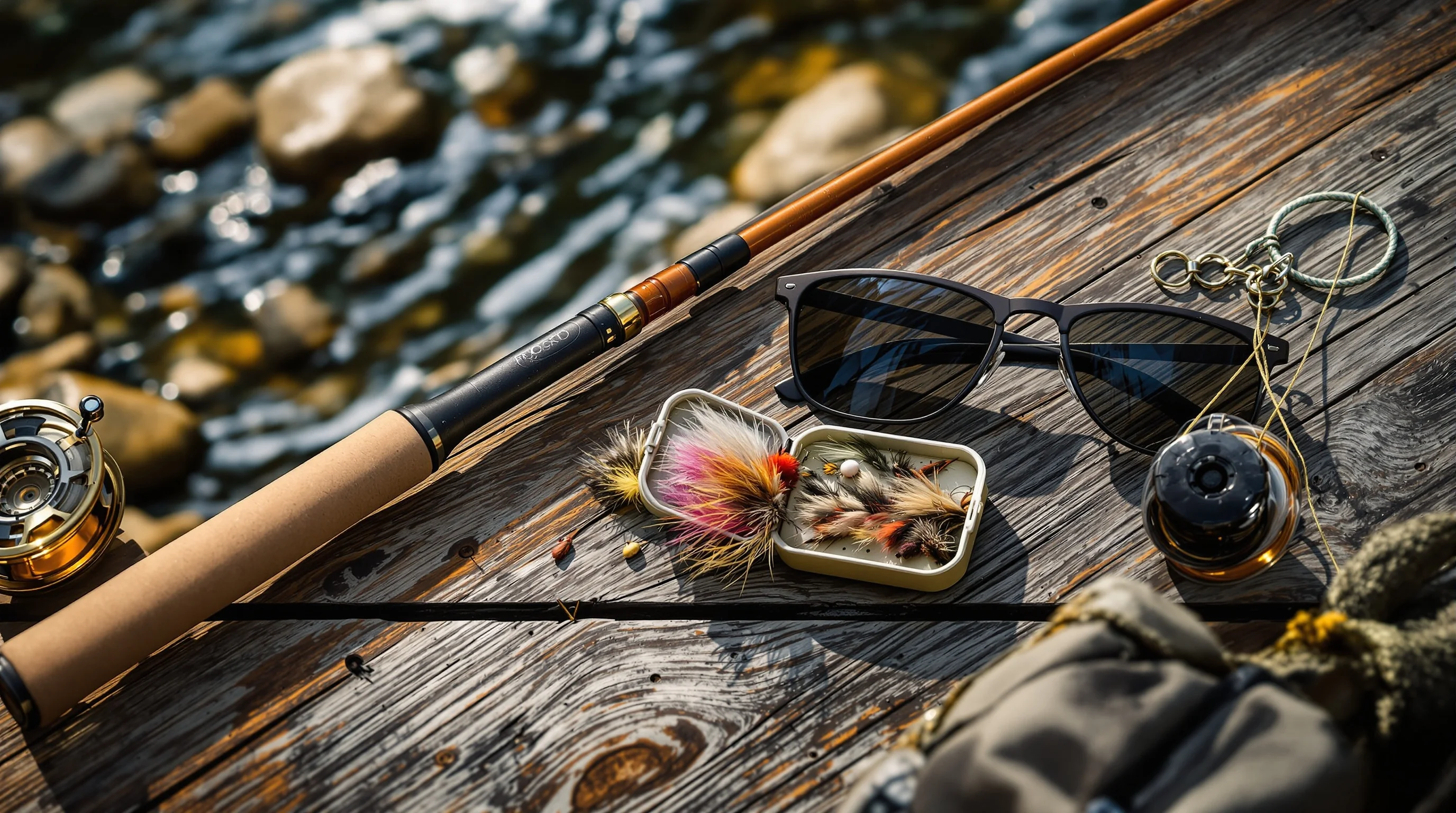
- Improved clinch knot: Attaches the fly to the tippet. Five wraps, thread back through the loop, cinch firmly.
- Surgeon's knot: Joins tippet to leader. Simple, strong, and reliable in cold or wet conditions.
Both are available free on YouTube, and both become automatic after a few evenings of practice at the kitchen table. (OARS)
Reading the Water and Managing the Drift
Knowing where trout hold is as important as any casting technique. Trout are efficient creatures. They position themselves where the current delivers food without requiring much energy to hold position. Current seams where fast water meets slow, back eddies behind rocks and structure, and oxygenated pockets near boulders are all prime holding lies. Scan these spots before your first cast. According to Hooked Up Magazine, on lakes trout cruise defined beats along shorelines and points, rising in predictable patterns that patience and observation can identify before a single cast is made.
Wade upstream when possible. Moving upstream keeps muddied water behind you rather than drifting into your target zone. Stay low, move slowly, and pause often. Trout spook at shadow and vibration long before they see a fly, and one careless step through a riffle can shut down a productive run for twenty minutes.
A drag-free drift is the defining skill of useful trout fly fishing. Drag occurs when different current speeds pull on sections of fly line, causing the fly to skate unnaturally across the surface, the single most common reason for refusals on an otherwise well-placed cast. Mending the line (repositioning it on the water after the cast) corrects drag and extends the natural drift. For nymphs fished subsurface, Georgia Wild Trout recommends setting depth at roughly 1.5 times the stream depth to keep the fly in the trout's feeding zone. Watch aquatic insects on the surface, then mimic that drift. The fly that behaves like natural food gets eaten.
Practical Steps for How to Fly Fish for Trout Beginners on the Water
Before the first cast, pause and observe. Watch for rises, current seams, and likely holding lies. Trout are often feeding within rod-length of the bank, and as on-water instruction confirms, there's no need to make 20-yard casts. Accuracy, stealth, and a good drift within comfortable range catch more fish than distance. Casting with intention at short range is the skill that produces consistent results for beginners.
Cast at an angle upstream and let the fly drift naturally through the feeding zone, mending line as needed. Before selecting a pattern, watch what's on the water. Mayflies, stoneflies, and caddis are the primary trout food sources, and matching the size, shape, and drift behavior of what's actually hatching outperforms random pattern selection every time. For help choosing the right fly, this beginner fly selection guide covers the most productive patterns by season and water type.
Local fly shops provide location-specific advice on hatches, patterns, and current conditions that no online resource can replicate. OARS recommends visiting one before your first outing and asking what's hatching. That one question can make the difference between a blank day and your first rise.
Before You Wade In
A short preparation routine before entering the water prevents the most common beginner mistakes.
- Practice casting on dry land: A yard or parking lot builds loop control before the pressure of moving water. (VFC Fly Fishing Crash Course)
- Tie knots at home: Cold, wet hands make knot tying difficult. Practice both knots until they are automatic. (OARS)
- Observe before casting: Identify rises and seams first. Let the river show you where the fish are before you disturb the water.
Why Fly Fishing for Trout Matters
Fly fishing teaches patience, observation, and precision in ways that transfer to every body of water you'll ever stand in. Beginners who invest early in casting fundamentals and water-reading build habits that serve them for a lifetime on the water. The barrier to entry has never been lower, quality instruction, free video resources, and welcoming fly shops make starting today a realistic and genuinely rewarding choice.
Conclusion
Learning how to fly fish for trout as a beginner comes down to three fundamentals: a relaxed, wrist-driven cast, an understanding of where trout hold and why, and a drag-free drift that imitates natural food. Presentation quality and accuracy at short range consistently outperform power and distance. The angler who slows down, observes, and casts with intention catches more fish and finds more serenity in the process.
Start with dry-land casting practice. Learn the improved clinch and surgeon's knots before you reach the river. Then visit a local fly shop and ask what's hatching. Solid mechanics, water knowledge, and local insight are all you need to begin. The rest the river will teach you, one drift at a time. Tight lines.
Sources
- Hooked Up Magazine - Comprehensive guide to catching trout on fly; casting mechanics, body motion, lake and stream strategies, and stealth approaches
- FishTalk Magazine - Ten foundational fly fishing lessons for beginners; casting technique, upstream wading, and natural drift principles
- Georgia Wild Trout - Beginner-focused guide to fly fishing's natural advantage; the "sniper" approach, drag-free drift, and current seam targeting
- OARS - Practical beginner fly fishing overview; gear setup, essential knots, insect observation, and drift fundamentals
- YouTube - VFC Fly Fishing Crash Course - Full beginner video tutorial covering casting mechanics, gear, and presentation accuracy
- YouTube - Beginner Fly Fishing Full Course - Complete beginner journey in video format; gear selection, knot tying, and casting instruction
- YouTube - Accuracy and Stealth on the Water - Practical on-water lesson emphasizing short casts, stealth, and quality of drift over casting distance