
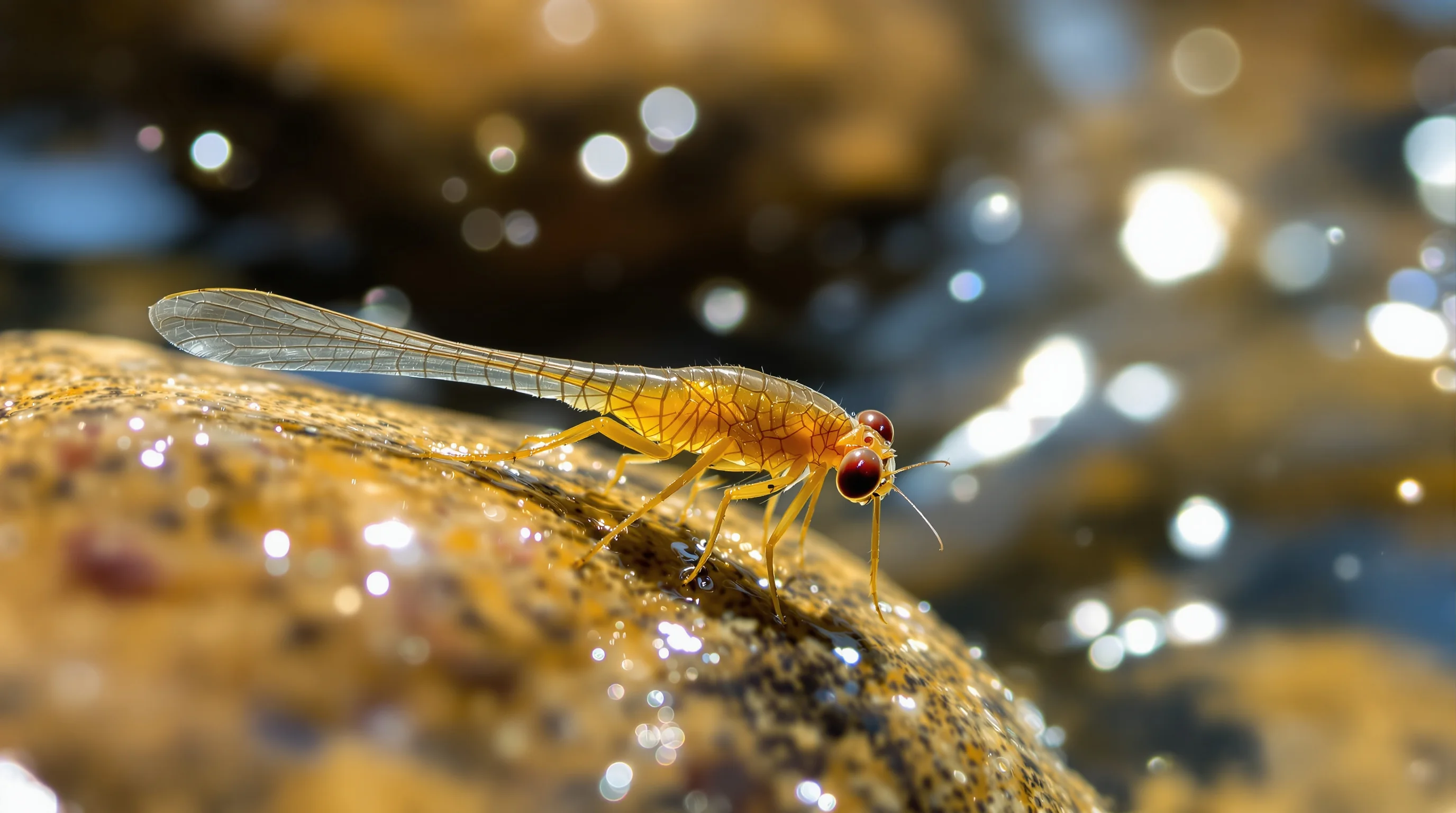
Trout feed on mayfly nymphs at nearly every stage of a stream's day. The Missouri Department of Conservation notes that "all life stages of mayflies are favorite foods for fish such as trout, bass, and many others" (Missouri Department of Conservation). The nymph spends the longest time under the surface, so it's the stage trout see most.
That long underwater life works in your favor. If you can name what's clinging to the rock in your hand, you can match it with confidence. For a broader look at the insects trout eat, see our stream entomology guide.
This article covers field identification, the four nymph behavior types and where each lives, and the patterns and sizes that match them. A mayfly nymph carries visible clues that point straight to a short list of flies.
Quick Answer: A mayfly nymph is the underwater stage of the order Ephemeroptera. Most have three tails, feathery gills along the abdomen, and external wing pads. Anglers group them as swimmers, clingers, crawlers, and burrowers.
Definition: A mayfly nymph is the long-lived, underwater larval stage of a mayfly, identified chiefly by its three tails and abdominal gills.
Key Evidence: According to Purdue Extension, "mayfly nymphs are distinctive in that most have seven pairs of gills on the abdomen. In addition, most possess three long tails."
Context: Size and silhouette drive pattern choice, so a quick tail count tells you which fly box to open first.
A mayfly nymph reveals itself through a chain of small clues. Tail count points to the family, gill position confirms it, and behavior type tells you where it lives and which fly to tie on. That sequence turns a tangle of bugs under a rock into a short list of likely patterns.
Key Takeaways
- Three tails: A 3-tailed nymph is a mayfly. Some species have two tails, so check gill position as well (The Catch and The Hatch).
- Behavior types: Swimmers, clingers, crawlers, and burrowers each favor different water.
- Pheasant Tail: This pattern covers BWOs, PMDs, and many other species at once.
- Hook sizes: Mayfly nymphs range from #8 to #26 depending on species (The Catch and The Hatch).
How to Identify a Mayfly Nymph in the Field
Identifying a mayfly nymph starts with counting tails. The Missouri Department of Conservation explains that "nymphs possess 3 (sometimes 2) cerci (antenna-like appendages extending from the tip of the abdomen)" (Missouri Department of Conservation, 2024). Three tails is your fastest confirmation, though a two-tailed nymph isn't automatically ruled out.
Gills are the second clue. Missouri describes "a series of leaflike or feathery external gills" that "attach along the sides of or atop the rear portion of the abdomen." Pinch a nymph gently and you'll notice these small, fluttering structures running down its sides. The Montana Entomology Collection adds that nymphs show "external wingpads present, unmodified chewing mouthparts, tarsi with one claw" (Montana Entomology Collection). Missouri notes some legs carry "1 or 0 claws," so treat claw count as a supporting check.
Penn State Extension recommends a simple field method: partly fill a light-colored basin with creek water, gently lift a rock and set it in the basin, then return the rock and empty the creatures back into the stream (Penn State Extension, 2025). For a faster read on a whole run, The Catch and The Hatch notes that "a 5 minute seine will show you the color and size of the mayfly nymphs in the water" (The Catch and The Hatch). Our dedicated post on nymph pattern selection goes deeper once you have a sample in hand. Before you sample insects on any stream, check current rules with your state wildlife agency.
A pattern that shows up often: an angler flips a rock, sees a dozen wriggling bugs, and freezes. Maybe you've been there, staring at the fly box with no idea where to start. Counting tails first cuts the pile down to a short list, and it's okay if you can't name the exact species. Size and silhouette matter more.
Mayfly or Stonefly? Two Quick Checks
"Mistaking stonefly nymphs for mayfly nymphs is common for anglers," according to The Catch and The Hatch. Two checks sort them out fast.
- Tail count: Stoneflies have two cerci, while mayflies usually show three (Penn State Extension, 2025).
- Gills and antennae: Mayflies carry gills along the sides of the abdomen with short antennae. Stoneflies carry longer, slender antennae.
Swimmers, Clingers, Crawlers and Burrowers: Where Each Lives
Behavior type is the most practical way to sort a mayfly nymph once you've confirmed what it is. Penn State Extension notes that nymphs have "six legs modified for burrowing, swimming, or crawling," depending on species (Penn State Extension, 2025). Those legs shape where each nymph lives and where you should fish it.
Swimmers favor open water. Baetidae, the Blue-Winged Olive family, are open-water swimmers that hatch mid-run and mid-riffle (Cast and Fly, 2026). Callibaetis nymphs are slender, barred swimmers most active in stillwater, while Isonychia nymphs are strong swimmers typically found clinging to rocks in moderate to fast current (The Catch and The Hatch).
Clingers hold fast in rough water. Heptageniidae, including March Brown and Gray Fox, live in fast, turbulent water (Cast and Fly, 2026). Missouri notes a flattened head that "helps them to" stay put on rocks in fast-flowing water.
Crawlers prefer gentler seams. Ephemerellidae, the PMD and Sulphur family, move to slower current seams to hatch (Cast and Fly, 2026). Missouri adds that most nymphs "creep around on rocks in lakes, ponds, streams, or at river edges, eating algae and other small plants."
Nymph life overall ranges from months to roughly two years by species, with 20 to 30 molts along the way (Purdue Extension). One year is a useful average, not a rule.
A nymph's behavior type tells you where to look: swimmers in open runs and stillwater, clingers on rocks in fast riffles, crawlers in slower seams.
Mayfly Nymph Patterns and Sizes That Match
Matching a mayfly nymph comes down to silhouette and size more than exact species. The pattern guidance here comes from The Catch and The Hatch, a commercial angling resource, and reflects practical fly-box advice rather than research.
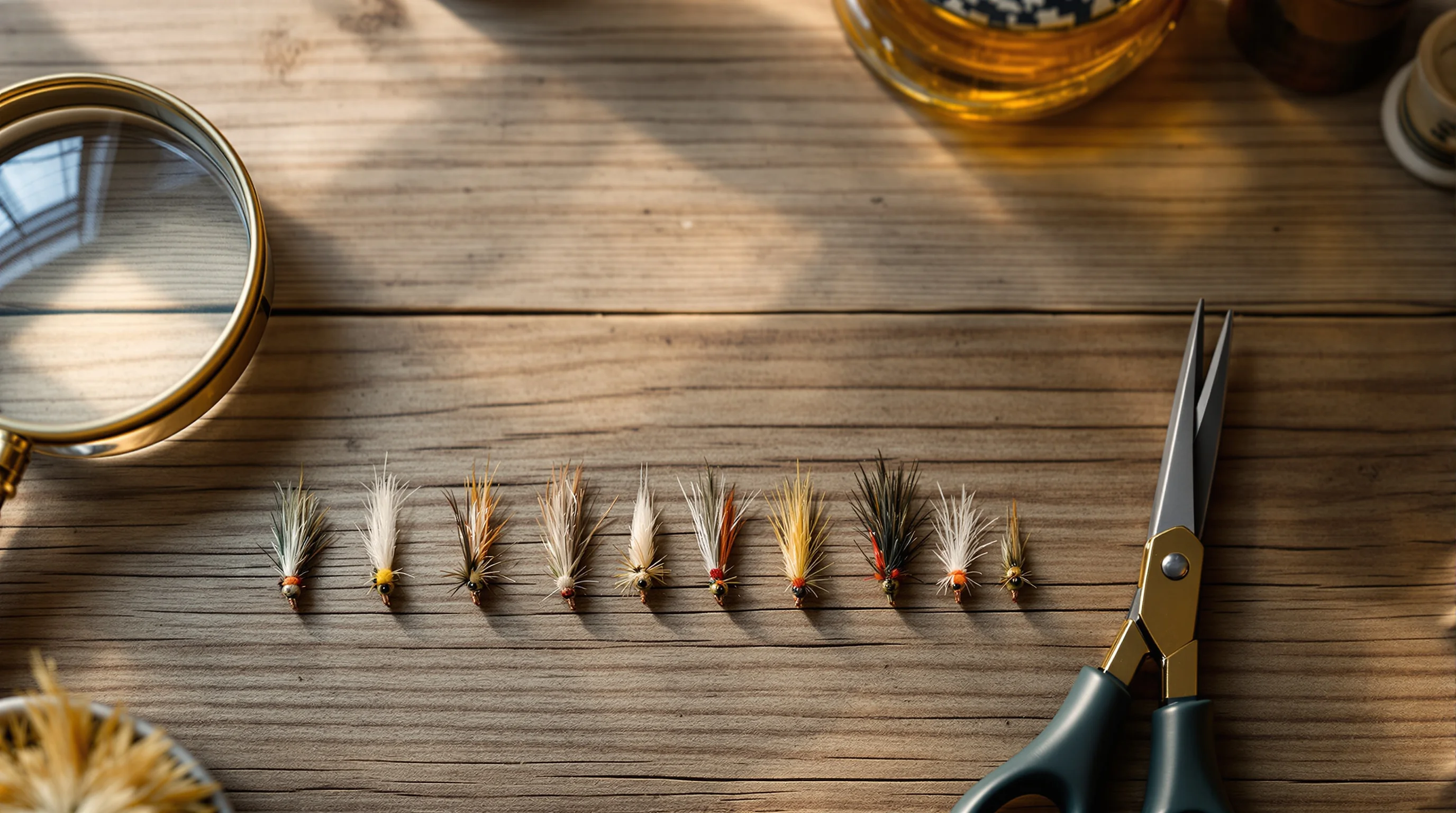
The Pheasant Tail covers the widest range. According to The Catch and The Hatch, "mayfly nymphs, though 3-tailed, when in the water often slick into one tail. This is why the pheasant tail fibers work so well." The Beadhead Pheasant Tail imitates BWOs and PMDs, with the bead getting the fly to depth. The American Pheasant Tail suits unfamiliar water since it covers mayfly, stonefly, and midge nymphs at once.
The BLM Mayfly targets smaller species like BWOs and PMDs, while a weighted Iso Nymph or Chocolate Nymph, tied dark brown to mahogany, covers Isonychia water. As The Catch and The Hatch puts it, "you don't need to know it's a BWO, you need to know it's a small olive mayfly with blue/grey wings." Once a nymph rises and sheds its shuck, the game shifts, and our guide to matching complex hatches covers emerger and dun strategy.
Quick Match Chart by Nymph Type
Match the type you found under the rock to a reliable pattern and size.
- Swimmers: Split-Back BWO, #18 to #22; Flashback Callibaetis, #14 to #18; Iso Nymph, #12 to #16
- Clingers and crawlers: Hare's Ear or Pheasant Tail for March Brown, #12 to #16; Split-Back PMD, #16 to #20; Trico micro-nymph, #18 to #24
Why Mayfly Nymphs Matter Beyond the Fly Box
Mayfly nymphs tell you about the water itself. Susan Knight of the University of Wisconsin-Madison's Center for Limnology says, "mayflies are our aquatic sentinels" (WXPR, 2020). That report notes a 50% drop in large mayfly hatch events on the Mississippi River at La Crosse between 2012 and 2019, a reminder of how quickly a healthy population can change.
Conclusion
A mayfly nymph is quick to confirm once you know what to look for. Count three tails, find the gills along the abdomen, and note the wing pads. Then spot the behavior type, whether swimmer, clinger, crawler, or burrower, and match size and silhouette.
Turn over a rock on your next trip and count tails before you open your fly box. Start with our stream entomology guide, then move on to emergers and duns with our guide to matching complex hatches. And before you sample insects or wet a line, check current rules with your state wildlife agency. Tight lines.