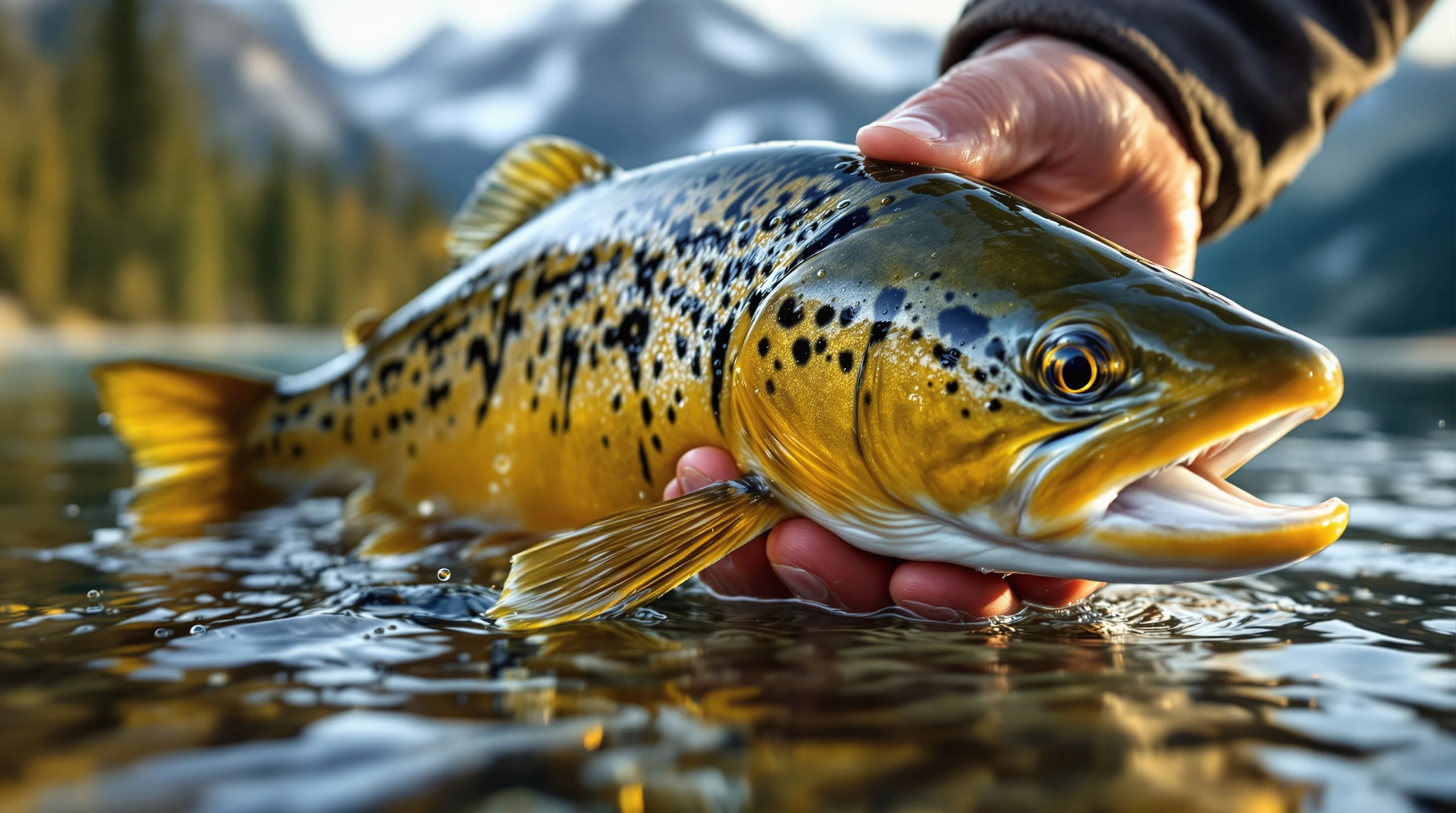
Maybe you've never seen a tiger trout, and that's understandable. One weighing 27.42 pounds came out of Loon Lake in Stevens County, Washington, on August 7, 2022. Cathy Clegg landed that fish, and WDFW lists it as the state record.
A tiger trout is a hatchery-raised hybrid, stocked on purpose, which means knowing which waters hold them and why agencies put them there changes how you plan a trip.
This article covers what tiger trout are, why state agencies stock them, and where you might find one. It also walks through the fly tactics the Washington Department of Fish and Wildlife recommends for lake fishing.
Quick Answer: A tiger trout is a sterile hybrid of a female brown trout and a male brook trout. Its name comes from the bold, vermiculated markings on its back and sides. Tiger trout are rare in the wild, and almost all fish anglers catch were stocked by state agencies in lakes and reservoirs, where they feed aggressively on other fish.
Definition: A tiger trout is a sterile brown trout and brook trout hybrid, identified by its vermiculated, tiger-stripe markings.
Key Evidence: According to USGS research by Winters, Budy and Thiede, Utah chub made up "up to 80% of the diet depending on the season" in one Utah reservoir.
Context: That fish-eating habit explains both why agencies stock tiger trout and why fly anglers do well with streamers and leeches.
Sterility makes tiger trout a useful management tool because it removes the risk of overpopulation. An agency stocks a lake, watches how the fish feed and grow, and knows the effect ends when that generation dies off. That predictability lets biologists put them up against problem fish like suckers and chub. The sections ahead cover the biology, the states running these programs, and the flies that work once you find a stocked water.
Key Takeaways
- Sterile hybrid: Tiger trout come from a female brown trout and a male brook trout and cannot reproduce, according to Connecticut DEEP.
- Mostly stocked: Wild fish occur only rarely, where wild brown and brook trout overlap, per Virginia DWR.
- Management tool: Agencies stock tiger trout to target overabundant prey fish such as suckers, though results vary by water.
- Washington waters: WDFW lists specific lakes and counties where anglers may find tiger trout.
- Fly tactics: WDFW recommends leech, muddler, woolly bugger and nymph patterns, along with streamers.
What Are Tiger Trout? Identity, Markings and Size
Tiger trout are "a sterile hybrid created with a female brown trout and a male brook trout," according to Virginia DWR. They "cannot successfully reproduce (backcross) with either parent species or among themselves," as Connecticut DEEP notes. Hatcheries reinforce that sterility artificially. Wyoming's Story Hatchery pressure-shocks fertilized eggs at "9,500 psi of pressure for five minutes," 40 minutes after fertilization, producing triploid fish that can't reproduce.
Natural hybrids exist, but they're uncommon. WDFW says hybridization in the wild "is very rare," and Connecticut reports wild fish "are never common," adding that "almost all tiger trout observed by anglers are stocked."
Visually, tiger trout stand apart from either parent. WDFW describes "pronounced dark vermiculations (tiger stripes, like brook trout) all over a brownish, gray body." Virginia adds an orange or yellow underside, orange pectoral, pelvic and anal fins, and a square, slightly forked tail.
Size varies by water. WDFW reports an average of 10 to 16 inches, with fish reaching 20 inches and five pounds in quality populations. Connecticut fish run smaller, commonly 9 to 12 inches. At the trophy end, Wyoming's state record stands at 12.77 pounds and 31.25 inches, caught by 13-year-old Jaxon Krall from shore at Viva Naughton Reservoir.
A tiger trout is a sterile brown trout and brook trout hybrid named for its exaggerated vermiculated markings.
Why State Agencies Stock Tiger Trout and Where to Find Them
State agencies stock tiger trout for one main reason: control without consequence. Colorado Parks and Wildlife explains that hybrid predators are "often stocked to control undesirable or overabundant prey fish species (e.g., suckers)," and because they're sterile, "managers can keep close tabs on their numbers, and predatory or competitive effects only last over their lifespan."
Kevin Gelwicks of Wyoming Game and Fish put it directly: "One thing that makes tiger trout a really valuable management tool is they're not fertile." A second trait helps anglers. Connecticut notes tiger trout "tend to be more aggressive and faster-growing than either parent species," so they take flies readily. In Wyoming's High Savery Reservoir, fish reached "catchable-size in two years and trophy size in six," according to retired fisheries supervisor Robb Keith.
Does the predation actually control prey fish? The evidence is mixed. Wyoming found "little evidence" that tiger trout reduced white sucker or Utah chub numbers, though the fish clearly eat them, and "no evidence" of harm to other trout populations. A Colorado study of juvenile fish in subalpine lakes also found slower growth at higher stocking densities and when large prey fish were abundant.
Tiger trout are a sterile predator that agencies can stock without risk of the fish reproducing and overpopulating a water.
Where Tiger Trout Are Stocked
A handful of states run active programs, and each publishes its own stocking details.
- Wyoming: stocked 32 waters in 2024, with Story Hatchery as one of only four state hatcheries producing tiger trout eggs, alongside Utah, Washington and Virginia.
- Washington: WDFW lists Bonaparte Lake, Loon Lake, Lake Roosevelt and waters across 11 counties.
- Virginia: runs an experimental stocking program through its hatchery system.
How to Catch Tiger Trout on the Fly in Lakes
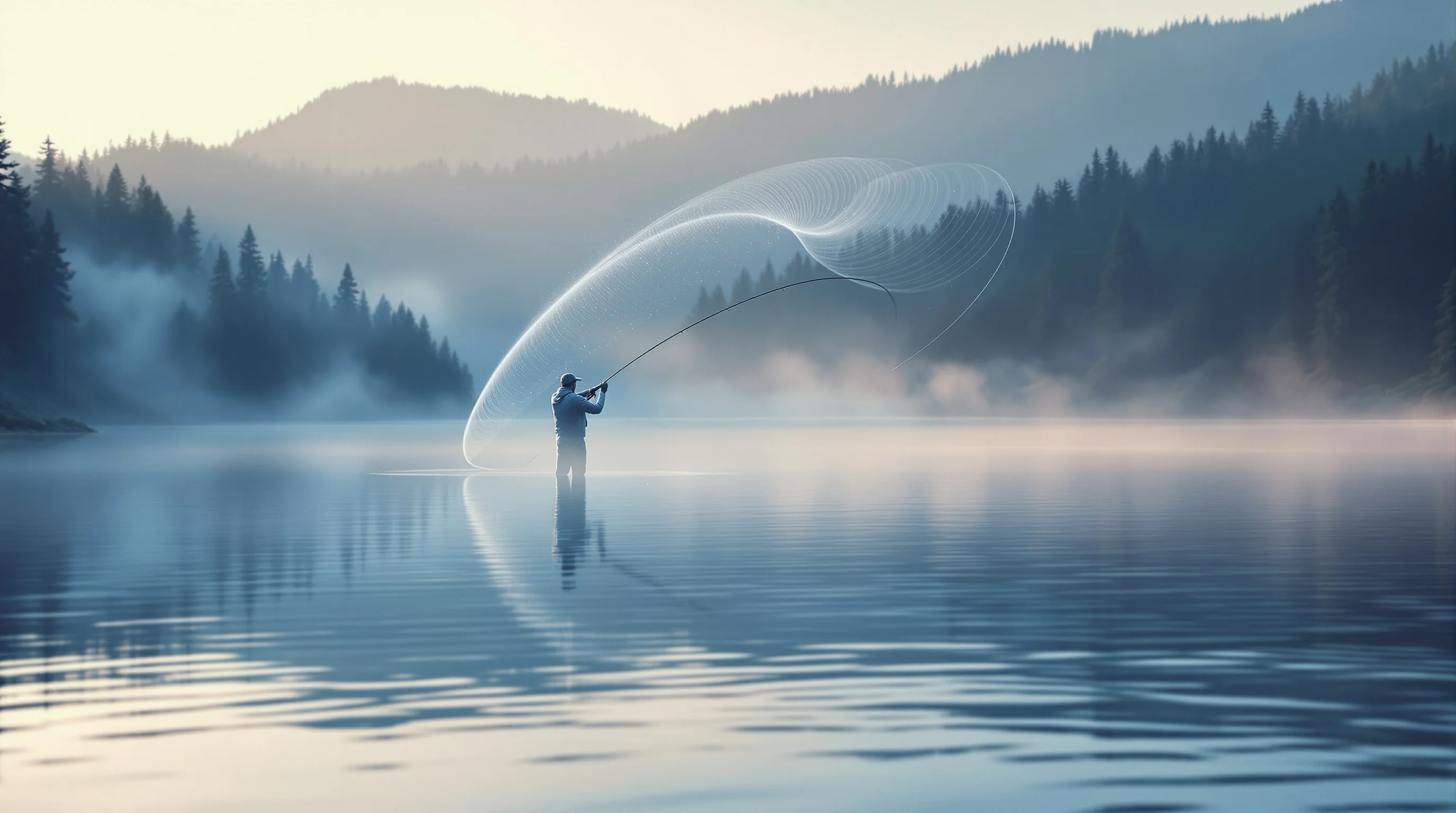
WDFW offers the clearest guidance on stillwater tactics. Tiger trout "can be caught year-round," but spring after ice-out and fall produce the best fishing, when the fish feed in the upper water column. In summer they move to deeper, cooler water, so adjust your depth as the season turns.
One common pattern looks like this: you reach a lake in July, strip streamers near the surface for an hour, and get nothing. Then you switch to a sinking line, let the fly drop several feet, and the first hard strike arrives. The fish had gone deep, and you only needed to meet them there.
Because tiger trout are "aggressive and piscivorous (they eat other fish)," a minnow imitation such as a streamer makes a sensible first choice. WDFW adds that "fly fishers do well with leech, muddler, woolly bugger, and nymph patterns." For help narrowing pattern selection, our streamer fly guide covers the details.
Line choice follows the rise. If fish are taking flies on the surface, a floating line with a dry fly or emerger fits the moment. Otherwise, a sinking-tip or full-sinking line paired with streamers or nymphs puts your fly in the strike zone.
Shore anglers tend to do best early in the morning or in the evening, while trolling from a boat or float tube produces fish through the day. For a broader approach to reading still water, see our guide to mountain lake fly fishing.
Tiger trout eat other fish, so streamers and leeches on a sinking line are a dependable lake approach, according to WDFW.
Check the Rules Before You Go
Seasons and limits change yearly, so this article lists no numbers. WDFW and Virginia DWR publish the current ones.
- Washington: check current WDFW regulations for each lake before you fish.
- Virginia: tiger trout fall under statewide trout rules; confirm current details with the DWR.
- Other states: check your state wildlife agency's current regulations before heading out.
Why Tiger Trout Matter
Tiger trout give fisheries managers a predator they can use with confidence. Sterility means no runaway population, and the fish's appetite for suckers and Utah chub makes it worth testing in different waters. Wyoming's 32 stocked waters in 2024 show states are willing to expand their programs.
Conclusion
Tiger trout are sterile hybrids of brown trout and brook trout, marked by bold vermiculated patterns and raised almost entirely in hatcheries. Agencies such as Colorado Parks and Wildlife value them as a controllable predator that can reach trophy size, while Wyoming's results on prey control varied from one water to the next.
If you're planning a trip, target lakes after ice-out or in fall, and lean on streamers, leeches and woolly buggers as WDFW recommends. Find stocked waters through the WDFW species page or your own state agency, confirm current regulations, then round out your planning with our guides to mountain lake fly fishing and streamer fly selection. It's okay if your first trip ends without a fish; stocked lakes reward the angler who keeps adjusting. Tight lines out there.