
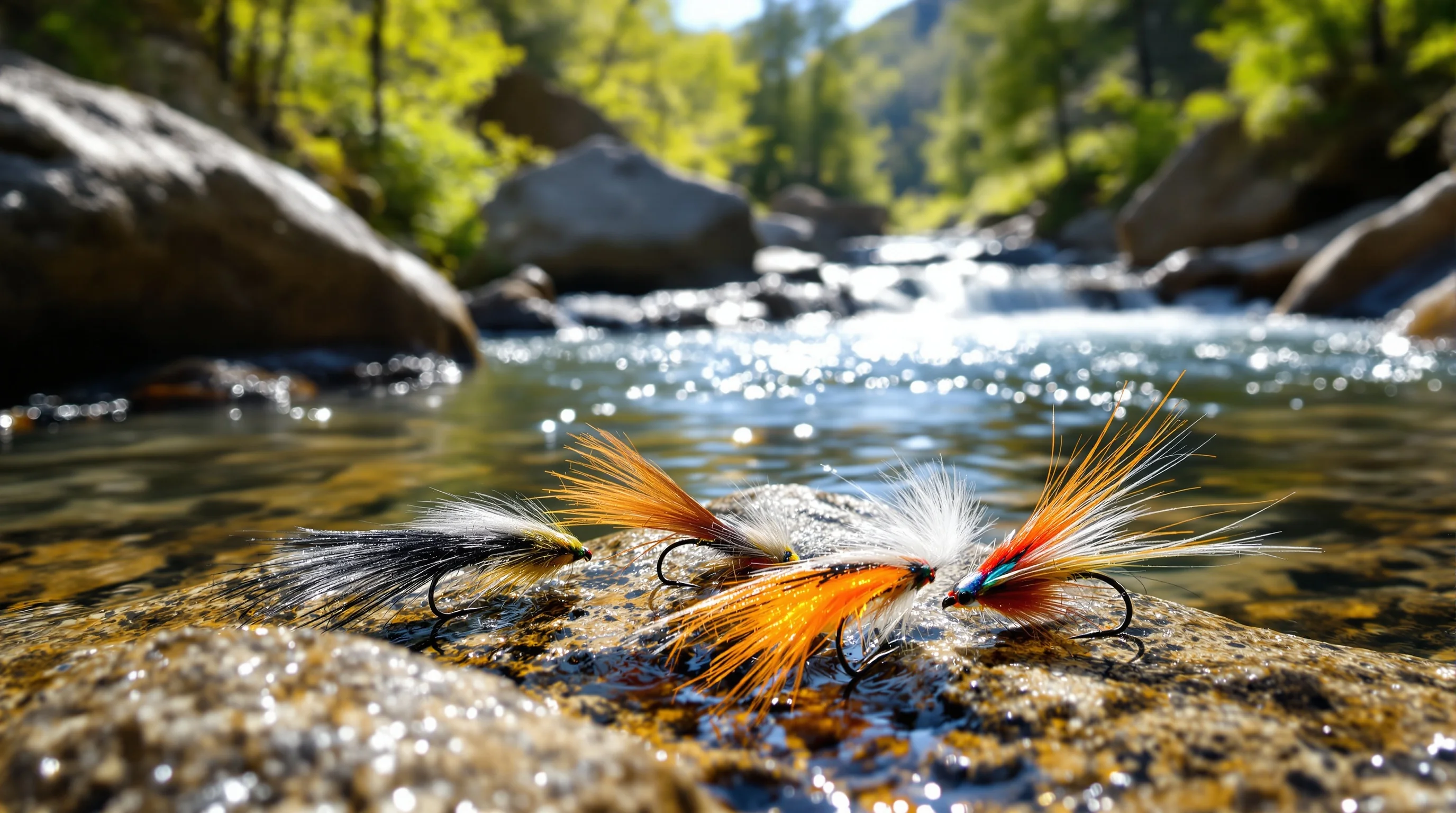
While most anglers accumulate boxes filled with dozens of streamer patterns, success on the water comes down to matching just 2-3 proven flies to immediate water conditions rather than pattern variety. Streamer fishing is not random casting with flashy patterns—it is strategic pursuit that reads water depth, clarity, and fish behavior first, then selects flies accordingly.
Maybe you've stood knee-deep in promising water, cycling through pattern after pattern while fish ignore every offering. That frustration dissolves when you understand how fly characteristics—size, weight, profile, and color—interact with water depth, clarity, and fish behavior. This guide reveals the classification system that simplifies fly fishing streamer flies selection, the specific conditions that dictate pattern choice, and the presentation techniques that trigger aggressive strikes from predatory fish.
Quick Answer: Effective fly fishing streamer flies match three conditions: fly weight to water depth (jig-style for 2-8 feet), color to clarity (dark patterns in turbid water, natural in clear), and size to species (2-8 for wild trout, 8 or smaller for stocked fish).
Definition: Fly fishing streamer flies are weighted patterns that imitate baitfish, leeches, and other prey fish through active retrieves rather than dead drifts.
Key Evidence: According to PA Fly Fish, streamer sizes for wild trout typically range 2-8, while smaller patterns (size 8 or below) prove more effective for stocked trout.
Context: This size differentiation reflects behavioral differences between wild predators that aggressively pursue larger prey and stocked fish conditioned to smaller food sources.
Fly fishing streamer flies work through three mechanisms: they trigger predatory instincts, they imitate wounded or fleeing baitfish, and they allow anglers to actively search water rather than wait for feeding activity. That combination accesses aggressive feeding behavior that produces powerful strikes from fish that ignore surface presentations. When you strip a well-chosen streamer through the right water, you're speaking directly to ancient hunting instincts that surface flies never touch.
Key Takeaways
- Profile-based classification simplifies selection: jig-style for depth, swimmers for shallow banks, hangers for low-light periods
- Water clarity dictates visibility: bigger, darker patterns in colored water; smaller, natural colors in clear conditions
- Tippet strength must match fly size: 0X-3X for size #8 and larger streamers prevents break-offs during strikes
- Hook construction matters: 2X or 3X strong wire hooks prevent failures during powerful predatory strikes
- Simple patterns outperform complexity: confidence in presentation with proven flies beats elaborate designs anglers hesitate to risk
Understanding Streamer Classification Systems for Fly Fishing Streamer Flies
Most of us have experienced the overwhelm of staring into a fly shop's streamer bins, wondering which patterns actually produce fish versus those that catch anglers. Phil Monahan, editor at Hatch Magazine, developed a classification system that cuts through this confusion by focusing on how flies behave rather than what they represent.
Jig-style streamers feature weighted front sections that create quick drop and up-down jigging motion, keeping flies in strike zones longer when drifted through seams and deeper pools. This profile excels in water 2-8 feet deep where predatory fish hold near structure, waiting for disoriented prey to drift within range. The weighted head creates an irresistible wounded-baitfish action that triggers reaction strikes.
Swimmers utilize balanced designs that run horizontally during fast retrieves, excelling along banks and shallow flats when you want to cover water efficiently. These patterns trigger reaction strikes from fish that chase rather than ambush. Hangers incorporate buoyant materials that, when fished with sinking lines, create irregular movements most productive during low-light periods when predators move into shallows to feed.
Hook and Tippet Requirements
Proper terminal tackle prevents the heartbreak of lost fish during explosive strikes.
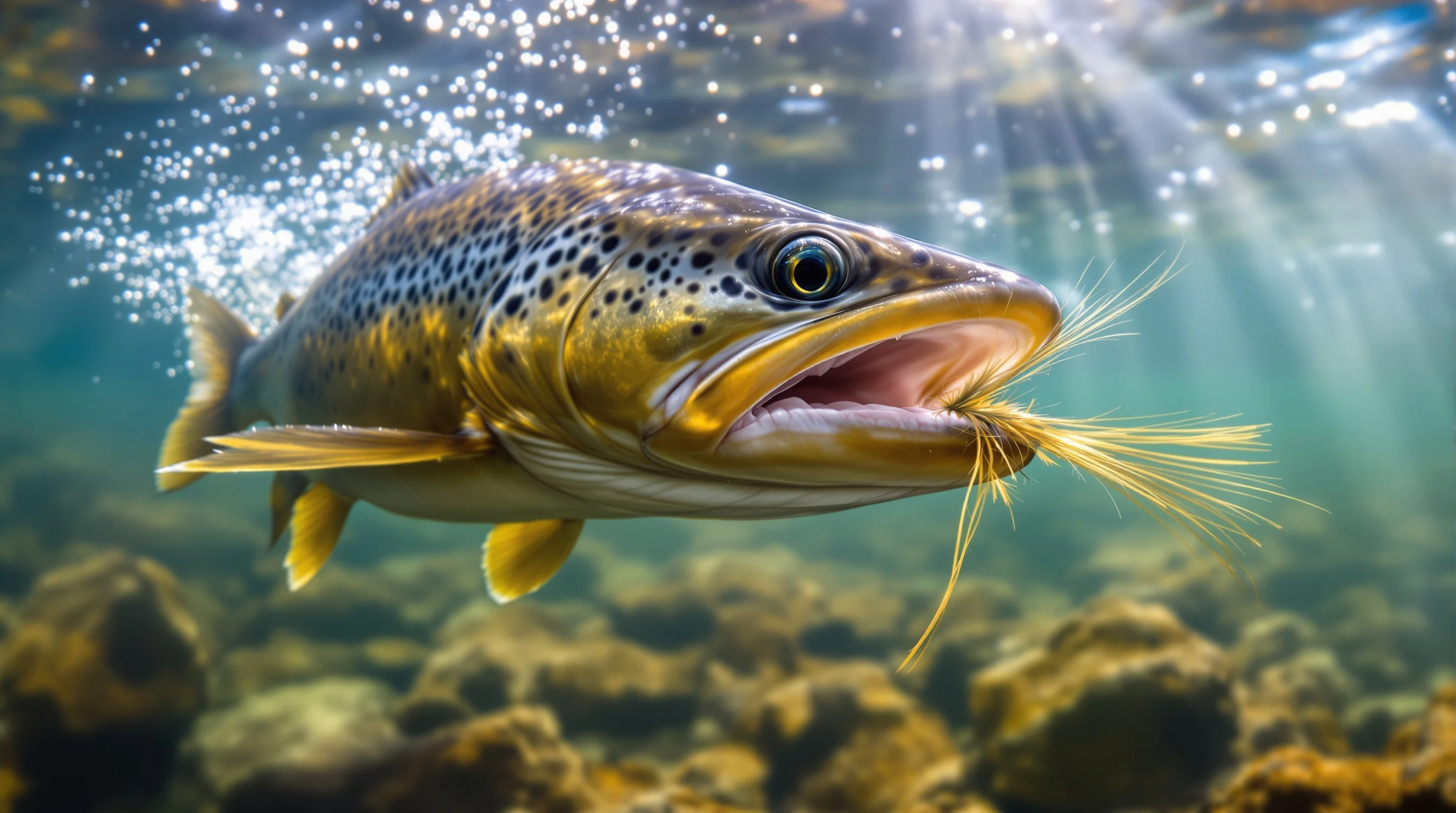
- Hook strength specifications: Standard trout/bass streamers use size 4-10, large articulated patterns size 2-6, with 2X or 3X strong wire construction
- Tippet matching: 0X-3X for size #8 and larger flies handles bigger fish; 4X-5X for smaller streamers
- Leader setup: Shorten to 7.5 feet for improved turnover of weighted patterns
Matching Patterns to Water Conditions
You might notice how the same streamer that worked perfectly last week suddenly feels invisible to fish this week. Water conditions change everything, and research from Streamer Fishing confirms that clarity and color dictate size and color selection more than any other factors.
Colored water requires bigger, darker patterns to maintain profile visibility. Think 5-7cm streamers in black, brown, or olive when runoff or recent rain has stained the water. These conditions demand contrast that predatory fish can track and target through murky backgrounds. Dark colors cut through turbidity where subtle presentations disappear completely.
Clear water demands the opposite approach—smaller profiles with natural colors prevent spooked fish in low, transparent conditions where predators inspect prey carefully before striking. Natural browns, tans, and muted olives match actual baitfish coloration without alarming wary fish. In gin-clear water, size becomes more important than flash.
Depth dictates weight selection more than any other factor. Target water 2-8 feet deep with floating lines and weighted jig-style patterns that drop quickly into feeding zones where structure concentrates baitfish. According to Lost Sierra Fly Guide, temperature influences retrieve speed—slower "low and slow" strip-pause presentations in cold water keep flies in strike zones longer, while aggressive strips work when fish actively feed in warmer temperatures.
Reading Prime Streamer Water
Structure and current transitions concentrate predatory fish in predictable locations.
- Slow seams: Transitions between current speeds where fish hold in slower water while monitoring faster flows for disoriented baitfish
- Tailouts: Pool exits where water narrows and shallows, forcing baitfish through confined ambush zones
- Deep runs with structure: Submerged logs, undercut banks, rocky cover providing concealment for patient predators
Presentation Techniques That Trigger Strikes
One common pattern shows up often: anglers who fish streamers like oversized nymphs, setting the hook upward when they feel a strike. According to The Fly Crate, this trout-set approach loses more fish than it lands because predatory strikes happen horizontally, not vertically.
Strip-set technique separates successful streamer anglers from those who lose fish. Sweep the rod tip low and parallel to water while simultaneously pulling line, driving hooks into powerful jaws rather than lifting upward. This motion accounts for the horizontal nature of predatory strikes and the heavy wire hooks required for streamer fishing.
Retrieve variations match streamer profiles to their intended behavior. Jig-style patterns work with slow drifts and occasional strips to maintain jigging motion. Swimmers require fast, steady retrieves that create horizontal movement through the water column. Hangers need erratic strip-pause-strip patterns that imitate wounded baitfish struggling near the surface.
Casting to cover requires commitment many anglers avoid. Position flies tight against logs, beneath undercut banks, into deep dark runs where intimidating water holds patient predators. The right fly rod weight provides the backbone needed to turn over weighted patterns and extract fish from heavy cover without hesitation.
Maybe you've noticed how some anglers seem to hook fish in water you just fished through. Often, they're simply fishing with confidence in 2-3 proven patterns rather than constantly switching flies. Modern anglers favor efficient ties over complex articulated designs, choosing hooks like Gamakatsu F314 or Ahrex TP650 for patterns they'll commit to fishing aggressively. This trend toward simplicity reflects understanding that proper tippet selection and confident presentation matter more than elaborate construction.
Why Fly Fishing Streamer Flies Matter
Streamer fishing accesses the predatory feeding behavior that produces the most aggressive strikes and largest fish. Unlike matching delicate hatches, streamers allow anglers to actively search water, triggering reaction strikes from fish that ignore passive presentations. The technique transforms familiar water into new opportunity by targeting different feeding modes and fish that rarely rise to surface flies. When conditions shut down surface activity, streamers keep you connected to fish that continue feeding below.
Conclusion
Choosing effective fly fishing streamer flies begins with reading water conditions—depth, clarity, temperature—then matching fly profile and weight to those specific factors rather than accumulating pattern variety. The three-category classification system provides the framework, while proper terminal tackle prevents lost fish. Success comes from confidence in 2-3 proven patterns fished aggressively in intimidating water where structure concentrates predators. Strip-set with authority, adjust retrieves to conditions, and commit to casting where hesitation keeps other anglers from reaching patient, explosive fish. Understanding how flies match water conditions transforms streamer fishing from random casting to strategic pursuit of predatory strikes.
Sources
- The Fly Crate - Comprehensive guidance on streamer setup, gear specifications, and tippet selection
- Hatch Magazine - Phil Monahan's streamer classification system and profile-based selection framework
- JS Fly Fishing - Hook size specifications and strength requirements across streamer applications
- Streamer Fishing - Design principles, water clarity considerations, and hook recommendations
- Lost Sierra Fly Guide - Water reading strategies, retrieve techniques, and presentation approaches
- PA Fly Fish - Community consensus on streamer sizing for wild versus stocked trout