
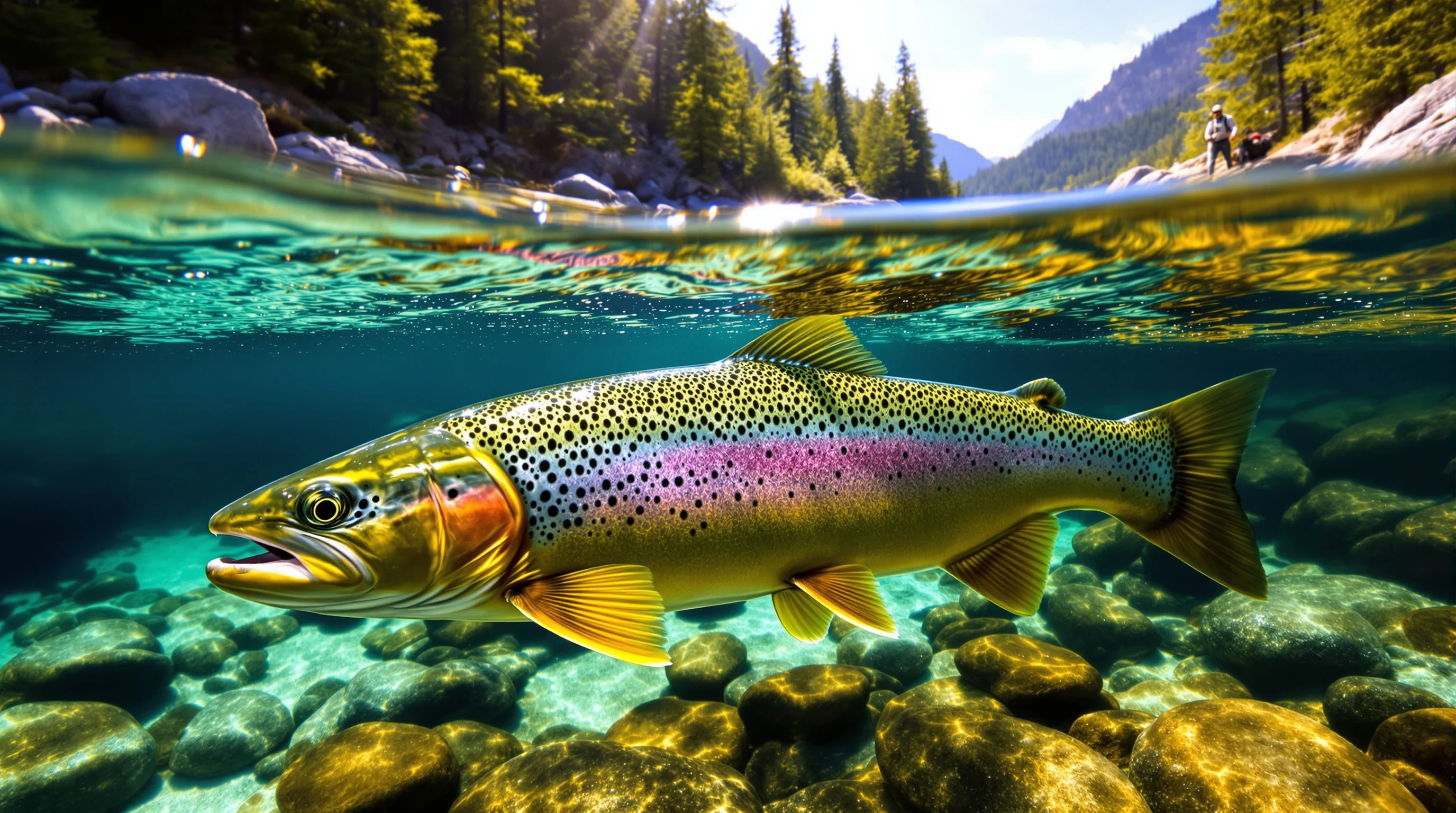
Trout fishing starts with recognition. Learning the types of trout on the end of your line changes which flies you tie on and how you handle a fish before release. The U.S. Geological Survey reports that "hybridization, or the interbreeding of species, is increasing between native and invasive trout across the northern Rocky Mountains," so even a confident angler can misread a fish.
Identifying trout means reading spots, fins, and water together. This hub covers nine fish anglers call trout, with one identification note and one fly tip for each, plus a comparison table to bookmark.
Quick Answer: The main types of trout fly anglers meet in North America are rainbow, steelhead, brown, cutthroat, golden and tiger trout.
Definition: Types of trout refers to the distinct species and subspecies anglers identify by spot pattern, body color, fin markings, and home water.
Evidence: According to the USGS NOROCK research center, "all 12 remaining subspecies of native cutthroat trout are threatened by hybridization with introduced rainbow trout in western North America."
Context: Location and stocking history shape what a fish may be, so read appearance alongside local agency guidance.
Key Takeaways
- Nine fish make up the core list: rainbow, steelhead, brown, cutthroat, golden, tiger, brook, bull and lake trout.
- Char classification: Brook, bull and lake trout belong to the char genus Salvelinus, according to the U.S. Fish and Wildlife Service.
- Hybridization between rainbow and cutthroat trout is increasing across the northern Rockies, per USGS, 2017.
- Cold water is no guarantee: about 60 percent of hybridized sites in the USGS study had cold summer temperatures.
- Local rules apply: check current regulations with your state wildlife agency before targeting any species.
Key Evidence
- Sample size: The USGS hybridization study drew on genetic data from 12,878 fish at 582 locations (USGS, 2017).
- Fitness cost: Rainbow-cutthroat hybrids show "much lower fitness" than pure cutthroat (USGS, 2021).
- Classification: Brook trout are a char in the genus Salvelinus (U.S. Fish and Wildlife Service).
Western Types of Trout: Rainbow, Steelhead and Cutthroat
Western species share overlapping ranges, so careful identification is part of the fun. A dead-drift nymph through riffles where current breaks over structure is a staple, a technique Trout Unlimited covers in depth.
Steelhead have a chrome-bright body that dulls as they move upriver. On rivers like the Columbia, swing a streamer through a deep seam and let it hang in the current to draw the grab.
Cutthroat trout take their name from the red or orange slash under the jaw. A size 14 attractor dry along undercut banks often brings a confident rise. On coastal water, our guide on why coastal cutthroat trout refuse certain patterns covers presentation details. As USGS notes, "in the western U.S., genetically pure cutthroat trout populations represent only a fraction of their historical range."
Hybrids in Cutthroat Water
Maybe you've landed a fish with a faint orange slash and rainbow-like spots and wondered what you were holding. That uncertainty is normal, and it is common in the West. USGS researchers found that rainbow and cutthroat trout interbreed, which blurs the lines.
- Study scale: The USGS study drew on genetic data from 12,878 fish at 582 locations across 17 river basins.
- Headwaters aren't safe: Lead researcher Clint Muhlfeld warns that temperature-only conservation strategies "may seriously underestimate the threat of rainbow trout invasion and hybridization."
Brown, Golden and Tiger Trout
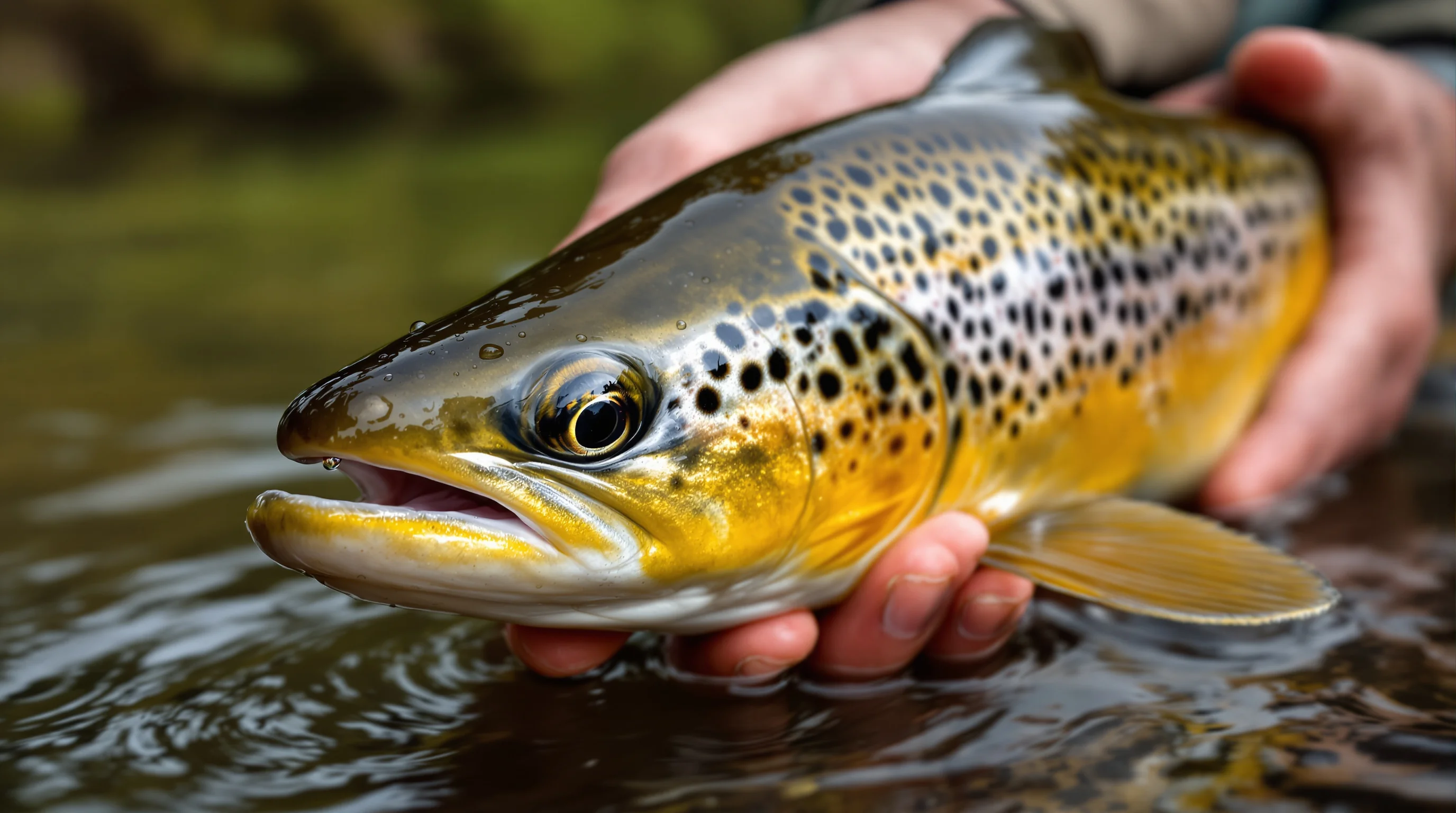
Brown trout, introduced to North America from Europe, carry dark spots ringed in pale halos over a brown to golden body, often with red spots along the flank. A quiet approach and a small emerger at dusk often beat louder tactics on pressured water.
Golden trout, native to California's Sierra Nevada, show orange-gold flanks, a red lateral stripe, and parr marks that persist into adulthood. In small alpine water, a short, accurate dry-fly cast usually beats a long drift.
Tiger trout, a hatchery cross of brown and brook trout, feed aggressively, so a streamer stripped through deeper pools often draws a strike. For tackle across these waters, see our guide to what weight fly rod to use for trout by water type.
Char Types of Trout: Brook, Bull and Lake Trout
Brook trout, which the U.S. Fish and Wildlife Service classes as a char, display worm-like markings (vermiculations) on the back and red spots haloed in blue along the flanks. A short-line nymph drifted through small plunge pools suits their love of tight cover.
Bull trout are listed as threatened under the Endangered Species Act, and protections vary by water, so check state rules first. Large streamers fished deep and slow match the predatory habits of these fish.
For lake trout, as in the Great Lakes, getting a sinking line down to the thermocline, the cold layer where they hold, is key. To see how trout position themselves in any water, read our breakdown of fish holding lies in different water types.
Types of Trout Comparison Table
Use this table for quick reference on the water.
| Species | Native Range | Identifying Marks | Typical Water |
|---|---|---|---|
| Rainbow trout | Pacific coast, Alaska to Mexico | Pink stripe, small black spots | Riffles, moving water |
| Steelhead | Same as rainbow (migratory) | Chrome body, fades upriver | Deep seams, large rivers |
| Cutthroat trout | Interior West, Pacific Northwest | Red/orange jaw slash | Undercut banks |
| Brown trout | Europe, western Asia (introduced) | Haloed spots, golden body | Slow, pressured water |
| Golden trout | Sierra Nevada high country | Orange-gold, red stripe | Alpine streams |
| Tiger trout | Hatchery hybrid | Maze-like vermiculations | Deep pools |
| Brook trout (char) | Eastern North America | Vermiculations, blue-haloed spots | Small plunge pools |
| Bull trout (char) | Pacific Northwest, northern Rockies | Pale spots, no black marks | Deep, cold runs |
| Lake trout (char) | Northern North America | Light irregular spots | Deep, cold lakes |
Why Knowing Trout Types Matters
USGS expects hybridization "to increase in the coming years due to climate-induced expansions of invasive species." Rainbow-cutthroat hybrids show "much lower fitness" than pure cutthroat, according to USGS, 2021. Anglers who recognize native fish can handle them with care and follow local guidance. Every release decision becomes part of a larger conservation picture.
Conclusion
These nine types of trout, three of them technically char, each carry markings and water preferences that make identification possible with a little practice. It's okay to miss a call now and then, particularly in hybrid water. Notice the spots, the fins, and where you're standing, and your eye sharpens with every trip. Before you head out, check rules with your state wildlife agency, and tight lines.