

Your dry fly sinks after the third cast, fish refuse your perfectly matched fly fishing dry flies patterns, or your line drags unnaturally across the current—these failures rarely stem from the wrong fly choice. Most anglers immediately swap patterns when fish refuse their offering, but research shows that changing your casting position often yields better results than changing flies. Dry fly fishing is not about having the perfect pattern collection. It is about mastering the mechanics that make any pattern work effectively on the water.
Quick Answer: Fly fishing dry flies fail for three reasons: waterlogged materials breaking through surface tension, drag from poor line management, or collapsed presentation from casting errors. Fix flotation with proper floatant application before the first cast, eliminate drag by changing your position before changing patterns, and tighten your casting loop to prevent fly collapse on delivery.
Definition: Fly fishing dry flies is the technique of presenting artificial flies on the water's surface to imitate adult insects, requiring proper flotation and natural drift to fool feeding trout.
Key Evidence: According to Fly Fishing Fix, dry flies typically become waterlogged after approximately 30 minutes of casting, with accelerated saturation occurring after a fish takes the fly underwater.
Context: Regular maintenance matters as much as initial preparation—proactive treatment prevents most failures before they start.
Maybe you've had those mornings where everything seemed perfect—rising fish, matching hatch, calm water—yet your fly sat ignored while naturals disappeared all around it. The frustration builds as you cycle through pattern after pattern, wondering what secret you're missing. The truth is simpler than most anglers realize: presentation mechanics matter more than pattern selection, and small adjustments often solve what feels like impossible puzzles.
Key Takeaways
- Flotation requires structure and chemistry—hackle barbules trap air for buoyancy, while floatants enhance this natural mechanism
- Position changes outperform pattern changes for eliminating refusals caused by poor angles or micro-drag
- Apply floatant before the first cast, not after the fly is already waterlogged
- Limit false casting to 2-3 attempts to avoid tangles and maintain precision
- Match floatant type to fly materials—paste for bushy flies, powder for CDC
Why Your Fly Fishing Dry Flies Sink
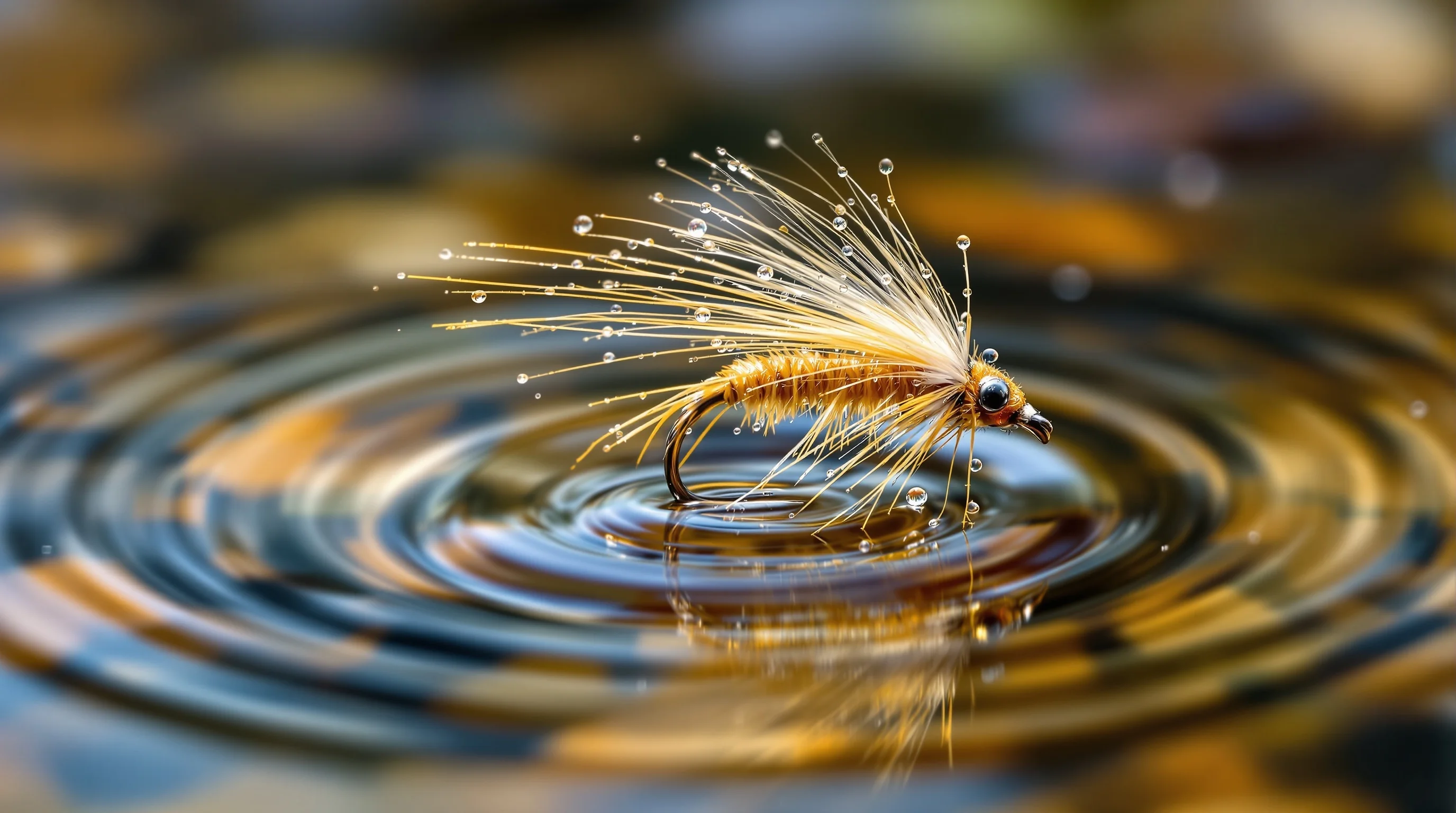
Surface tension creates an elastic membrane on water that supports properly prepared fly fishing dry flies. Your fly must break through this barrier to sink, which happens when waterlogged materials overwhelm the natural buoyancy created by trapped air. Research by Dominic Rosacci of Troutbitten shows that dry fly flotation depends primarily on air trapped within hackle barbules, with modern floatants enhancing rather than replacing this structural requirement.
The 30-minute timeline for waterlogging reflects the gradual saturation of even well-treated materials during normal casting and presentation. This process accelerates dramatically after a fish takes your fly fishing dry flies underwater—the thrashing action forces water deep into hackle fibers that floatant alone cannot protect. You might notice that delicate ties with minimal hackle sink faster because insufficient physical structure creates inadequate air pockets for buoyancy.
Naturally buoyant materials like CDC and foam reduce dependence on chemical treatment while maintaining surface presentation longer. These materials shed water more effectively than traditional rooster hackle, though they require different maintenance approaches. The mechanism works through three stages: air trapped in hackle barbules provides initial buoyancy, floatant creates a hydrophobic barrier that repels water, and proper maintenance preserves both elements throughout your fishing session.
Floatant Types and When to Use Them
Different floatants serve distinct purposes based on fly materials and fishing conditions.
- Paste floatants: Longest-lasting option, ideal for large bushy flies; works best on patterns with substantial hackle
- Gel floatants: Moderate duration, easier application for mid-sized patterns
- Powder desiccants: Optimal for CDC materials and restoring already-waterlogged flies; superior water removal compared to air-drying
How Drag and Position Sabotage Your Presentation
One common pattern shows up on every stream: you spot rising fish, make what feels like a perfect cast, and watch your fly fishing dry flies get completely ignored while naturals disappear just inches away. The culprit is often micro-drag—competing currents pulling your line and fly at different speeds, creating unnatural movement that immediately alerts feeding fish. Even slight variations in current velocity between your line's position and your fly's drift can produce the subtle wrongness that triggers refusal.
Expert guidance from The Fly Crate recommends changing your casting position before switching fly patterns to eliminate refusals caused by poor angles or micro-drag. The high-stick method in pocket water keeps minimal line on the surface, reducing drag from conflicting currents while maintaining control over your drift. Positioning yourself upstream of feeding fish whenever possible allows natural current flow to carry your fly toward the target without line interference.
Excessive false casting beyond 2-3 attempts creates more problems than it solves, generating line tangles while alerting fish to your presence. Modern techniques emphasize accuracy over repetition—a single well-placed cast with proper preparation outperforms multiple attempts with poor setup. Notice how presentation errors masquerade as pattern mismatches, wasting time at the vise when you should be reading the water differently.
When Pattern Changes Actually Matter
Fly selection becomes relevant only after presentation issues are eliminated.
- After catching 2-3 fish from same position: Switch to emerger or cripple patterns to reset selective feeders who've become wary
- During mixed feeding: Use dry-dropper rigs with overbuilt dry flies to cover multiple depth zones
- Not as initial response: Resist immediate pattern changes when fish refuse—reposition first
Practical Fixes for Fly Fishing Dry Flies That Work
Start every session by applying floatant to fly fishing dry flies before the first cast—treating an already wet fly proves far less effective, and this simple discipline prevents most flotation failures before they start. Use an amadou patch or small cloth to thoroughly dry any fly that's been fished before reapplying treatment. This preparation creates the foundation for sustained surface presentation throughout your time on the water.
Tighten your casting loop to prevent flies from collapsing on delivery, particularly with delicate patterns that fold easily under their own weight. A tight loop carries energy efficiently to your target while protecting fragile hackle from wind resistance. After landing a fish, check your fly's condition immediately and retreat if needed—even small trout can saturate materials enough to compromise your next presentation.
Select larger, bushier flies when fishing pocket water or supporting dropper rigs, where buoyancy matters more than delicate presentation. Reserve size 18 and smaller patterns for flat water where drag concerns override flotation challenges. Keep desiccant powder readily accessible for quick restoration between casts rather than waiting until complete failure forces a pattern change. For matching flies to water conditions, consider how current speed affects both flotation needs and presentation requirements.
Why Fly Fishing Dry Flies Matters
Fly fishing dry flies represents the most visual and engaging form of fly fishing, allowing anglers to witness every take in real time. Understanding why flies fail and how to fix them transforms frustration into consistent success on the water. The difference between productive days and fishless outings often traces to presentation mechanics rather than fly selection. Mastering flotation, drag elimination, and position changes creates effectiveness that pattern rotation alone cannot achieve.
Conclusion
Your fly fishing dry flies failures stem from three fixable problems: waterlogged materials, drag from poor positioning, and collapsed presentation from casting errors. Apply floatant before the first cast and maintain it throughout the session. Change your casting position before changing patterns—presentation errors cause more refusals than wrong fly selection. Limit false casting to 2-3 attempts and tighten your loop to prevent fly collapse. Master these fundamentals and you'll spend more time fishing effectively and less time frantically swapping patterns in your fly box. Consider how your tippet selection and presentation techniques work together to create the natural drift that makes all the difference on the water.
Sources
- Troutbitten - Detailed analysis of dry fly flotation mechanics, floatant types, and buoyancy-building techniques from Dominic Rosacci
- Fly Fishing Fix - Practical guidance on preventing dry fly sinking through material selection, floatant application, and line management
- The Fly Crate - Strategic advice on position changes, pattern rotation, and addressing selective feeding behavior
- Dark Skies Fly Fishing - Specialized techniques for dry fly fishing during precipitation and altered surface conditions