
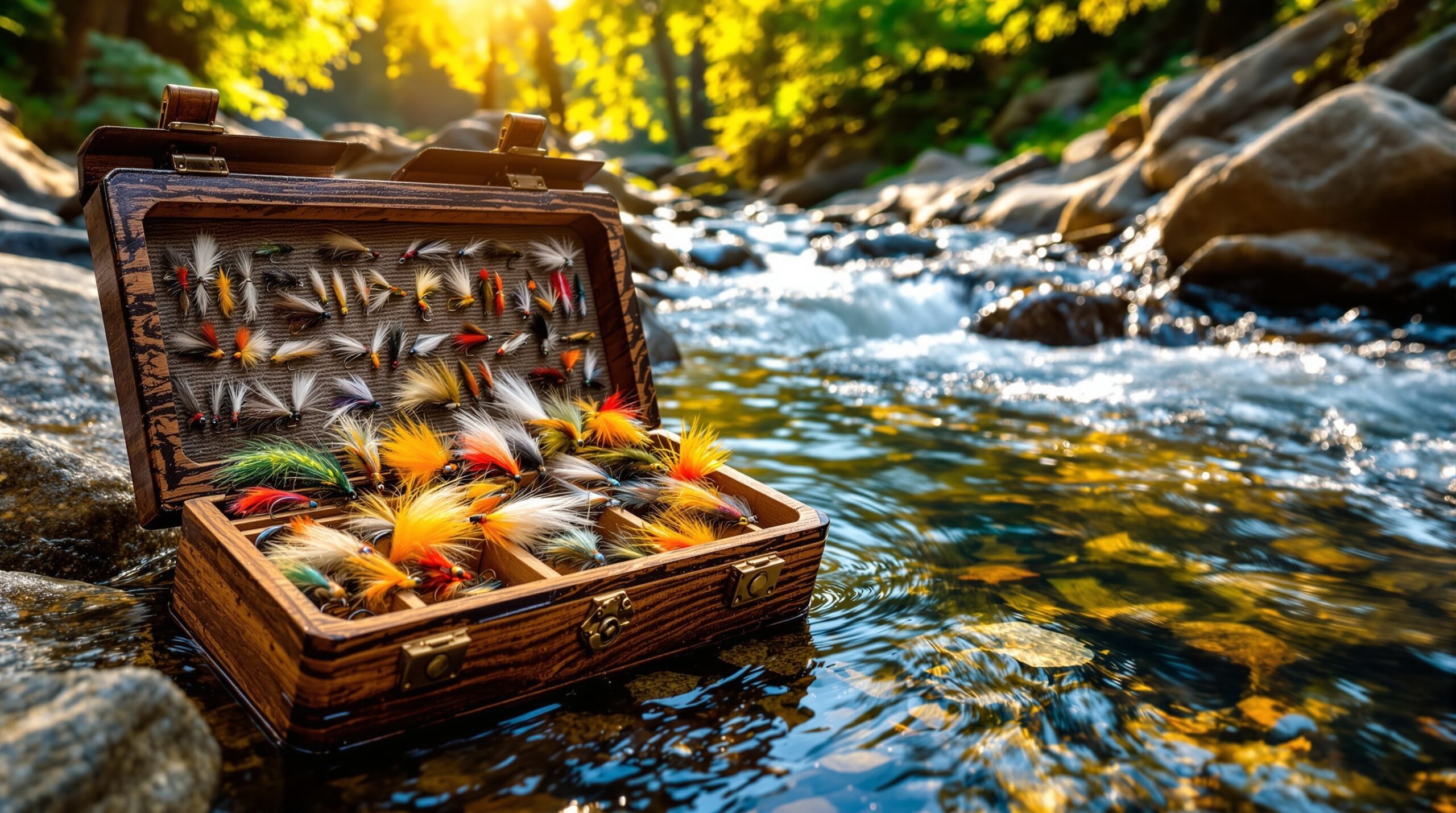
Most anglers arrive at the water with either a dozen flies or a thousand, yet success depends less on collection size than on reading what the moment requires. Fly selection overwhelms beginners who believe they need encyclopedic pattern knowledge, when experts like Tom Rosenbauer recommend starting with just 12 essential flies. Fly fishing flies are not about collecting every pattern ever tied—they are tools for reading water conditions and matching what trout see in their environment. This guide reveals how water conditions, seasonal patterns, and observation skills determine which fly fishing flies work, and why confidence in your presentation matters more than carrying every pattern ever tied.
Quick Answer: Choose fly fishing flies by first reading water conditions—small, drab patterns for low and clear water, flashy streamers for high and stained flows—then match visible feeding activity to size and movement, or use proven attractors like the Parachute Adams when fish aren’t showing themselves.
Definition: Fly fishing flies are artificial lures that imitate insects, baitfish, or other food sources to deceive trout into striking, selected based on water conditions and observed feeding behavior.
Key Evidence: According to Orvis, experts recommend beginners start with just 12-25 essential fly fishing flies rather than thousands of patterns, with versatile options like the Parachute Adams working effectively across mayfly, caddis, and midge hatches.
Context: This simplified approach allows anglers to focus on presentation quality and water observation rather than endless pattern selection.
Key Takeaways
- Water clarity drives selection: Low, clear water demands small drab flies (sizes 18-22), while high, stained water requires weighted patterns with flashy beads
- Versatile patterns eliminate complexity: The Parachute Adams works across multiple hatches because trout key on different elements of its mixed colors
- Observation trumps inventory: Watch for visible feeding activity before opening your fly box—match imitation to what fish are eating
- Confidence improves presentation: Anglers fish trusted patterns with better drift quality than theoretically perfect flies fished with hesitation
- Seasonal calendars matter less than conditions: A spring creek in August requires different tactics than a runoff-swollen river in June
Reading Water Conditions to Select Fly Fishing Flies
Water conditions dictate fly selection more than calendar dates, with clarity, speed, and depth determining whether you need delicate imitations or aggressive attractors. The water tells you what it needs if you take time to observe before casting. You might notice how clear, slow water reveals every detail of your presentation to selective trout, while turbid flows hide imperfections but demand patterns that create vibration and flash.In low, clear, slow water, downsize everything and fish with delicate precision. Blue-Winged Olive patterns in sizes 18-22 match common small mayflies, while sparse presentations avoid disturbing the surface film where trout often feed. Your drift becomes everything in these conditions—any drag or unnatural movement spooks fish that can examine your fly closely. According to Fulling Mill, these conditions require small drab flies with delicate imitations that match the subdued environment.
High, stained water reverses this strategy entirely. Fish large streamers in sizes 8-12, using Woolly Buggers with bright beads that create vibration through the water column. Weighted patterns punch through current and reach depth where trout hold during high flows. Bright colors and larger profiles compensate for reduced visibility, triggering predatory responses rather than selective feeding. This isn’t about perfect imitation—it’s about getting noticed in turbulent conditions.
Moderate conditions call for versatile middle-ground patterns. Pheasant Tail Nymphs in sizes 12-18 work effectively in fast water, while RS2 emergers fished in the film with greased leader match subtle feeding during hatches. These patterns bridge the gap between delicate and aggressive, adapting to changing conditions throughout the day. High-floating patterns become essential in choppy conditions regardless of perfect imitation, because you can’t catch fish on flies you can’t see.
Adapting to Changing Flow Conditions
Flow changes throughout the day and season require tactical adjustments beyond simple pattern swaps.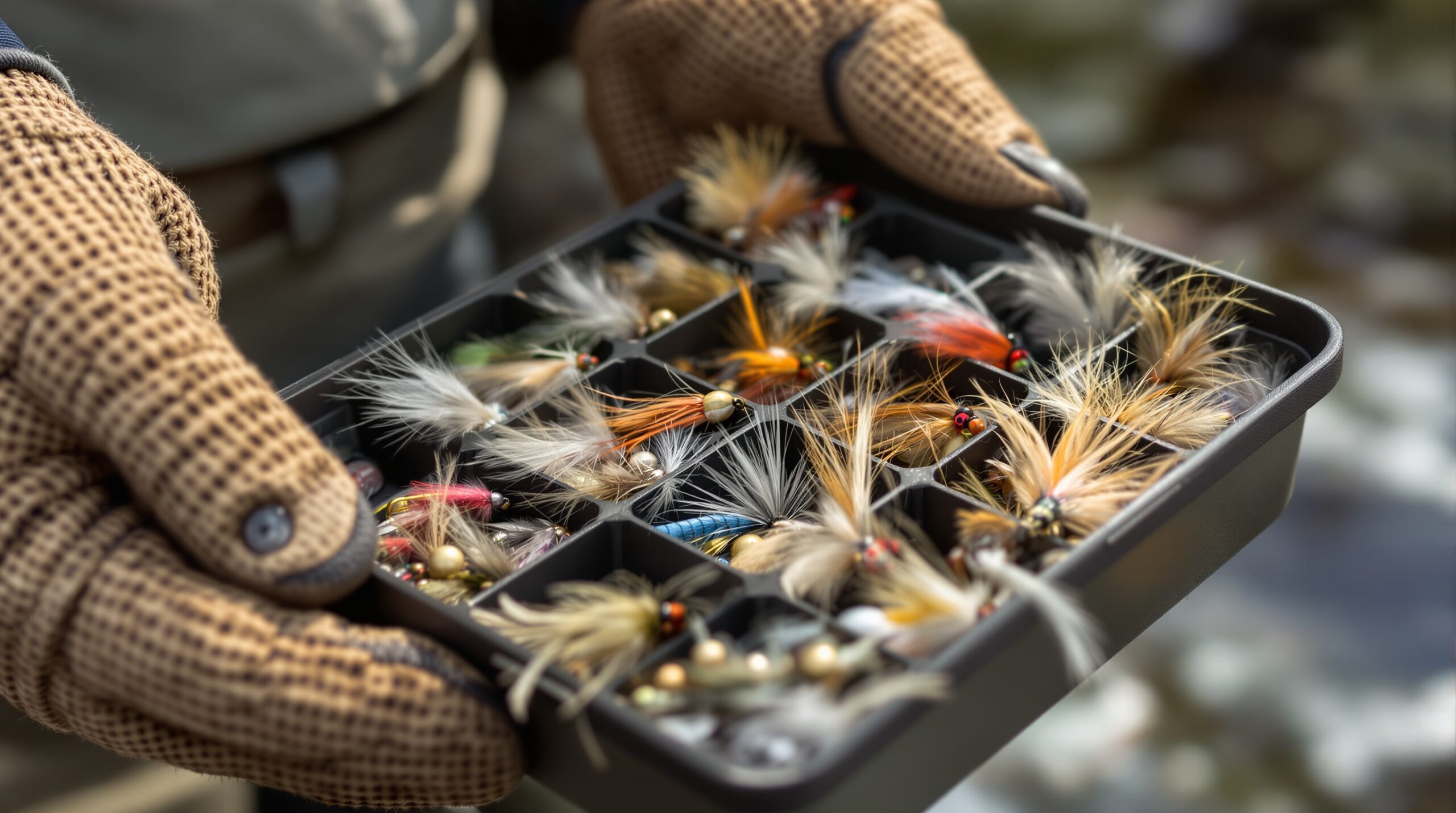
- Morning low water: Start with small nymphs and emergers before surface activity begins
- Afternoon peak flows: Switch to weighted flies that punch through increased current, adding split shot as needed
- Evening clarity: Return to delicate presentations as water settles and fish become selective
Matching Seasonal Patterns and Hatches
When fish feed visibly, match imitation to size, profile, and movement of the food source; when no rises appear, attractors like the Royal Wulff become the primary choice. This observation-first approach eliminates guesswork and connects your fly selection to actual trout behavior. Many of us have made the mistake of choosing flies first and hoping fish cooperate, but successful anglers watch the water before opening their fly box.Start every outing by examining surface activity and collecting sample insects when possible. Mayflies typically appear in sizes 12-18, caddis in 10-16, with Blue-Winged Olives tied in 16-22 for selective fish in clear water. These size ranges provide practical boundaries for stocking your selection without endless variation. According to Manic Tackle Project, understanding these natural patterns helps anglers focus on proven size ranges rather than guessing.
Early and late season fishing often requires different strategies than midsummer hatch matching. Woolly Buggers and articulated streamers that imitate leeches, baitfish, and nymphs through marabou movement work effectively when water temperatures suppress insect activity. These patterns trigger predatory strikes rather than selective feeding, turning challenging conditions into productive sessions. The key is recognizing when trout feed opportunistically versus selectively.
One common pattern looks like this: you arrive at a favorite stretch expecting the Pale Morning Dun hatch that worked last week, but find the water two degrees colder and no surface activity. Instead of forcing the dry fly game, switching to a Pheasant Tail Nymph or small streamer matches what the conditions offer. Research by Tom Rosenbauer at Orvis shows the Parachute Adams “just works” because its mixed colors allow trout to key on whatever element matches their current food source.
Building Your Essential Fly Fishing Flies Selection
Start with 12-25 essential fly fishing flies organized around presentation needs—high-floating dries for pocket water, weighted nymphs for fast runs, emergers for film feeding, streamers for probing structure—rather than attempting comprehensive hatch coverage. This functional approach acknowledges that most fishing happens between major hatches, when versatile patterns and solid technique matter more than perfect matches. You can always add specialized patterns later, but master the basics first.Core categories cover the water column and common feeding situations. Dry flies like the Royal Wulff and Parachute Adams in sizes 10-20 handle surface feeding and dry-dropper setups. Nymphs including the Pheasant Tail and Prince in sizes 12-18 work fast water and deep runs. Emergers such as the RS2 with CDC wings match film feeding during hatches. Streamers led by the Woolly Bugger in sizes 8-12 probe structure and trigger predatory strikes.
The Woolly Bugger exemplifies multi-purpose design, imitating leeches, baitfish, and nymphs simultaneously through its marabou tail movement. This versatility makes it effective across seasons and conditions, eliminating the need for specialized patterns in similar size ranges. According to Hatch Magazine, research suggests anglers fish trusted flies with better presentation and drift quality than theoretically perfect flies fished with hesitation. Confidence in your pattern improves your time on the water.
Dry-dropper setups maximize efficiency by covering multiple depths when fish aren’t rising visibly. Suspend a nymph beneath a buoyant dry fly to probe the water column while maintaining strike indication. This technique keeps you fishing productively rather than constantly changing rigs. Avoid the common beginner trap of arriving with either too few patterns or boxes stuffed with flies you’ve never fished. Understanding fly types and patterns helps build a functional selection based on actual fishing needs.
Prioritizing Versatility Over Specialization
New anglers benefit more from understanding a few patterns deeply than collecting specialized flies for every scenario.- Master core presentations: Perfect your drift with a Parachute Adams before adding variations
- Learn retrieval techniques: A single streamer pattern fished at different speeds covers multiple prey types
- Build regional knowledge: Add specialized patterns only after identifying consistent local needs
Why Fly Fishing Flies Selection Matters
Choosing the right fly fishing flies transforms frustrating days on the water into productive sessions because proper selection addresses what trout actually see and respond to in their current environment. This skill liberates anglers from gear overwhelm, allowing focus on presentation quality and water reading rather than endless pattern anxiety. The confidence gained from understanding why certain flies work in specific conditions creates more enjoyable, successful fishing experiences regardless of collection size.Conclusion
Selecting fly fishing flies successfully depends on reading water conditions first, observing feeding activity second, and trusting versatile patterns third. The progression from overwhelmed beginner to confident angler doesn't require mastering thousands of patterns—it requires understanding that water clarity, flow speed, and visible fish behavior guide every choice. Start with 12-25 proven flies covering dry, nymph, emerger, and streamer categories, then refine your selection based on waters you frequent. Your presentation quality and drift will always matter more than having the theoretically perfect pattern, so fish with confidence and watch the water tell you what it needs. For deeper insight into advanced hatch matching techniques or terrestrial patterns, these skills build naturally on the foundation of reading water and trusting your instincts.Sources
- Orvis - Tom Rosenbauer's essential fly recommendations and versatile pattern guidance
- Hatch Magazine - Water reading techniques and confidence pattern approach
- Fulling Mill - Water condition-based selection strategies and beginner guidance
- Jackson Hole Fly Company - Essential fly patterns with historical context and presentation techniques
- Manic Tackle Project - Fly size ranges and multi-purpose pattern applications